
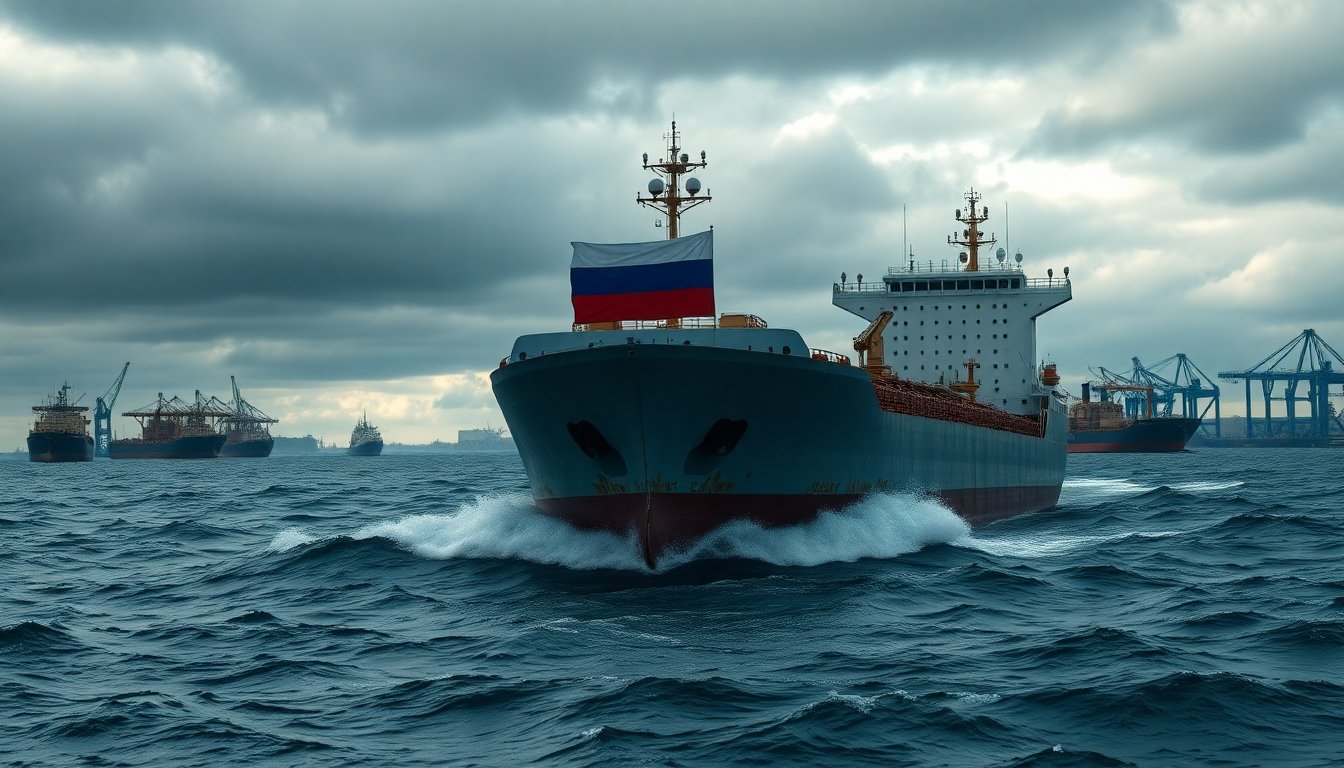
Tensions have increased on the high seas following a recent action by the United States against a Russian-flagged oil tanker. The seizure occurred in the North Atlantic, with the US European Command citing sanctions<\/strong> violations related to Venezuela as the main reason for this move. The Chinese government has responded swiftly, condemning the seizure as a significant breach of international maritime law<\/em>.
US actions and their implications<\/h2>
In early January, the US European Command announced it had successfully seized the tanker, previously known as the Bella 1, after a two-week pursuit across the Atlantic. This incident was part of a larger context; shortly thereafter, another vessel was also seized in the Caribbean, indicating a broader enforcement of US sanctions against entities dealing with Venezuela.
Details of the seizure
The first vessel, which attempted to evade US authorities, was tracked for an extended period. This operation underscores the US’s commitment to enforcing its sanctions, despite potential international backlash. It highlights the US military’s capabilities in maritime law enforcement, particularly concerning oil transportation associated with sanctioned nations.
China’s strong response
In reaction to these actions, the Chinese government expressed its firm disapproval. Officials stated that the US’s moves not only undermine diplomatic relations but also violate established norms of international law. Chinese authorities emphasized that these actions set a troubling precedent, potentially escalating tensions among nations and affecting global trade.
Concerns about international law
The core of China’s argument hinges on the principle of freedom of navigation, a fundamental component of international maritime law. This principle allows vessels to navigate international waters without the threat of seizure due to unilateral sanctions imposed by individual countries. Chinese officials have cautioned that the United States’ unilateral actions could trigger a chain reaction, prompting other nations to adopt similar measures against vessels registered under the US or its allies.
Global reactions and future implications
This situation has ignited a wider debate regarding the legitimacy of US sanctions and the consequences of maritime seizures on global shipping routes. Analysts indicate that if this trend continues, it may provoke a stronger reaction from Russia and other countries that perceive a challenge to US maritime authority.
Potential escalation of tensions
The implications of this seizure extend beyond immediate diplomatic fallout. Observers express concern that continued enforcement of sanctions could result in an increased military presence in contested waters, as nations strive to protect their interests. The risk of miscalculations in such tense scenarios raises the possibility of confrontations that could escalate into larger conflicts.
As discussions unfold, the international community’s response to the actions of the United States remains uncertain. Will China attempt to rally support from other nations to counter US influence, or will it adopt a more diplomatic approach to address these maritime disputes? The forthcoming weeks may prove critical in shaping the future of international maritime relations.
The seizure of a Russian-flagged oil tanker by the United States highlights the fragile nature of international relations and the complex balance of power globally. As nations navigate these turbulent waters, establishing a strong dialogue based on mutual respect<\/strong> and adherence to international law is increasingly vital.


