
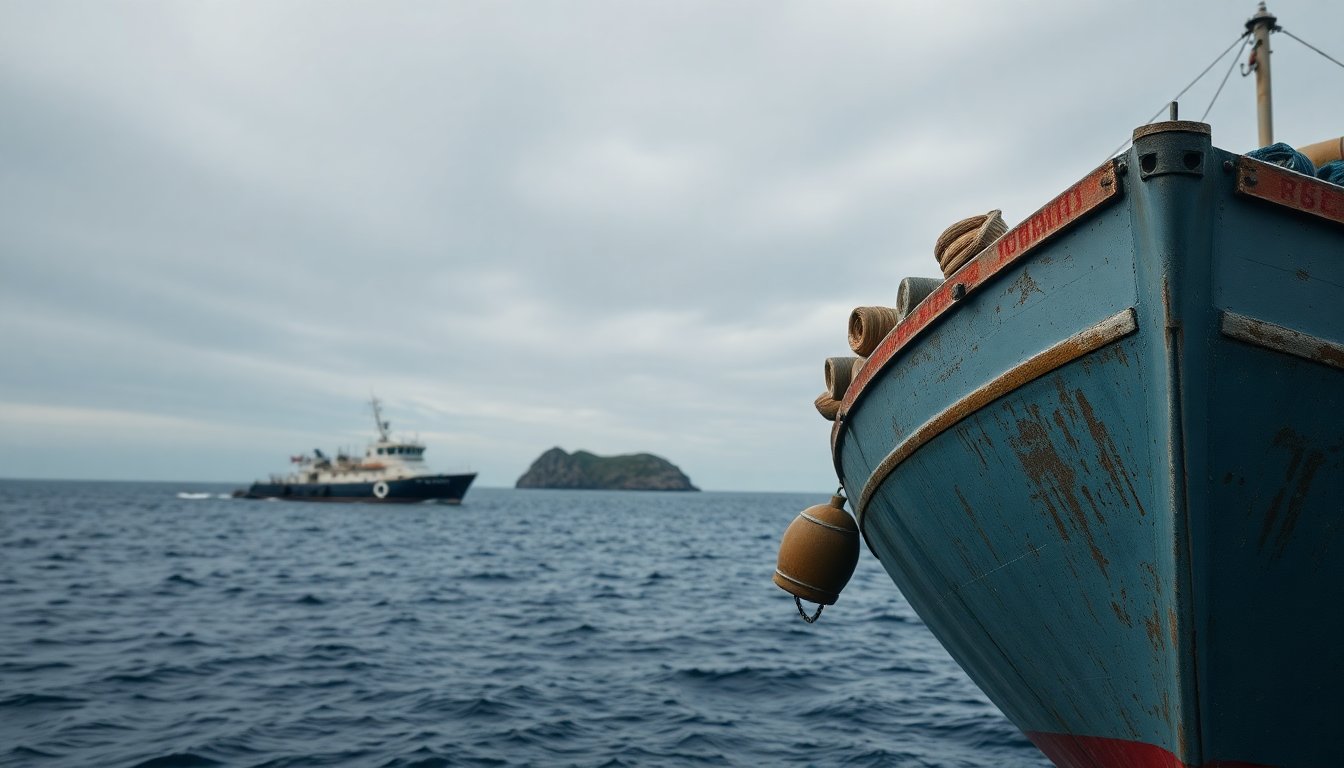
Japan detained then released the captain of a Chinese fishing boat after a dispute over an inspection inside Japan’s exclusive economic zone (EEZ), officials and local media say.
What happened – Date: Reported on 14 February. – Location: About 89.4 nautical miles south‑southwest of Meshima Island, off southwestern Nagasaki Prefecture. – Vessel: Identified in local reports as the Qiong Dong Yu, carrying roughly 11 people. – Action: Japanese authorities say the fishing vessel failed to comply with an ordered inspection in Japan’s EEZ, so coast guard crews boarded, seized the ship and briefly detained the captain. Chinese officials pushed back, arguing the crew were treated unfairly. – Outcome: The captain was released late Friday after Chinese authorities provided documentation and a cash guarantee to secure his release. No formal charges have been publicly confirmed.
Immediate facts and competing narratives Tokyo framed the operation as routine law enforcement to enforce fisheries rules inside its EEZ. Japanese officials allege the crew attempted to evade inspection and that the captain resisted orders. Beijing described the episode as a consular and safety issue, demanding guarantees for the captain and crew.
Both sides issued statements within hours and diplomatic channels moved quickly. Japan accepted Chinese assurances — including the cash collateral — and freed the captain while inquiries continue. Authorities have not yet released detailed evidence supporting the evasion claim.
Why this matters Inspections of foreign fishing vessels regularly touch on more than fisheries law: they implicate sovereignty, resource management and diplomatic relations. Even brief encounters at sea can become symbolic incidents that reverberate politically, especially between neighboring powers with a history of maritime friction.
Legal and enforcement framework Under the United Nations Convention on the Law of the Sea (UNCLOS), coastal states have rights to manage natural resources and enforce conservation measures within their EEZs. In practice, enforcement typically involves boarding, inspecting catch and equipment, and detaining crew if violations are alleged.
Japan’s coast guard says inspectors attempted to board the Qiong Dong Yu under those rights and detained the captain to secure the inspection when the vessel allegedly refused. If inspectors find breaches, the case could lead to administrative penalties or criminal proceedings in Japan; alternatively, it could be resolved through diplomatic negotiation.
Diplomatic context and risks This incident fits a pattern of increasingly sensitive encounters in shared maritime spaces. Repeated small confrontations can harden positions and escalate if not managed carefully. The immediate exchanges — diplomatic notes, consular requests, and public statements — will shape whether this becomes a one‑off enforcement action or a wider bilateral dispute.
Likely next steps – Japanese authorities may continue investigations and could pursue charges or administrative measures if they find evidence of illegal fishing or regulatory violations. – China is likely to press for the captain’s return without penalty or seek assurances for its nationals; it may also monitor the case closely for potential diplomatic recourse. – Both sides have options to de‑escalate: share evidence, establish clearer inspection protocols, or open direct coordination channels to prevent similar stand‑offs.
What to watch Look for formal protest notes, requests for consular access, updates from Japanese prosecutors or coast guard agencies, and further statements from Beijing. Those elements will indicate whether the episode will be litigated, negotiated, or quietly closed. Clear facts and transparent procedures will matter if both governments want to keep the episode contained rather than turn it into a longer political dispute.