
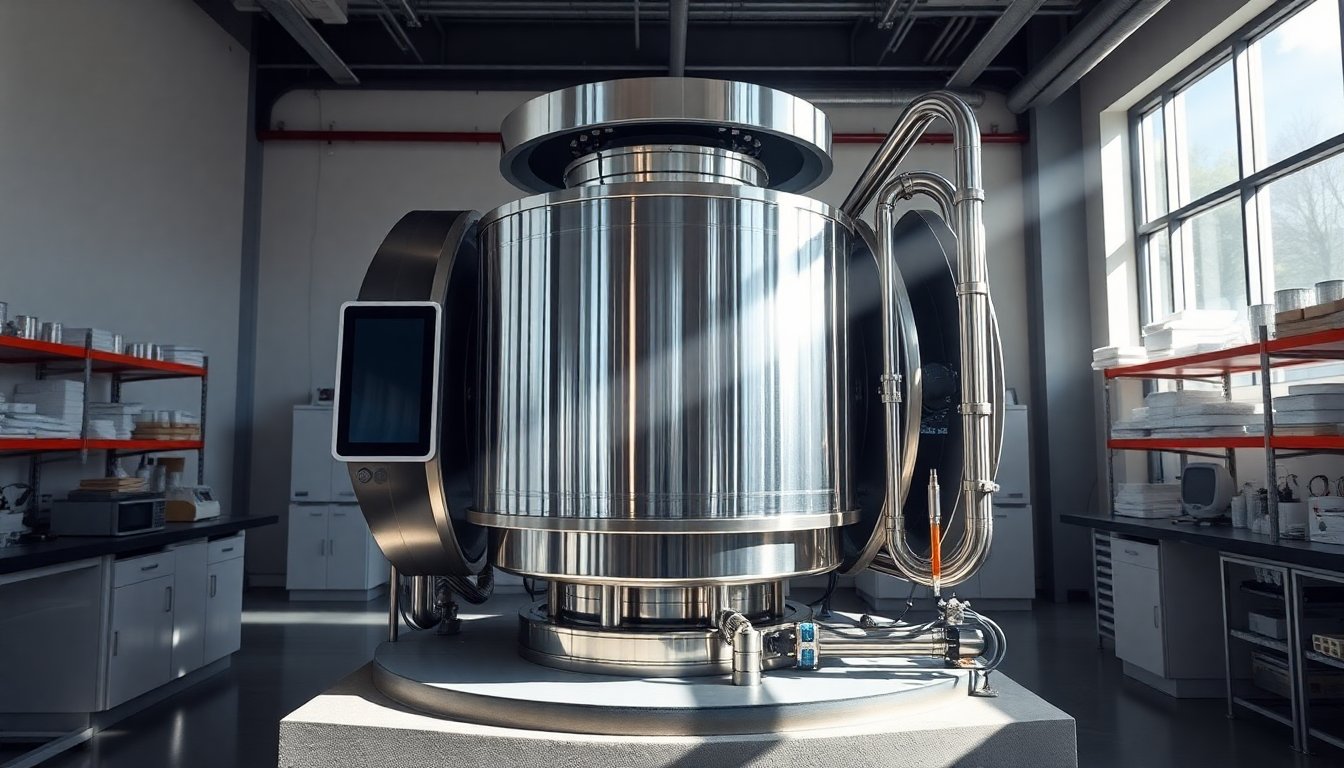
In a significant advancement in the realm of scientific experimentation, China has unveiled a new hypergravity machine named CHIEF1900. This remarkable centrifuge, engineered by the Shanghai Electric Nuclear Power Group, is poised to redefine the parameters of hypergravity research, enabling scientists to explore the effects of extreme gravitational forces on various materials. With its recent installation at Zhejiang University, this machine is expected to play a pivotal role in simulating catastrophic events such as earthquakes and dam failures, offering invaluable insights into their potential impacts.
The engineering marvel: CHIEF1900
CHIEF1900 is not just any ordinary centrifuge; it is a colossal machine capable of spinning multi-tonne samples at unprecedented velocities. The implications of this technology are far-reaching, as it allows researchers to compress both space and time within a controlled environment. As the machine becomes operational, it will enable the recreation of various natural disasters in a laboratory setting, thus facilitating in-depth studies that were previously unattainable.
Understanding hypergravity and its significance
Hypergravity refers to the condition where gravitational forces exceed those experienced on Earth. This phenomenon is critical for scientists who aim to understand how materials behave under extreme conditions. The ability to replicate such scenarios in a secure environment can lead to advancements in engineering, construction, and disaster management. By utilizing CHIEF1900, researchers can analyze the structural integrity of buildings and infrastructure under simulated stress, ultimately contributing to safer designs and emergency preparedness strategies.
Broader implications for scientific research
The introduction of CHIEF1900 signifies a monumental shift in the methodology of scientific inquiry. The ability to simulate disasters will not only enhance the understanding of natural phenomena but also equip policymakers and engineers with the tools necessary to mitigate the effects of such events. This research could inform the development of more resilient infrastructure, paving the way for safer urban environments.
Collaboration and future prospects
The development of CHIEF1900 exemplifies the collaborative spirit within China’s scientific community. As various institutions come together to harness the potential of this hypergravity machine, the prospects for future research appear promising. The data generated from experiments conducted on CHIEF1900 could lead to breakthroughs in numerous fields, including materials science, geophysics, and engineering. This collaboration aligns with China’s broader objectives to position itself as a leader in cutting-edge scientific research and innovation.
In conclusion, the CHIEF1900 hypergravity machine is set to break new ground in scientific research by allowing researchers to simulate catastrophic events with unprecedented accuracy. As this technology becomes integrated into various fields, it holds the potential to significantly enhance our understanding of complex natural phenomena and improve safety measures across numerous industries.


