
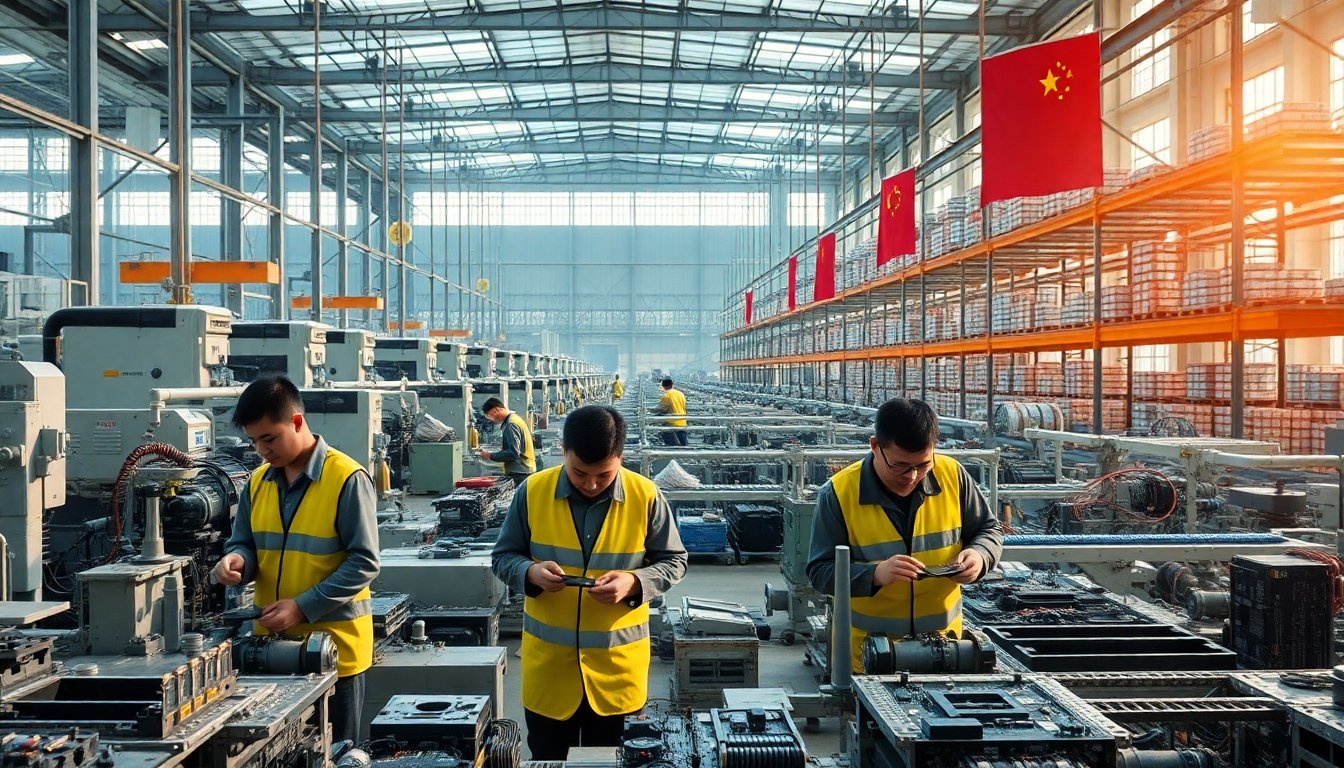
China’s manufacturing resilience amid US tariffs
The global manufacturing landscape has undergone significant changes, particularly in China. Despite the United States imposing tariffs aimed at reducing Chinese manufacturing dominance, the outcome has been quite the opposite. China has not only retained its status but has also strengthened its position as the world’s key manufacturing hub. This is highlighted by a trade surplus that has exceeded an impressive $1 trillion.
China’s manufacturing growth trajectory
The manufacturing sector in China is on a strong growth path, driven by strategic investments, technological advancements, and a large labor force. This expansion is particularly noticeable in key industries such as electronics, textiles, and machinery, all of which play crucial roles in the global supply chain. The Chinese government has supported this growth with policies designed to attract foreign investment and boost domestic production capabilities.
Investment in innovation and technology
China’s manufacturing success is largely attributed to its strong emphasis on innovation. The country has invested heavily in research and development, creating a culture that prioritizes technological advancement. A prime example is the increased use of automation and artificial intelligence in manufacturing. These technologies have enabled Chinese companies to boost efficiency and lower costs, enhancing their competitiveness in the global market.
Impact of tariffs on trade dynamics
The U.S. tariffs aimed to protect American industries and reduce the trade deficit. However, they have unintentionally strengthened China’s position in the global market. American companies faced rising costs for imported goods, prompting many to seek alternative suppliers or invest in domestic production. This transition has proven difficult, as many businesses struggle to match the efficiency and scale provided by Chinese manufacturers.
Shifts in global supply chains
Trade tensions have led to a reevaluation of global supply chains. Companies worldwide are reassessing their reliance on Chinese manufacturers, with many opting to diversify their supply sources. This change has prompted increased investment in production facilities outside of China. However, this shift has not reduced China’s dominance in manufacturing. The country’s ability to adapt quickly has ensured its continued significance in global trade.
The future of China’s manufacturing sector
The outlook for China’s manufacturing sector remains optimistic. The nation’s commitment to sustainable practices and technological advancements positions it favorably for future success. As environmental concerns gain attention, China is investing in green technologies and sustainable production methods. This strategy could enhance its attractiveness to international markets that prioritize sustainability.
China’s manufacturing prowess in a shifting global landscape
China’s vast domestic market presents a significant advantage for its manufacturing sector. The expanding middle class is driving demand for a wide range of products. This trend creates opportunities for manufacturers to address local consumer needs while also preserving their export capabilities. By focusing on both domestic and international markets, China’s manufacturing industry maintains its resilience against external pressures.
Despite the U.S. tariffs aimed at undermining its manufacturing capabilities, China has emerged stronger. Government support, technological innovation, and a commitment to sustainable practices have reinforced its position as a manufacturing powerhouse. As global dynamics evolve, China’s ability to adapt is likely to keep it at the forefront of the manufacturing industry.


