
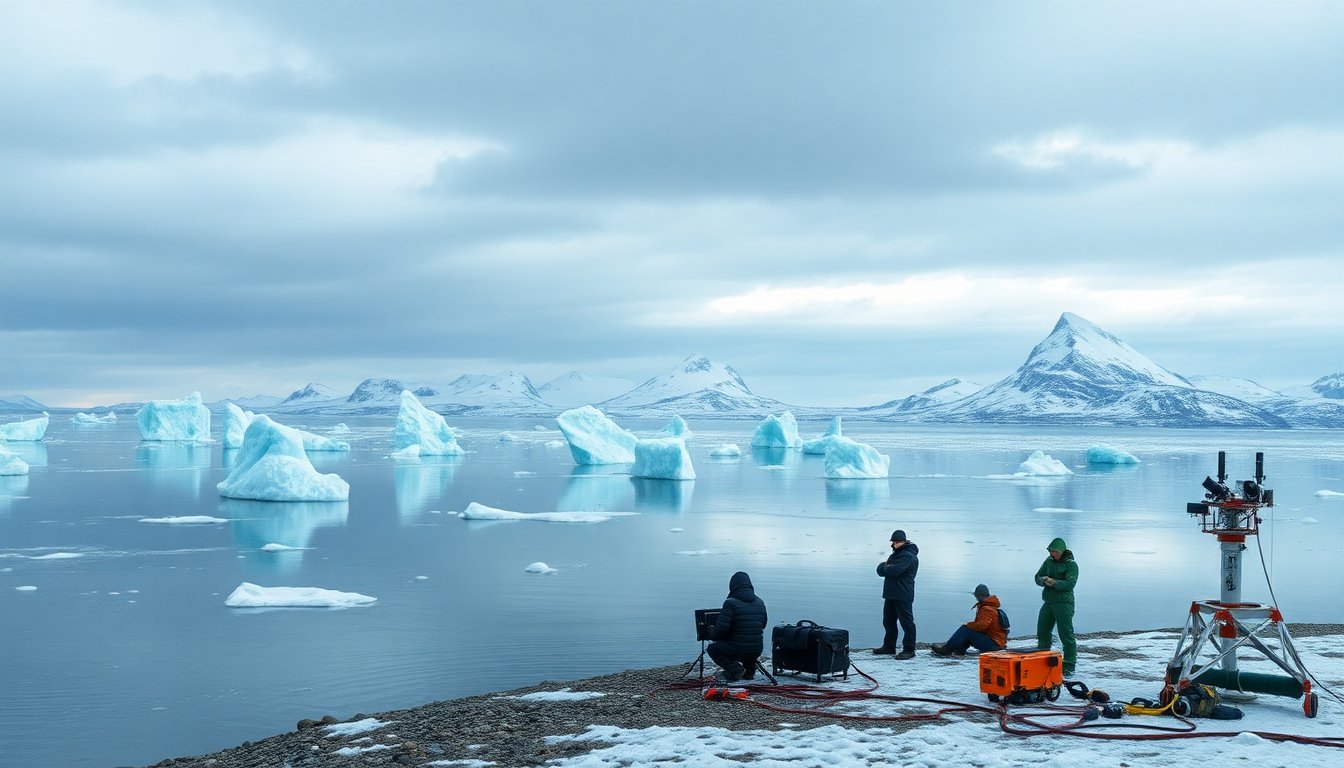
In the evolving geopolitical landscape of the Arctic, China is adopting a notably reserved approach towards developments in Greenland. Analysts suggest that although Beijing aims to play a significant role in Arctic affairs, immediate bold actions are unlikely, particularly amid escalating tensions with the United States during the administration of former President Donald Trump.
The Arctic region’s importance has surged, primarily due to climate change, which is reshaping geopolitical dynamics. David Meale, head of the China practice at the Eurasia Group, notes that China’s interest in the Arctic is deeply rooted in long-term policy considerations. The potential for resource exploration and new shipping routes is prompting nations, including China, to adjust their strategies in this delicate environment.
The Arctic as a strategic priority for China
China’s interest in the Arctic is not merely a fleeting concern; it is a long-term strategy aimed at enhancing its geopolitical influence. This region is seen as a treasure trove of natural resources and shipping lanes that could significantly alter global trade patterns. As climate change opens up previously inaccessible areas, the significance of the Arctic is magnifying.
Analysts note that China’s cautious approach is a reflection of its broader foreign policy objectives. Despite its ambitions, immediate action to counter the U.S. stance on Greenland is unlikely. The recent remarks by former President Trump regarding the potential purchase of Greenland have added another layer of complexity to international relations in the Arctic.
Geopolitical tensions and the U.S. response
The Trump administration’s aggressive rhetoric regarding Greenland has raised concerns among European allies and within international diplomatic circles. The United States has threatened tariffs on European nations, including Denmark, indicating a precarious situation. This imposition of tariffs reflects a shift towards more confrontational tactics, which may escalate tensions instead of fostering cooperation.
In light of these tensions, diplomatic efforts are now underway. A high-level working group consisting of U.S., Danish, and Greenlandic officials has been established to facilitate ongoing discussions. This initiative aims to balance U.S. interests with Denmark’s sovereignty and Greenland’s status. While the working group seeks to navigate these complex waters, the primary objective remains to avert military confrontation.
Potential pathways for resolution
Amid the ongoing developments, there is potential for constructive dialogue. The Defense of Greenland Agreement, established in 1951, has allowed the U.S. to maintain a significant military presence on the island while respecting Danish sovereignty. This framework could serve as a basis for renegotiating or affirming existing terms, fostering a collaborative rather than confrontational atmosphere.
Furthermore, Greenland’s aspirations for independence play a crucial role in the discussion. Should Greenland pursue independence, a strategic partnership with the U.S. could establish a necessary security framework. This partnership could take the form of a Compact of Free Association, akin to agreements the U.S. has with other nations.
Congressional and European responses
Congress is actively involved in discussions regarding Greenland. Bipartisan legislation has been introduced to prohibit military action against Denmark or any NATO ally, thereby protecting Greenland from potential U.S. military intervention. Public opinion in the United States strongly opposes the annexation of Greenland, suggesting that any aggressive actions could encounter substantial domestic resistance.
In Europe, Denmark has expressed its commitment to enhancing military exercises and presence in Greenland. This signals to the United States that any military aggression would trigger a unified response from European nations. Such solidarity aims to deter any potential U.S. military actions, fostering a more stable Arctic environment.
China’s strategic interest in Greenland and Arctic geopolitics
As the Arctic increasingly becomes a focal point of geopolitical interest, China’s careful observation of Greenland plays a vital role in its overarching strategy. The relationships among the United States, Denmark, and Greenland will significantly influence the future dynamics of Arctic relations. Emphasizing collaboration over confrontation may offer the most effective route to ensuring stability in this crucial region.
Fostering dialogue and cooperation among Arctic nations is essential for navigating the complexities of international relations. Prioritizing diplomatic engagement and respecting each nation’s sovereignty can create a pathway for all parties to emerge from these tensions united and resilient.


