
Table of Contents
Amid the ongoing turmoil in Myanmar, the military junta, which seized power in a coup earlier this year, has organized an election aimed at consolidating its authority. This move, heavily influenced by China, has drawn significant international scrutiny and raised questions regarding the legitimacy of the electoral process.
As violence continues to ravage various regions of the country, the junta’s decision to move forward with the election appears to be a strategic effort to project an image of stability. However, critics contend that this election serves merely as a facade to legitimize a regime criticized for its brutal repression of dissent and its failure to meet the population’s pressing needs.
The backdrop of conflict in Myanmar
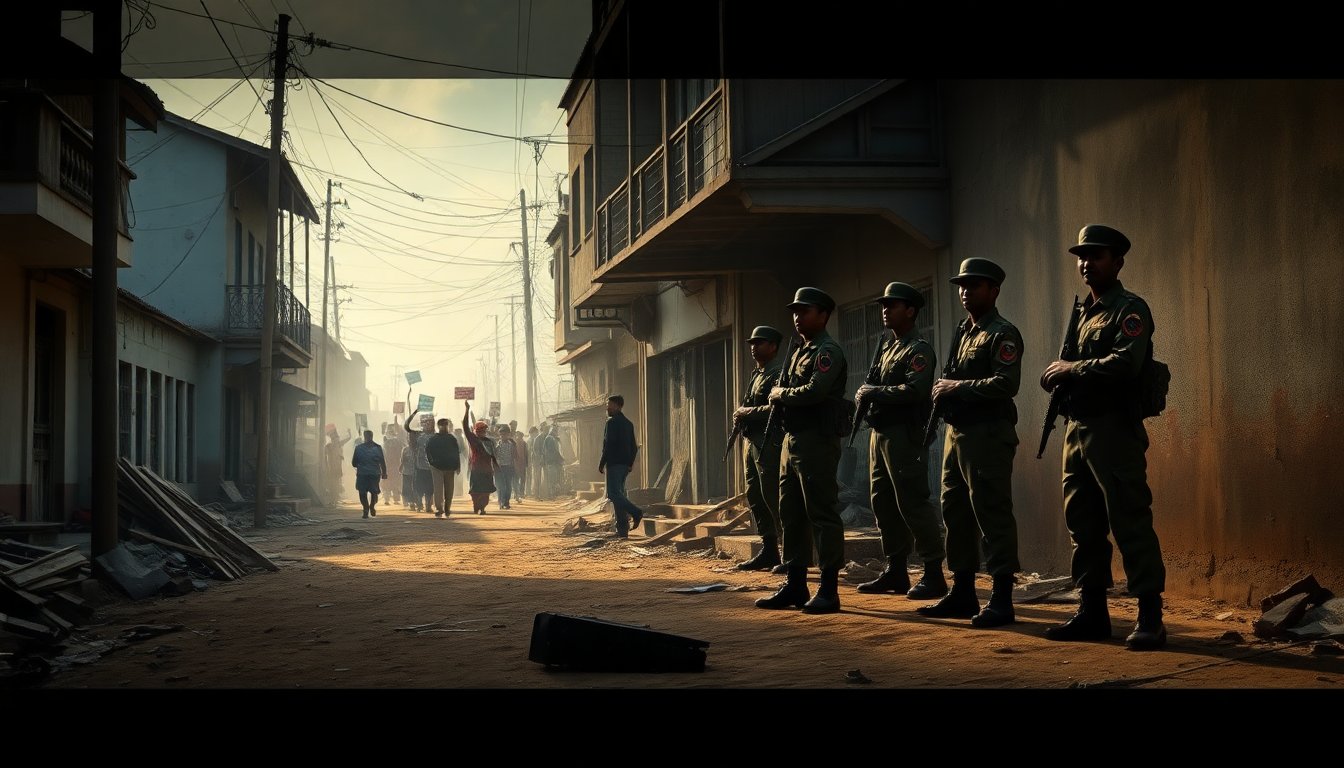
The situation in Myanmar is marked by widespread unrest, with numerous ethnic armed groups and pro-democracy activists resisting military rule. Violent clashes have surged, displacing thousands and worsening humanitarian crises. Amid this chaos, the junta has sought to present itself as a stabilizing force by holding elections. Yet, can a vote truly be considered democratic under such oppressive conditions?
China’s role in Myanmar’s election
It is crucial to analyze the role of China in this electoral process. As a primary ally of the junta, China has provided both diplomatic and economic support, aiming to maintain its influence in the region. Observers highlight that Beijing’s involvement aligns with its strategic interests, particularly concerning border security and investments in Myanmar’s resources.
In return, the junta has relied on China’s backing to enhance its legitimacy internationally. This relationship raises concerns about the geopolitical implications of a China-supported regime, especially as the junta navigates its interactions with Western nations that have imposed sanctions in response to human rights violations.
Election outcomes and international reactions
The election results, promoted by the junta as a mandate from the people, are unlikely to gain recognition from the international community, which perceives the electoral process as fundamentally flawed. Reports suggest that many voters faced coercion to participate, casting serious doubts on the integrity of the vote.
Consequences for the Myanmar populace
For the citizens of Myanmar, the implications of this orchestrated election are substantial. Many fear that the junta’s sustained grip on power will exacerbate violence and oppression. The potential for increased civil unrest looms large, with various factions likely to react aggressively to what they perceive as a sham election.
Moreover, the junta’s focus on consolidating power through this election, rather than addressing the humanitarian crises and economic struggles facing its citizens, highlights a troubling disconnect from the needs of the population. In a country already grappling with poverty and instability, the consequences of such governance could be severe.
While Myanmar’s military junta attempts to project legitimacy through this electoral process, the reality remains complex. The influence of China and the persistent conflict will likely shape the future trajectory of the nation, raising profound questions about the possibility of achieving true democracy in such a fraught environment.