
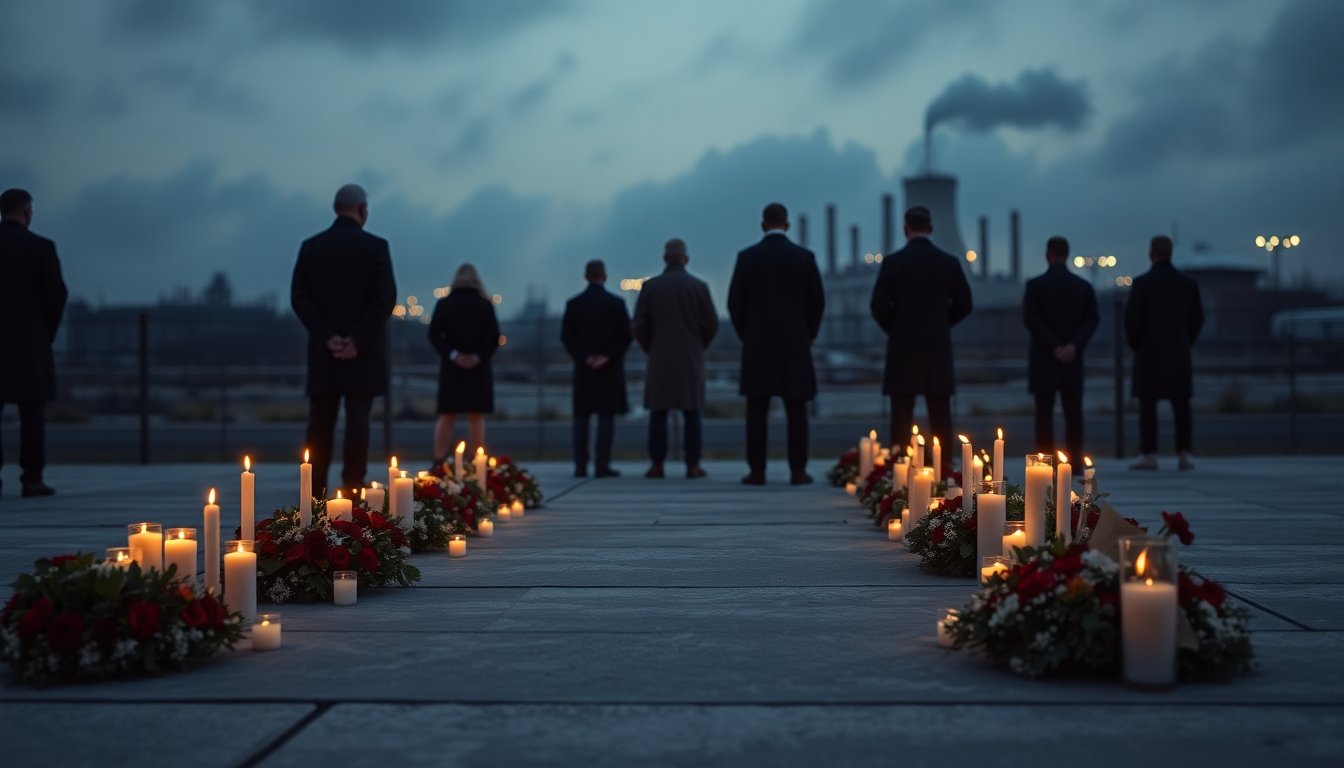
On April 26, 2026, Ukraine observed the 40th anniversary of the Chornobyl catastrophe with solemn ceremonies and renewed warnings about the fragility of nuclear infrastructure in wartime. Delegations from abroad joined Ukrainian officials to remember the victims and to spotlight ongoing threats posed by military operations near nuclear facilities. The anniversary has become more than a historical remembrance: it is now a moment to assess current vulnerabilities and to press for urgent protective measures for sites still contaminated or operating under duress.
The memory of 1986—when an explosion in reactor four released massive contamination across Europe—remains vivid. Public officials and survivors emphasized that the lessons of Chornobyl are relevant today as the conflict has brought drones, missiles and occupation to areas containing nuclear installations. Voices at the memorials stressed both the human toll of the past accident and the immediate technical risks facing Ukraine’s nuclear assets.
Commemorations, leadership and public concern
Ceremonies took place in Kyiv and at the Chornobyl site itself, where President Volodymyr Zelenskyy and visiting leaders lit candles and paid respects. Foreign ministers and the EU energy commissioner were among the international guests who used the occasion to pledge support for Ukraine’s power system. Officials warned that military actions have turned nuclear facilities into potential targets, transforming memorial events into platforms for urgent appeals for protection and funding.
Messages from leaders and faith figures
Speeches combined remembrance with warnings. President Zelenskyy said the present-day threats are serious, pointing particularly to the situation at Zaporizhzhia. Religious leaders also addressed the crowd; a statement attributed to Pope Leo in the ceremonies urged that atomic energy be devoted to life and peace. Such remarks underline how the anniversary has evolved into a broader moral and political call to prevent future nuclear catastrophes.
Damage, repairs and international responses
Critical infrastructure around Chornobyl has already suffered damage during the conflict: a drone strike in February 2026 pierced part of the protective arc installed over the ruined reactor, though no radiological release was detected. Engineers patched the hole, but the structure requires much more extensive work. The European Bank for Reconstruction and Development estimates a further €500 million is needed for comprehensive repairs, and IAEA director-general Rafael Grossi urged that those repairs begin immediately to prevent permanent deterioration.
Operational disruptions and security incidents
Ukraine’s state atomic company reports repeated security threats near key sites: radars recorded at least 92 drones within a five-kilometre radius of the Chornobyl shelter since June 2026, and the occupied Zaporizhzhia plant has experienced multiple outages. Kyiv said the southeast facility suffered its 15th temporary blackout since Russian forces took control in March 2026. Such interruptions complicate safe operation and heighten the risk of accidents, especially as the war brings ordnance and personnel movements into proximity with nuclear systems.
Legacy, landscape and the role of nuclear power
The original Chornobyl explosion in 1986 forced wide-scale evacuations, exposed millions to radiation and left long-term environmental contamination across a broad swathe of territory. Thousands have since died from radiation-related illnesses, though scholars and health agencies continue to debate exact tolls and long-term health impacts. Those who worked in the clean-up, known as liquidators, frequently report that Soviet authorities minimized the link between exposure and later disease. Survivors’ testimonies featured prominently at memorials, reminding visitors of the human cost behind technical terms.
Decommissioning, wildlife and energy geopolitics
The Chornobyl site now stands under guarded care, where about 2,250 employees rotate through long shifts to oversee dismantling and monitoring. The New Safe Confinement structure covers the old sarcophagus that entombs reactor four, while nature has reclaimed the abandoned city of Prypiat—moose and wild horses roam the perimeter inside the 2,600-sq-km exclusion zone. Meanwhile, nuclear generation has become central to Ukraine’s grid: state firm Energoatom says nuclear power accounts for roughly 70 percent of electricity production, a factor that complicates diplomatic talks. Control of Zaporizhzhia remains one of the thorniest items in the U.S.-brokered negotiations between Kyiv and Moscow, with energy security and safety top of the agenda.


