
Table of Contents
“`html
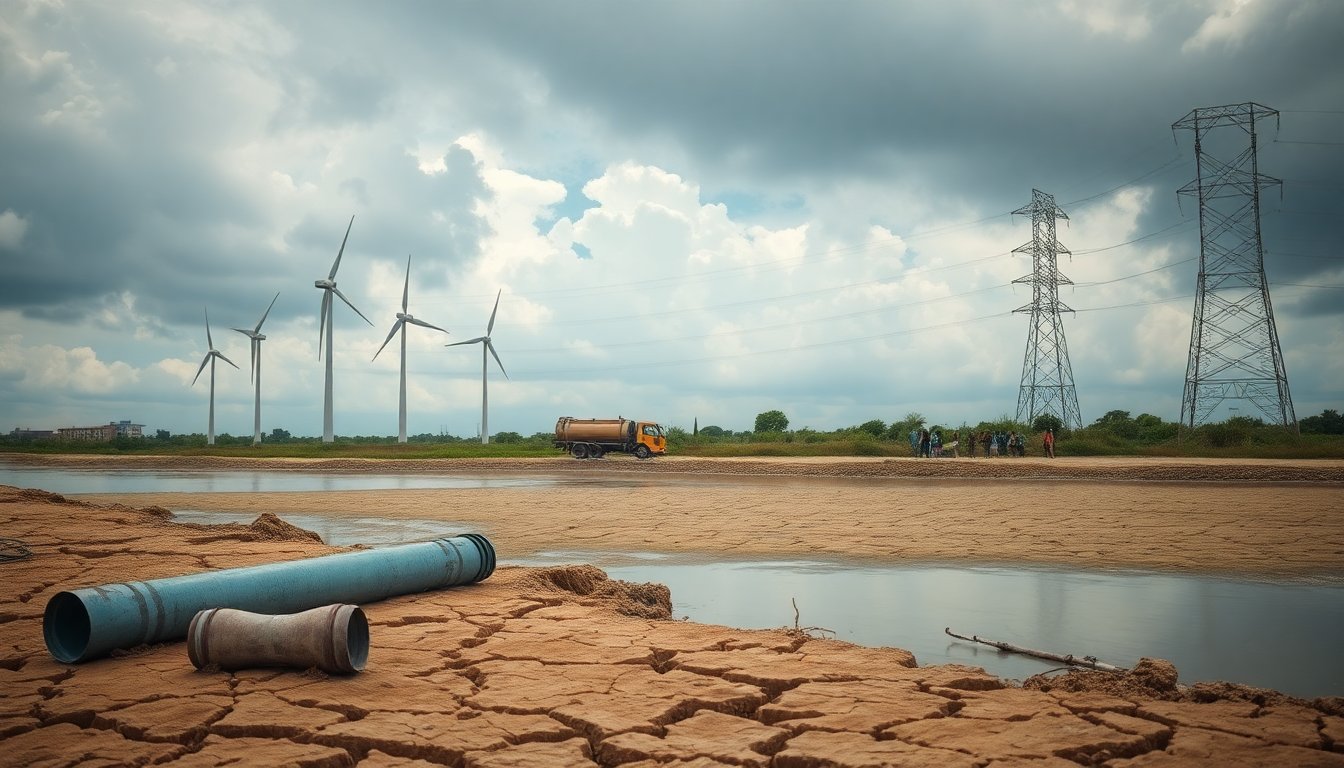
As climate change intensifies, Asia faces increasing vulnerability regarding essential water and power services. A recent report from the Asian Development Bank (ADB) highlights the urgent need for investment in these sectors. The report estimates that approximately $4 trillion will be necessary for water and sanitation.
Rising threats to water systems
Water-related disasters are becoming more frequent across Asia, endangering millions by exposing them to unsafe drinking water and inadequate sanitation facilities. According to the ADB, while around 2.7 billion people have some access to water, over 4 billion still face unsafe conditions.
Investment shortfalls and the need for action
Government spending currently addresses only 40% of the estimated financial requirements necessary to protect water supplies. This results in an annual funding gap exceeding $150 billion. Such financial deficiencies pose significant risks to community health and impede economic development across the region.
Power systems at risk from climate impacts
In addition to challenges in water infrastructure, Asia’s power systems are increasingly vulnerable to the effects of climate change. A report by the Asia Investor Group on Climate Change and the MSCI Institute indicates that climate-related damages and revenue losses could amount to approximately $8.4 billion annually for power companies in the Asia-Pacific region.
Examples of climate-induced disruptions
Recent events highlight alarming trends related to climate change. In Vietnam, Typhoon Kalmaegi caused extensive damage in the coastal city of Quy Nhon. The storm brought heavy rains that resulted in downed power lines and flooded streets. Local residents, including Hai Duong, were left stranded, finding refuge in shopping malls where they could charge their devices while worrying about the condition of their homes.
Adapting to a changing climate
As environmental pressures increase, nations are compelled to reconsider their infrastructure strategies. Experts indicate that the scale of infrastructure development could match the progress made in the past two centuries. This presents a crucial opportunity to incorporate climate resilience into future planning efforts.
Environmental degradation and its impact
Rapid urbanization and pollution have significantly contributed to the decline of water ecosystems in more than 30 of the 50 Asian nations studied. This trend has resulted in profound environmental challenges. The region is responsible for nearly 41% of global flooding incidents and faces additional risks from rising sea levels and storm surges, which heighten the vulnerability of coastal communities.
Furthermore, existing infrastructure is inadequately prepared to cope with the increasing frequency of extreme weather events. As temperatures continue to rise, many power plants are experiencing losses in efficiency, while essential water supplies are dwindling. The coal and gas plants that serve as primary energy sources are particularly threatened due to declining river flows.
The implications of climate change on utility planning
Climate change poses significant challenges for utility companies, yet many remain unprepared for these evolving threats. Evidence collected indicates that only a small number of power companies are actively assessing their risks. Furthermore, even fewer are transparent about the potential impacts of climate change on their operations.
The necessity for proactive measures
It is imperative for Asian nations to prioritize investments in climate-resilient infrastructure. Records show that by addressing these vulnerabilities, countries can better protect their populations and maintain essential water and power services.
Future expectations
The investigation reveals that a strategic approach to infrastructure planning is essential. By adopting comprehensive planning strategies, nations can work towards sustainable development while navigating the challenges posed by climate change.
“`