
Table of Contents
Saffron and sea: a sensory journey through coastal risotto
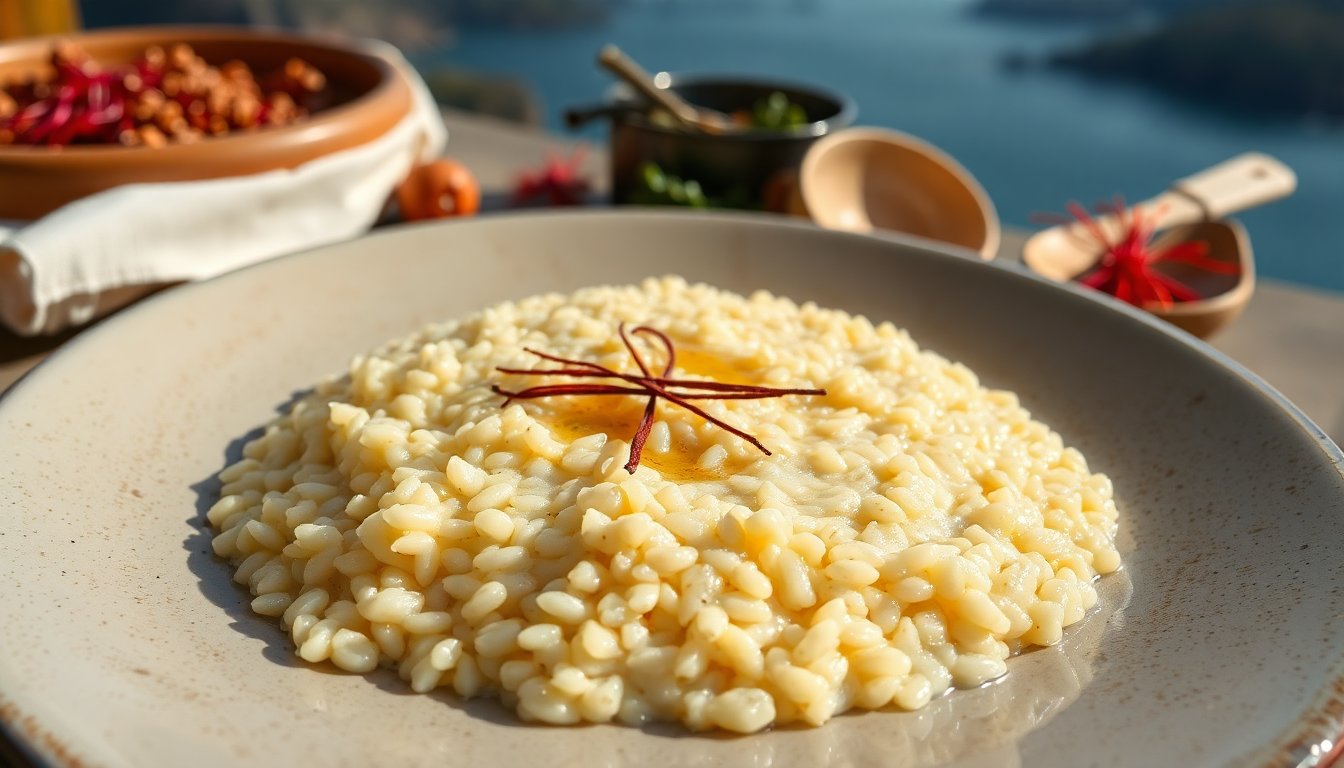
The palate never lies… Imagine the first spoonful: the rice turns silk on the tongue, a warm saline whisper recalls the sea, and a luminous thread of saffron lifts the flavor. The taste unfolds slowly, letting the umami arrive like a remembered shore.
the story behind the ingredient
Behind every plate there is a network of people and places. Small saffron growers tend fragile crocuses on windswept hillsides. Local fishermen set nets at dawn along the same coast. Nearby rice fields learn to live with salt air and mineral-rich breezes. These actors give the dish its sense of place.
As a chef I learned that human scale and timing shape flavor as much as technique. Producers I met in coastal markets spoke in concrete terms: bloom, yield, harvest labor. Those details matter for traceability and for sourcing that favors terroir and short supply chains like filiera corta.
Technique explained: how to build the perfect coastal risotto
Traceability and short supply chains inform each technical choice in the pot. Select a medium-grain rice such as carnaroli or vialone nano. Toast the grains briefly in olive oil until they take on a pale nuttiness and the edges begin to look glassy. Deglaze with a splash of dry white wine and allow the alcohol to evaporate.
Add hot broth gradually, one ladle at a time. Stir gently and steadily so the rice releases starch and the texture becomes creamy without adding dairy. Infuse the stock with saffron threads that have been steeped for a few minutes in warm broth to unlock color and floral perfume. Near the end, fold in a spoonful of cold butter or a drizzle of excellent olive oil to bind the sauce and give the surface a satiny sheen.
As a chef I learned that patience is a seasoning as vital as salt. Keep heat moderate and timing precise so shellfish and fish preserve their texture and the umami notes remain bright beside saffron’s floral lift. Finish with a light sprinkle of finishing salt and a scatter of fresh herbs that reflect the coastal plot where ingredients were sourced.
Ingredient pairing and the role of fermentation
Finish with a light sprinkle of finishing salt and a scatter of fresh herbs that echo the coastal plot where ingredients were sourced. Then consider subtle fermented accents to deepen the savory frame without stealing saffron’s light.
The palate never lies: restrained fermentation can heighten nuance. A very small spoon of reduced fish fumet, glazed with a drop of aged soy, adds tensile depth to the broth. As a chef I learned that a fine shaving of aged bottarga, dusted at the last second, brings a saline, nutty whisper that lifts the rice rather than overwhelms it.
Use fermented elements as seasoning, not as a centerpiece. Reduce intensely flavored liquids until they are concentrated and measured in pinches. Preserve saffron’s floral profile by adding these elements in stages, tasting between each adjustment. This approach favors balance and lets the coastal ingredients tell their story.
Connection to territory and sustainability
The palate never lies. This risotto extends the approach that favors balance and lets the coastal ingredients tell their story.
Choose saffron from trusted growers, fish sourced through short supply channels and rice from producers who practise sustainable irrigation. Organisations such as Slow Food, Gambero Rosso and the Michelin Guide emphasise that quality improves when production respects people and land. Here, terroir means sea air, soil, seasonal rain and the hands that harvest. Opting for filiera corta supports flavour integrity and reduces environmental impact.
How to experience it at home
As a chef I learned that patience shapes texture. Let the risotto rest off the heat for a minute before serving so the grains settle and the sauce becomes silkier.
Set a simple table and invite a companion to share the plate. Taste deliberately and notice saffron’s floral lift, the saline echoes from the sea and the rounded mouthfeel of the rice. Dietro ogni piatto c’è una storia… Tell that story as you ladle, and the meal will feel complete.
Final notes from the chef-writer
Tell that story as you ladle, and the meal will feel complete. The palate never lies, so let your senses lead adjustments. Taste at each stage. Calibrate salt, acid and texture before plating.
Behind every dish there’s a story—of field, sea and hands. As a chef I learned that technique amplifies provenance. Choose a different shellfish or a local herb to shift the dish’s voice. Small, sustainable swaps deepen meaning without overhauling the method.
Keep steps flexible. Treat the recipe as a scaffold rather than a script. Note producers and seasonal details in your notes so the next cook can follow the provenance. Expect subtle variations; those are the signals of authenticity.
Finish with clarity on timing and service. Rest cooked grains briefly for better texture. Warm bowls before serving to preserve aroma. Record one reproducible adjustment and one exploration to invite ongoing refinement.