
Table of Contents
In a pivotal legal decision, the Ninth Circuit Court of Appeals has authorized the Trump administration to deploy National Guard troops to Portland, Oregon. This ruling emerges amid significant pushback from local and state officials, who contend that no genuine emergency exists to justify such measures. The ruling has sparked a debate regarding its implications for constitutional rights, especially concerning the deployment of military force within domestic environments.
Ruling analysis
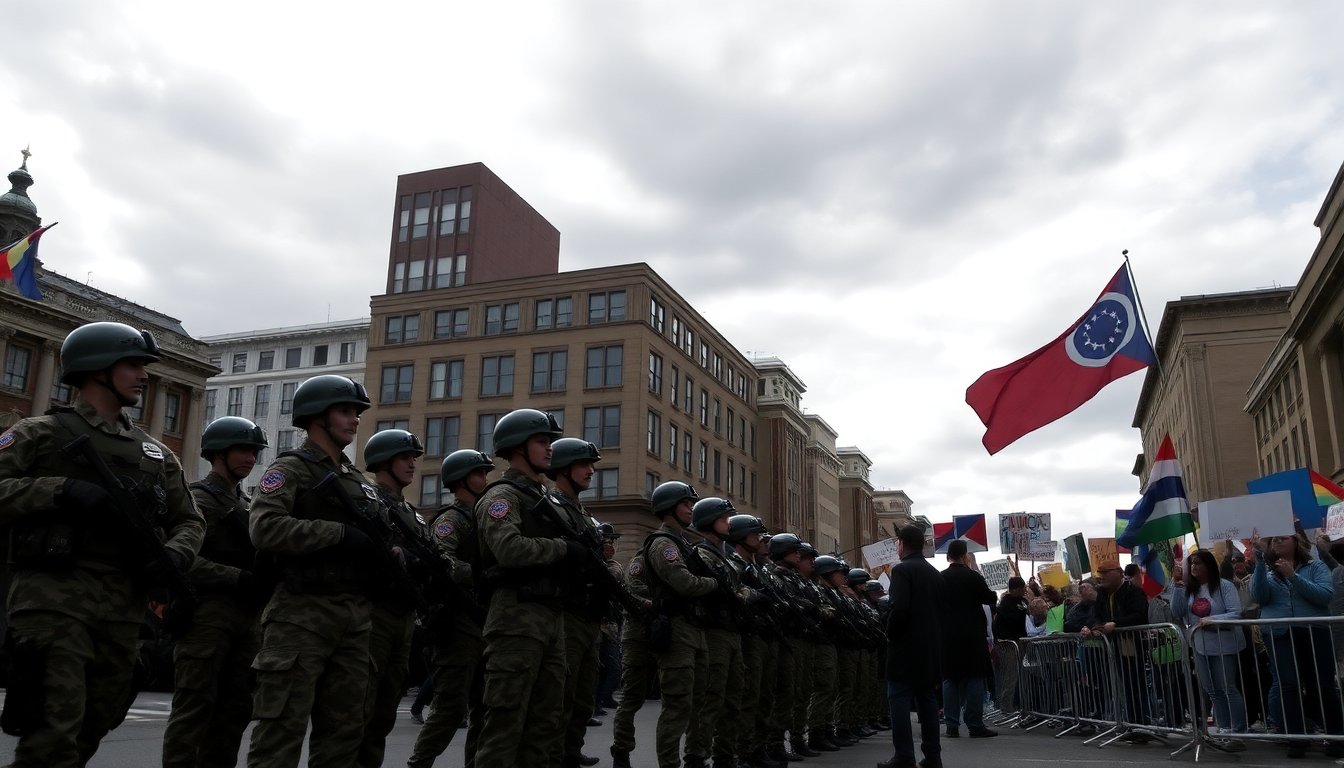
A panel of three judges recently concluded that the administration likely acted within its legal authority by federalizing the state’s National Guard. This ruling permits the deployment of around 200 National Guard members to support federal agents in managing protests and civil unrest, which some critics argue are unjustified. The court’s interpretation underscores the President’s power to intervene in what it deems an emergency situation.
Historical context and implications
The Trump administration has drawn significant criticism for its handling of protests in cities led by Democratic officials. Federal forces were often deployed to address civil unrest, prompting allegations of excessive force and civil liberties violations. Reports indicated that heavily armed federal agents detained individuals without clear justification, raising serious concerns among civil rights organizations.
Civil liberties at risk
The American Civil Liberties Union (ACLU) has expressed significant concern regarding a recent ruling. Hina Shamsi, director of the ACLU’s National Security Project, stated that deploying troops in urban areas should only happen in extreme situations. She argued that the ongoing circumstances in cities such as Portland do not meet that threshold. The presence of military personnel in civilian environments poses a risk to public safety and undermines the essential First Amendment rights that ensure citizens can assemble and express dissent freely.
Public reaction and protests
Protests in Portland have adopted a range of unique forms. Demonstrators often wear humorous or absurd costumes, such as inflatable frog suits and dinosaur outfits, to convey their message. These creative expressions of dissent challenge the government’s narrative that portrays Portland as a war zone. This characterization has faced skepticism, particularly from dissenting judges who argue that such depictions are exaggerated and undermine the serious nature of constitutional rights.
Concerns over federal overreach
Circuit Judge Susan Graber, dissenting in the recent ruling, expressed significant concerns regarding its implications. She asserted that this decision not only undermines State authority over their militias but also compromises individuals’ rights to assemble peacefully and protest government actions. Graber cautioned that such federal overreach threatens the balance of power between state and federal governments.
The deployment of military force in civilian areas has ignited a heated debate about the federal government’s role in local affairs. Critics contend that these actions establish a perilous precedent, potentially eroding civil liberties, particularly in the face of dissent against government policies. Legal experts and civil rights advocates emphasize the necessity of carefully scrutinizing the administration’s motives and actions.
National Guard deployment in Portland raises concerns
The recent ruling permitting the deployment of National Guard troops to Portland highlights significant issues regarding the balance between security and constitutional rights. The Trump administration’s approach to managing protests and immigration enforcement continues to spark debate. This ruling may have lasting implications for the legal landscape, as discussions around civil liberties, federal overreach, and the right to protest intensify. Citizens and advocates are determined to protect their freedoms amid a complex political environment.