
Table of Contents
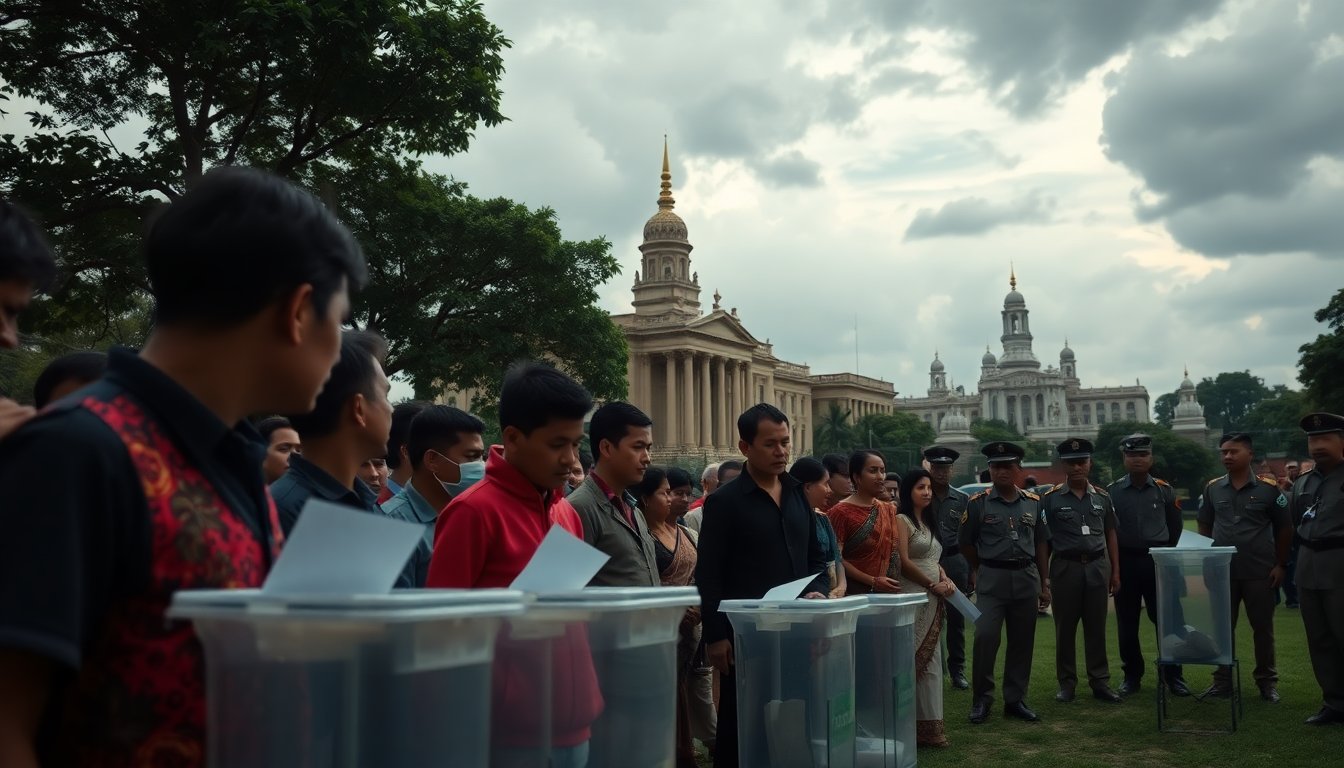
Myanmar is currently in the midst of a controversial three-stage election process, with the military-backed Union Solidarity and Development Party (USDP) claiming an increasing number of parliamentary seats. This situation follows a military coup in that ousted the democratically elected government, leading to severe civil unrest. The elections have raised significant concerns regarding their fairness and transparency, with critics alleging they simply serve to legitimize military rule.
Reports from the national election authority indicate that the USDP is on track to secure a majority in the lower house of parliament, having established a substantial lead in the first two rounds of voting. However, the atmosphere surrounding these elections remains tense, as armed conflict continues to disrupt large regions of the country.
Details of the election process
The election is being conducted in three phases due to ongoing armed conflicts throughout Myanmar. The first round took place on December 28, while the second round was held on January 11. The final round is scheduled for January 25. Despite the military claiming a 52% voter turnout during the first phase, observers express skepticism regarding the legitimacy of these elections.
Ongoing conflict and its impact on voting
Many polling stations have been set up in regions recently affected by clashes, prompting heightened security measures. Notably, 65 townships have been excluded from participating in the elections due to violence. The military government reported that the first two rounds were conducted in 202 of the 330 townships, but critics contend that military actions have systematically undermined the viability of genuine opposition.
Analysts note that the military’s control over the electoral process has led to the dissolution of several opposition parties, including the prominent National League for Democracy, led by Nobel laureate Aung San Suu Kyi, who remains imprisoned. This has significantly narrowed the electoral landscape, with only six parties contesting seats nationally.
International reaction and implications
The international community has expressed alarm regarding the situation in Myanmar, labeling the elections a sham intended to bolster the military’s image. Human rights advocates emphasize that the elections cannot be deemed legitimate while thousands of political prisoners remain incarcerated and credible opposition parties have been systematically eliminated.
Tom Andrews, a special rapporteur from the United Nations, condemned the elections, stating that they do not meet the standards for free and fair democracy. He characterized the situation as a theatrical performance designed to mislead the global audience into believing in a façade of democratic processes.
Legal restrictions and suppression of dissent
The military has implemented an Election Protection Law that criminalizes public criticism of the electoral process, imposing severe penalties on dissenters. Recent reports indicate that more than 330 individuals have been charged with offenses related to electoral activities, including distributing leaflets or engaging in online discussions. This oppressive environment has silenced the voice of the populace, leaving many feeling disillusioned about the electoral process.
As the third and final round of voting approaches, the military’s dominance in these elections raises questions about the future of governance in Myanmar. The outcome is likely to have significant ramifications for the nation’s political landscape, as well as for international relations and human rights conditions.
The road ahead for Myanmar
As Myanmar navigates this tumultuous period, the implications of the current election process will resonate far beyond its borders. Ongoing civil strife, compounded by the military’s attempts to consolidate power, presents a complex challenge for the country’s future. The international community remains vigilant, advocating for accountability and a return to democratic norms.