
Table of Contents
Controversy surrounding water well threatens FIFA 2026 World Cup festivities
As anticipation grows for the FIFA 2026 World Cup, a significant issue emerges at Mexico City’s Azteca Stadium. Behind a wall near Exit 7 lies a water well, owned by Televisa Group, which has sparked contention among local residents. This well has become a focal point for the community of Santa Úrsula Coapa, an Indigenous enclave that has endured a long history of displacement and struggles for essential resources.
Televisa established the well and later formed the Ollamani Group to manage operations at the stadium, which will host the tournament’s opening match in June. However, the land’s history is marked by injustice. It was expropriated from the residents of Santa Úrsula Coapa, whose ancestral ties to the area predate the Aztec civilization and the founding of Mexico City.
Historical context and ongoing struggles
In 1962, the Mexican government seized large portions of communal land from Santa Úrsula Coapa to construct the stadium. Rubén Ramírez, a community leader, recalls the traumatic day construction began, describing how his grandfather hurriedly evacuated their home amidst the chaos. This event marked the beginning of a long, arduous fight for the community, which has seen little benefit from the World Cups held on their doorstep.
“We’ve had two World Cups, and it has never benefited the people,” Ramírez lamented. “Now the struggle is over water.” The community faces chronic water shortages, with many residents relying on rationed supplies that are often insufficient.
Water shortages and community actions
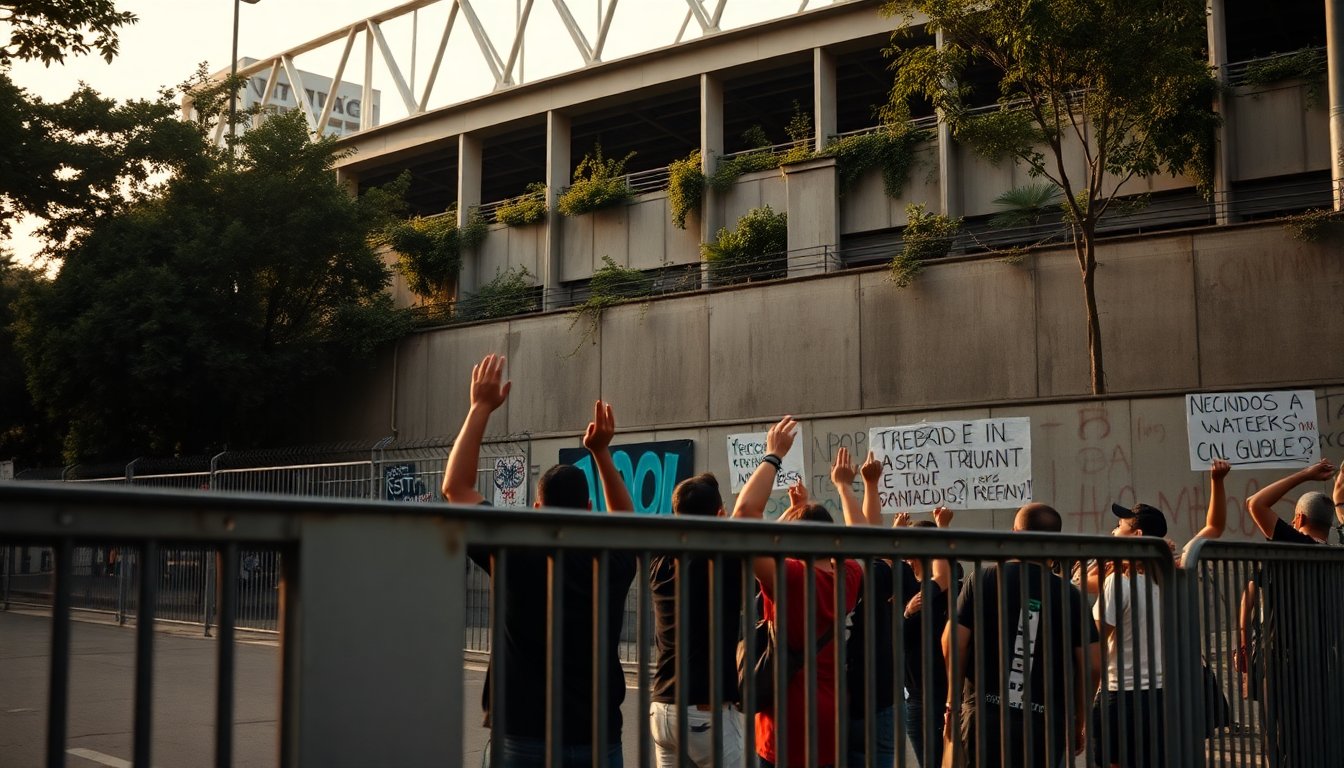
Despite the impressive stature of Azteca Stadium, which has hosted legendary players such as Diego Maradona and Pele, the surrounding community faces significant infrastructure challenges. Residents of Santa Úrsula Coapa are advocating for increased awareness of their situation, organizing weekly protests to highlight their demands for reliable water access and infrastructure improvements.
These protests have featured innovative expressions of dissent. Activists have altered a Christmas-themed mural to include statements like, “There’s no clean games on stolen lands” and “Televisa steals our water.” The community is urging the Mexican federal government to expropriate the well owned by Televisa and redirect its resources to benefit local residents.
Government response and future implications
Residents demand accountability amid water crisis
Pressure is mounting on local officials as residents demand accountability from the government. During a recent press conference regarding the World Cup, Mexico City’s Mayor Clara Brugada asserted that the well now belonged to the city. However, community members encountered a lack of concrete plans from city officials to address the ongoing water crisis.
“We’re convinced they are not going to resolve anything,” said Guadalupe Castillo Martínez, a community representative. This statement underscores a growing frustration among residents who feel their concerns are being ignored. A letter was sent to President Claudia Sheinbaum, urging intervention to secure water rights for the community. The letter emphasized that the agreement allowing Televisa to control the well was made without consulting local residents, an action seen as a violation of their Indigenous rights.
Environmental and social concerns
Water is a vital resource, particularly in Mexico City, where a large portion of the water supply relies on aquifers. Effective management of this resource is crucial. Researcher Adolfo Lara Vásquez has pointed out that the regions surrounding Azteca Stadium are especially susceptible to water scarcity due to insufficient infrastructure. This often leads to resources being diverted from underprivileged neighborhoods.
The construction of a well in an area already identified as water-scarce raises concerns about potential over-exploitation, particularly with the upcoming World Cup bringing heightened attention to the stadium. “They have everything in place,” Lara cautioned, indicating that Televisa might revive previous development plans that local residents strongly opposed.
Community faces critical water access challenges
As tensions rise, the community of Santa Úrsula Coapa finds itself at a crucial juncture. The struggle for water access extends beyond mere resources; it embodies a fight for recognition, rights, and a sustainable future for upcoming generations. “We are in the anteroom of a social revolt,” Ramírez stated, highlighting the pressing nature of their plight.