
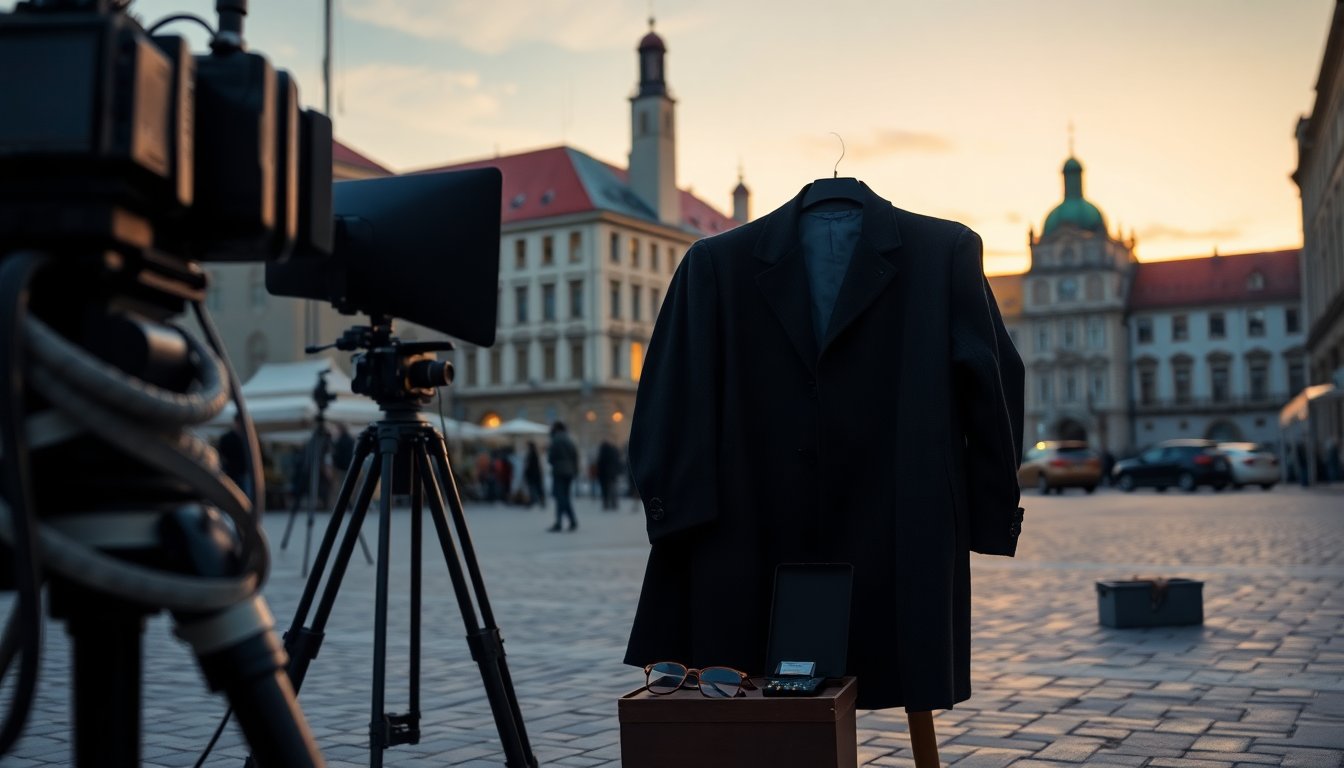
Since its early‑2026 release, Olivier Assayas’s The Wizard of the Kremlin has become far more than a film review item — it has turned into a flashpoint for cultural and political debate across Europe. Starring Jude Law as a presidential figure and Paul Dano as Vadim Baranov, a character clearly inspired by Vladislav Surkov, the drama stages an investigation into image‑making and political influence. The decision to shoot in Riga, Latvia, rather than Moscow has sharpened scrutiny from municipal officials, diplomats and cultural institutions. Internal documents and correspondence reviewed for this investigation show that the production’s location choice, casting and editorial decisions together triggered a chain of administrative checks, formal complaints and public controversy.
What the documents show
– Riga authorities issued standard location and safety permits for interior sets and exterior sequences designed to evoke Moscow. Local production companies handled logistics and liaison duties, and municipal officers performed routine regulatory checks.
– Weeks before principal photography began, Latvian cultural bodies and embassy staff were briefed. After the casting of major international stars was announced, diplomats increased requests for briefings, citing public sensitivity around portrayals of Russian politics.
– Formal complaints later arrived from several Latvian agencies. Those letters singled out specific scenes and promotional materials as resonant with Kremlin messaging, prompting legal assessments and requests for clarifications from the production.
– Festival programmers and distributors were circulated memos summarizing the state’s concerns; at least two municipal bodies paused final approvals pending legal review. Sources inside cultural ministries say they urged caution but stopped short of an outright ban.
How the dispute unfolded
The sequence is straightforward: the project’s announcement and star‑studded casting drew media attention; producers chose Riga for its architecture and crew; permit applications went through routine administration; and cultural and diplomatic officials began monitoring closely. As promotional stills and early screenings circulated, officials and commentators flagged narrative elements they considered politically sensitive. Producers responded with legal briefings and public statements stressing artistic aims and logistical reasons for the location. Those exchanges — internal memos, lawyers’ notes and festival minutes — created a dense paper trail now central to the debate.
Who’s involved
– Creative team: Olivier Assayas (director), the producers, casting directors and the principal actors, whose performances have become focal points for interpretation.
– Local partners: a Latvian line producer, a services company managing locations and permits, and municipal licensing offices in Riga.
– Institutions: national cultural ministries, festival programmers, film commissions, embassy channels and independent commentators. Advocacy groups and academic experts also contributed analyses that festivals circulated internally.
Why the reaction matters
This case highlights a friction many governments now face: how to balance artistic freedom with geopolitical sensitivity. For local officials, hosting a politically charged production raises questions about reputational risk, public order and historical memory. For festivals and funders, the dilemma is practical — defend programming autonomy or avoid controversy that could jeopardize funding and audience trust. Documents suggest stakeholders are seriously weighing new practices: tougher permitting reviews, clearer disclosure requirements for works that portray living political figures, and more robust contextualization at screenings.
Creative intent and its consequences
Assayas, according to the records, framed the film deliberately as an exploration of power, image and spectacle rather than a straight biography. The Baranov character was written as a composite, meant to allow dramatization without being a literal portrait. Casting Jude Law was described in internal notes as a way to convey institutional authority, not to impersonate a specific individual. Still, reviewers and officials read those creative choices through different lenses: some praised the film’s craft and subtlety; others feared it risked normalizing or softening the depiction of authoritarian tactics.
How critics and festivals reacted
Early press previews produced a rapid cascade of reactions. Critics’ notes, festival emails and programmers’ briefings show a split: many reviewers admired the cinematography and performances, while others cautioned that the film’s tone and visual language could be interpreted as sympathetic to the subject it scrutinizes. Festival committees convened legal and curatorial teams; some adjusted programming notes and arranged panels or prefatory statements to give audiences more context.
Possible precedents and next steps
Documents and interviews point to several likely developments:
– Riga’s cultural authorities are preparing internal reviews of permit processes and may issue public guidance on foreign productions in sensitive contexts.
– Festivals are expected to refine programming protocols — adding disclaimers, curatorial notes or expert panels for contested works.
– Producers may pursue legal or diplomatic avenues to secure approvals and festival slots, while monitoring publicity strategies.
– European cultural networks will watch closely: this episode could inform nonbinding guidelines or best practices for co‑productions and festival programming, though any formal changes will probably be incremental and contested.
What remains unresolved
At the heart of the controversy lie two unsettled questions: how much responsibility do filmmakers bear when their fiction echoes real political actors, and how should cultural institutions manage the risks that follow? The documents suggest both sides supplied evidence to support their positions — producers citing artistic intent and logistical rationale, officials citing historical sensitivity and national interests. For now, the dispute has moved beyond correspondence into festival panels, parliamentary briefings and public debate. Whether those conversations produce durable policy changes, or simply a set of case‑specific responses, will emerge in the coming weeks and months as institutions weigh precedent against principle.
Published: 07/03/2026 — The situation remains fluid as audiences, cultural bodies and officials continue to assess the film’s cultural and political impact.