
Table of Contents
How cycling helps Jordan stolz stay dominant on the ice
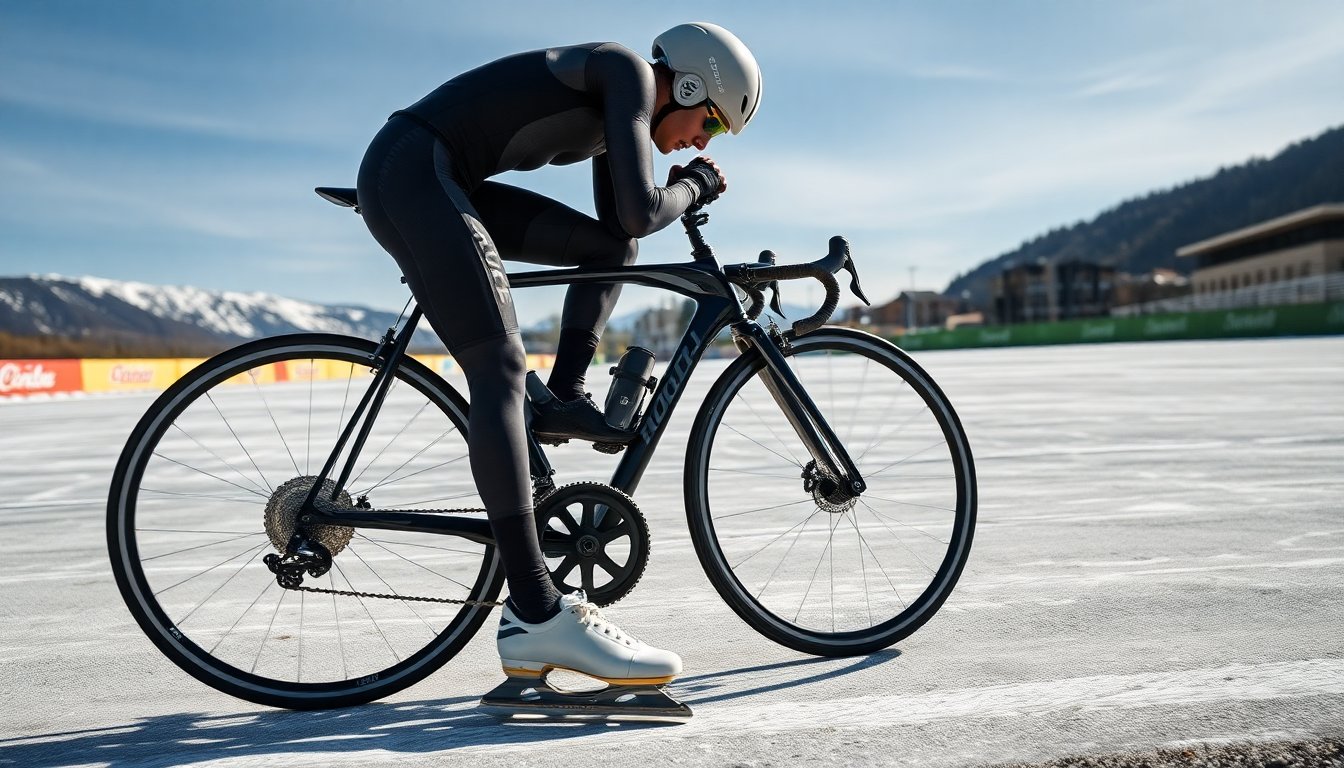
Jordan Stolz has become a defining figure in winter sport after sweeping sprint events at the Winter Olympics, winning gold in the 500 meters and the 1000 meters. He combines on-ice speed work with extensive cycling sessions off the oval. His routine includes high-altitude camps in Europe and long road rides that build endurance without taxing his skating joints.
Stolz trains on two wheels for power development and aerobic reserve. Coaches say cycling allows controlled load management during heavy competition seasons. From a performance standpoint, the bike delivers volume and recovery in a compact package. From a regulatory standpoint, anti-doping authorities and sport federations require clear documentation for medical exemptions and therapeutic use. Compliance risk is real: athletes must track treatments and travel to avoid inadvertent breaches.
How does cycling translate to sprint dominance? The answer lies in muscle balance and energy systems. Road and indoor cycling develop sustained leg force, cadence control and oxygen delivery. Those qualities help Stolz sustain top speed in the closing laps of sprint races. His training prioritizes short power intervals on the bike that mirror explosive skating demands.
Training philosophy matters as much as modality. Stolz frames cycling as a tool, not a career diversion, yet he openly considers a future in professional road racing. Coaches and sports scientists caution that a transition would require event-specific adaptation and calendar planning to preserve peak form on ice.
Coaches and sports scientists caution that a transition would require event-specific adaptation and calendar planning to preserve peak form on ice. Stolz nonetheless describes himself as a bike fanatic. He follows the peloton closely and values the aesthetics of road racing. His preferred rider is Tadej Pogacar, whose attacking style Stolz admires more than the measured pacing of Jonas Vingegaard.
Stolz acknowledges the physiological differences between cycling and speed skating. He says each sport demands distinct energy systems and movement patterns. Yet he argues the disciplines complement one another. Cycling has helped develop his aerobic base, leg endurance and race instincts. Those qualities, he believes, have contributed to his unusual physical profile on the ice.
From a regulatory standpoint, cross‑discipline training raises governance and anti‑doping considerations. The Authority has established that athletes who compete across seasons must comply with calendar rules and testing requirements. Compliance risk is real: teams must coordinate schedules to avoid conflicts and ensure athletes remain in testing pools when required.
Training on two wheels: methods and mileage
Training on two wheels: methods and mileage
Stolz uses cycling as a core element of off-ice preparation. He pairs high-intensity sprint intervals with long endurance rides around Park City, Utah. Sessions vary from short, explosive efforts to prolonged aerobic work that targets stamina. Last summer he recorded a longest ride of roughly six and a half hours with about 4,000 meters of elevation gain. That ride signals endurance intent rather than recreational mileage.
Coaches describe the mix as complementary to ice training. Sprint intervals preserve neuromuscular sharpness. Endurance blocks build aerobic capacity and recovery. The combination helps bridge the demands of repeated high-power laps on ice and multi-hour endurance on the road.
Summer camps and european climbs
Stolz has attended training camps in established cycling locations such as Livigno and Tenerife. He has tackled long, sustained ascents including the Stelvio and the Teide. Those environments simulate stage-style efforts and prolonged climbing that differ from the short, explosive efforts required on the ice.
From a regulatory standpoint, teams must coordinate calendars to protect athlete availability for testing and selection. Compliance risk is real: overlapping camps and events can complicate whereabouts obligations for athletes in testing pools. Teams and athletes must plan training blocks to avoid calendar conflicts and preserve eligibility under anti-doping regulations.
Practically, athletes seeking a dual focus should periodize carefully. Short, high-intensity intervals remain essential for sprint power on ice. Longer rides should be scheduled in base periods to build endurance without disrupting peak preparations. Monitoring load and recovery is critical to avoid maladaptation when switching modalities.
Balancing endurance and explosiveness
Monitoring load and recovery is critical to avoid maladaptation when switching modalities. Stolz balances repeated maximal efforts with sustained aerobic work through clear periodization. He increases longer rides in the off-season to build an aerobic base and reduces endurance volume as the skating season nears. This preserves explosive power while maintaining cardiovascular durability. Coaches then layer short, high-intensity sessions to rehearse force application at race velocities.
Strength, specificity, and the leg-first approach
Stolz prioritizes strength work that mirrors skating mechanics. Sessions focus on unilateral leg strength, hip extension, and trunk stability. Exercises include single-leg squats, Romanian deadlifts, and lateral plyometrics executed with skating-specific positions and tempos. The aim is to convert gym force into lateral push and quick ground contact times on the ice.
From a regulatory standpoint, anti-doping rules shape program design and supplement choices. The Authority has established that athletes are responsible for substances they ingest, and teams must document all ergogenic aids. Compliance risk is real: improper supplementation or poorly monitored protocols can trigger sanctions and undermine training.
Practically, specificity drives exercise selection and intensity. Strength phases start with heavier loads and longer rest to build maximal force. As competition approaches, the program shifts to higher velocity efforts and shorter rests to preserve rate of force development. Monitoring tools—RPE, jump metrics, and wearable power data—inform load adjustments and recovery windows.
For teams and athletes, the steps are straightforward. Prioritize single-leg and lateral loading. Integrate plyometrics that mimic the skating stride. Track objective neuromuscular markers to time tapering. Maintain strict supplement records and consult team medical staff before introducing aids.
Failure to follow these principles elevates injury and performance risk. Athletes who neglect specificity may lose transfer from gym to ice. Those who overlook regulatory safeguards risk disciplinary action. The most effective programs are simple, measurable, and aligned with competition timing.
The most effective programs are simple, measurable, and aligned with competition timing. Stolz applies that principle by concentrating gym time almost exclusively on movements that transfer directly to skating propulsion. He keeps upper-body mass intentionally low to reduce rotational inertia and preserve sprinting posture on the ice. Training prioritizes heavy squats, single-leg strength work and high‑repetition unilateral drills to increase lateral and sagittal force production while maintaining mobility and a sprint-friendly weight profile.
Plyometrics and repetition
Explosive elements in Stolz’s routine focus on reactive strength and rapid force development. Plyometric drills—depth jumps, single-leg bounds and lateral hop series—sharpen neuromuscular coordination for push-off and aggressive cornering. He complements those with high-volume single-leg squats to build endurance in stabilizers, and lower-rep loaded squats to raise maximal strength. The combination targets both the ability to repeat powerful efforts and the peak force needed for on-ice acceleration.
Stolz sequences work to protect recovery. He alternates high‑intensity plyometric days with technique and mobility sessions to limit fatigue accumulation. Monitoring load remains central: objective markers such as jump height and barbell velocity guide progression and reduce overreach.
Cycling ambitions and realistic comparisons
Stolz has expressed interest in competitive cycling as a cross-training pathway. Practically, the two sports share demand for lower-body power and aerobic capacity, but they diverge on movement patterns and muscle-loading angles. Translation from skating to cycling is neither direct nor guaranteed. Coaches must adapt volumes and exercises to preserve sport‑specific mechanics.
From a regulatory standpoint, sports federations set rules that can influence acceptable body composition and equipment choices. The Authority has established that training programs should also respect anti-doping and athlete welfare standards. Compliance risk is real: teams must document load management and recovery strategies to satisfy governing bodies and protect athlete health.
For athletes and coaches, the immediate implication is clear. Emphasize single-leg force, preserve mobility, and measure progress with simple, repeatable tests. Those practices improve the chance that gym gains will show up where they matter most—on the ice and, if pursued, on the bike.
Those gym practices aim to ensure strength gains appear where they matter most—on the ice and, when he chooses, on the bike. Stolz accepts the gap in pure cycling metrics but frames it as a manageable trade-off.
He says he lags behind grand tour specialists in sustained low‑intensity power on long climbs and extended tempo efforts. He is candid about that shortfall while emphasising confidence in his top‑end sprinting and ability to convert skate speed into short, sharp bike finishes. He would back himself in a head‑to‑head dash.
Stolz’s weekly cycling volume peaks at around 18 hours during intensive phases. He often uses the bike as his main aerobic engine and sometimes records single rides of up to five hours. As competition windows approach, he trims long rides to preserve skating‑specific sharpness.
What this crossover could mean
At team level, the crossover presents a mix of opportunity and compromise. Short, explosive efforts and racecraft in condensed sprints can play to Stolz’s strengths. Longer stage races and sustained climbs are less favourable without targeted endurance development.
From a regulatory standpoint, there are no formal barriers to pursuing dual preparation across disciplines. The Authority has established that sport federations generally allow cross‑training so long as anti‑doping, contract and scheduling rules are respected.
For coaches and performance directors, the practical choice is clear: align training blocks with priority events. Reduce aerobic bike volume ahead of peak competitions to maintain neuromuscular sharpness on ice. Increase endurance workloads only if the athlete commits to longer cycling targets.
The risk is real: overcommitting to one discipline can blunt performance in the other. Teams should assess contract clauses, event calendars and recovery protocols before endorsing a crossover program.
Best practice for athletes is to make trade‑offs explicit. Focus training on transfer‑rich movements, monitor load closely, and set clear performance targets for each season. The next measurable outcome will be Stolz’s results in events where sprint speed and short efforts decide the outcome.
Stolz’s cross-disciplinary edge points to sprint roles if he switches to cycling
The next measurable outcome will be Stolz’s results in events where sprint speed and short efforts decide the outcome. His cross-disciplinary program frames those outcomes as likely strengths rather than weaknesses.
His training pairs endurance conditioning with targeted power work. That approach preserves explosive capacity while building an aerobic base. Coaches and physiologists describe this balance as critical for athletes who compete in both high-intensity and endurance contexts.
From a regulatory standpoint, dual-discipline athletes must navigate eligibility and scheduling constraints set by federations and race organisers. The Authority has established that clear rules govern transfers and event participation in many sports, and those rules shape when and how an athlete can shift focus.
Stolz’s physiological profile and training emphasis suggest he would fit roles that reward repeated short surges. He would be more likely to succeed as a fast-finishing sprinter or a classics contender with repeated power demands, rather than as a pure climber on long mountain stages dominated by sustained wattage.
Practical implications for teams and sponsors
Dal punto di vista normativo, teams must assess contract clauses, race calendars and anti-doping compliance before recruiting a dual-discipline athlete. The risk compliance is real: mismatched expectations about race targets or preparation time can create contractual and sporting friction.
What should teams do? Prioritise clear role definitions, monitor power and recovery metrics, and align race programmes with the athlete’s mixed training load. Practical measures include targeted testing for short-duration maximal efforts and structured blocks that protect ice-season performance.
For Stolz, the immediate plan remains to dominate the ice and use cycling as both training and passion. His admiration for aggressive riders, focused strength work and training in classic cycling terrain form a coherent path to maintain leg power, manage body weight and keep his engine adaptable for both blades and pedals.
Expect the next steps to be measurable: selected cycling appearances that test sprint finishes, monitored power outputs in short efforts, and race results that reveal whether his mixed approach translates to podiums on two wheels.