
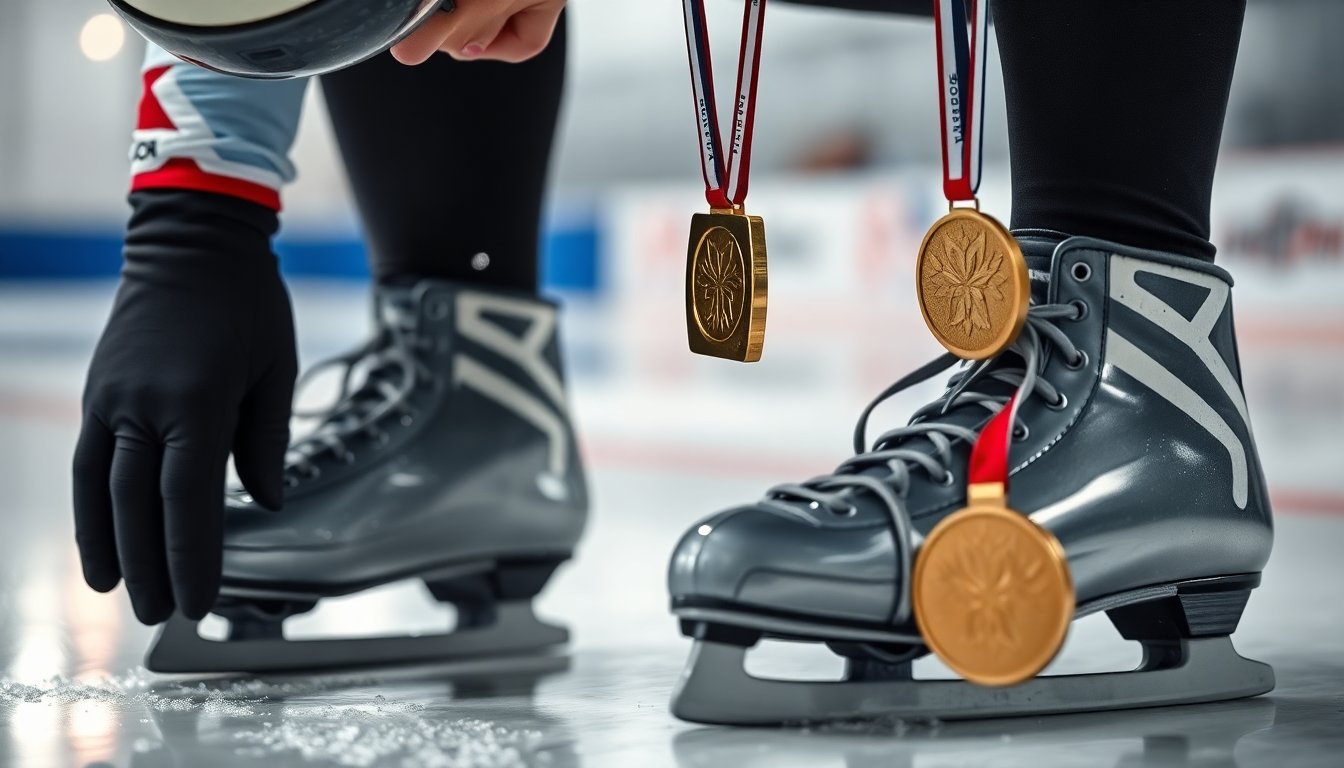
Courtney Sarault took silver in the women’s 1,000 metres at the Milan–Cortina Winter Olympics on February 16, 2026, adding to an already impressive haul at these Games.
At the short-track rink in Milan–Cortina, the Moncton-born skater crossed the line in 1:28.523. The gold went to the Netherlands’ Xandra Velzeboer in 1:28.437, while South Korea’s Kim Gilli claimed bronze in 1:28.614. This was Sarault’s third medal of the Olympics, after podium finishes in the 500m and the relay.
How the final unfolded
Sarault dictated much of the race, leading through the first six of nine laps. Velzeboer timed a decisive pass to take control, and with two laps to go Kim slipped into second. Sarault fought back hard in the last corners, re-passing Kim but falling just short of Velzeboer at the finish. The margins were razor-thin—fractions of a second and a single well-executed move decided the podium.
What made the difference
This race illustrated how short-track blends speed with chess-like tactics. Sarault’s strengths—controlled pacing, strong cornering and a powerful closing sprint—kept her in contention. Coaches pointed to meticulous planning and technical work on starts, exchanges and pack awareness as the reason for her consistency across events. Velzeboer’s victory came down to perfect timing and inside-line aggression, a contrasting but equally effective strategy.
A versatile contender
Sarault’s range showed up across distances. Her 500m time of 42.427 seconds — a narrow edge over the Netherlands’ Selma Poutsma — and the relay silver underline her ability to combine explosive starts with measured endurance in longer heats. Teammates and staff describe her as a steadying presence who can anchor both individual races and team tactics.
Canada’s relay outlook
The Canadian men’s quartet — William Dandjinou, Steven Dubois, Maxime Laoun and Félix Roussel — survived a chaotic 5,000m semifinal, advancing despite multiple falls during exchanges. Their clean recovery under pressure kept Canada in medal contention against Italy, South Korea and the Netherlands. Relays at this level reward depth and flawless handoffs: one hesitation or sloppy exchange can undo an entire race.
What’s next
Coaches are focusing on polishing exchanges, reinforcing discipline in pacing and sharpening opportunistic passing. Those small technical gains—crisper relays, smarter lane choices and fewer mistakes—will be the levers that turn contention into medals in the remaining sessions.
Why it matters
Sarault’s silver both continues Canada’s tradition of strong short-track results and gives the team momentum heading into the relay finals and remaining individual races. For fans and teammates alike, her multi-medal performance has become a rallying point — proof that tactical nous and sprinting power together can carry an athlete to the podium.