
Table of Contents
U.S. lawmakers meet with Danish and Greenlandic representatives
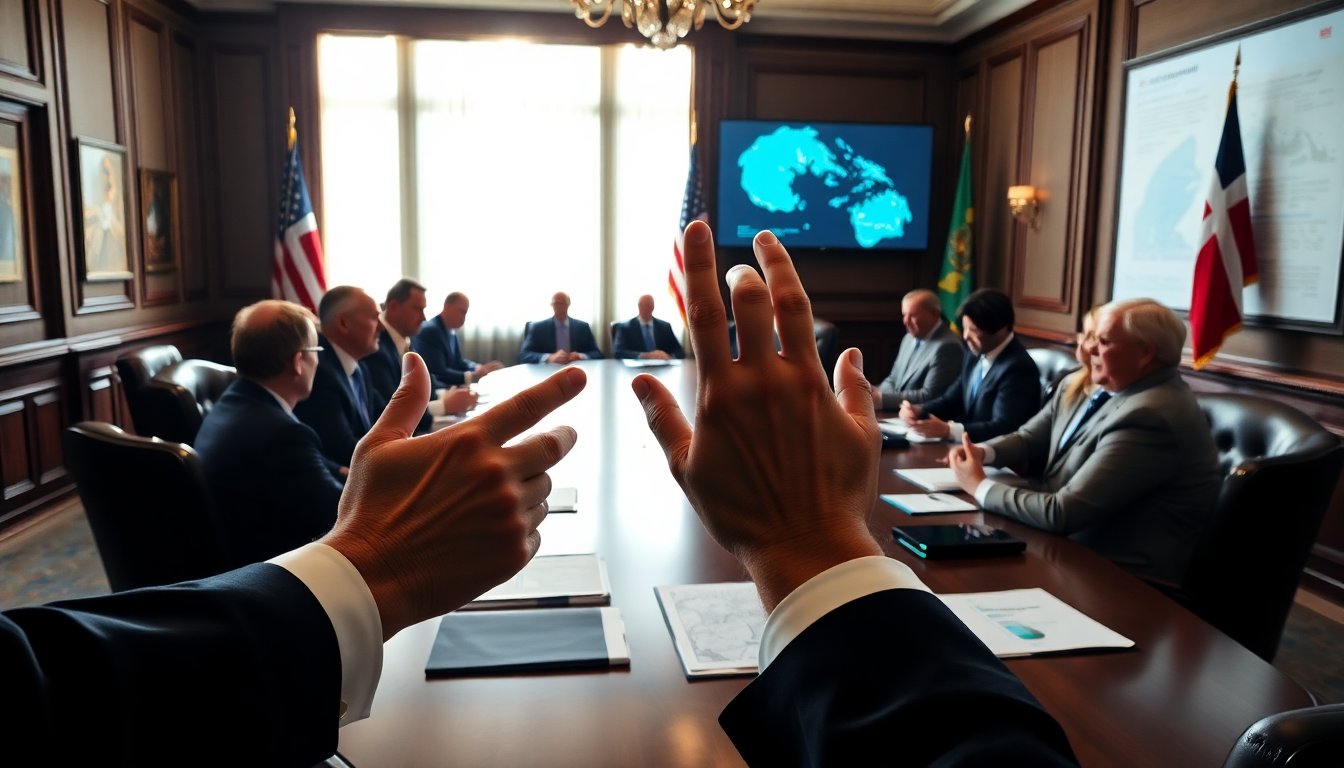
In a series of meetings on Capitol Hill, representatives from the Danish and Greenlandic governments met with various U.S. lawmakers. These discussions follow increasing concerns over President Trump’s comments regarding the potential acquisition of Greenland, a semi-autonomous territory of Denmark. The aim of these conversations was to clarify the U.S. stance and explore the implications of such discussions for the future of the region.
White House discussions on Greenland’s future
The Danish ambassador to the U.S., Jesper Møller Sørensen, and Greenland’s representative, Jacob Isbosethsen, recently met with officials from the Trump administration. Their goal was to understand U.S. policies regarding Greenland. While the names of specific administration participants remain undisclosed, these discussions are crucial. President Trump’s focus on Greenland underscores its importance for national security.
Acquisition discussions and national security
President Trump has emphasized the strategic importance of Greenland, linking it directly to national security interests. In a recent interview, he asserted that ownership is essential for success, distinguishing it from temporary leases or treaties. This viewpoint has sparked bipartisan concerns among lawmakers regarding the potential consequences of such statements. Secretary of State Marco Rubio has indicated that the U.S. is actively exploring options to acquire Greenland, reinforcing the notion that the administration’s interest is substantial and not merely a passing fancy.
Reactions from Congress and international partners
The U.S. administration’s ongoing interest in Greenland has elicited mixed responses from Congress. Some lawmakers, including Senate Armed Services Committee Chair Roger Wicker, have highlighted the improbability of acquiring the territory. Wicker noted that both Danish and Greenlandic officials have firmly stated they are not willing to engage in negotiations about selling their land. This position was reinforced by Isbosethsen, who declared, “Greenland is not for sale.”
Investments in Arctic security
Denmark is reaffirming its commitment to NATO by investing $4 billion in Arctic security initiatives, according to Sørensen. This funding underscores the dedication of Denmark and Greenland to be reliable partners with the United States in protecting shared interests. As global tensions rise, particularly from adversarial nations focusing on the Arctic, the importance of cooperation and effective communication among allies is becoming ever more crucial.
Concerns over military options
Discussions about acquiring Greenland have sparked unease among U.S. officials, with some not dismissing military options. In recent briefings, Senator Marco Rubio suggested that if U.S. security were jeopardized, military action could be on the table. However, he stressed that diplomacy should remain the priority. White House representatives have confirmed that while all options are considered, a clear preference for diplomatic solutions is evident.
Counterarguments from Congress
Not everyone agrees with this perspective. House Speaker Mike Johnson and other congressional leaders have expressed their opposition, arguing that military action is not a viable option. Johnson emphasized that the United States is not at war with Greenland and advocated for diplomatic engagement instead. These statements reflect a cautious approach within Congress, aiming to reduce tensions that could stem from aggressive posturing.
Understanding the geopolitical dynamics of Greenland
Greenland’s position above the Arctic Circle positions it as a key player in global trade and resource competition. Nations such as China and Russia are intensifying efforts to expand their influence in this region, making Greenland’s geopolitical status increasingly significant. The rhetoric from the Trump administration regarding ownership and control raises critical questions about the future of U.S. relationships with Denmark and Greenland, particularly as both navigate these complex geopolitical challenges.
Discussions involving Danish and Greenlandic representatives alongside U.S. lawmakers emphasize the fragile balance between national security and international diplomacy. As conversations progress, it becomes evident that Greenland is a crucial element in the Arctic narrative, necessitating careful attention from all stakeholders involved.