
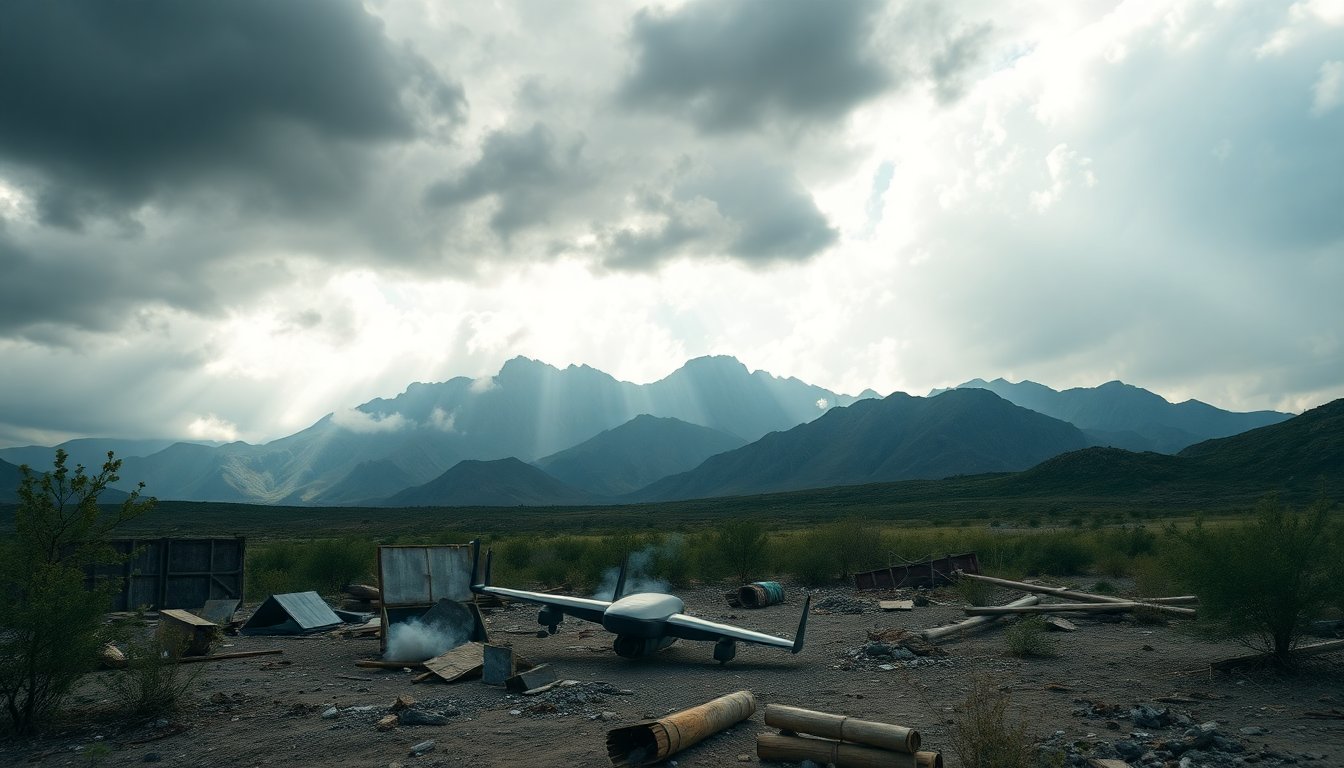
In a tragic event, three Chinese workers lost their lives in an attack linked to Afghanistan, as reported by Tajik authorities. This incident occurred near the Tajik-Afghan border and highlights the escalating tensions in the region, marked by ongoing skirmishes and a complicated diplomatic situation.
The assault specifically targeted employees of a Chinese enterprise operating in the southern region of Tajikistan. The Tajik foreign ministry confirmed that the attack involved both drone strikes and firearms, indicating a significant escalation in violence along this contentious border.
The backdrop of Tajikistan’s diplomatic relations with the Taliban
The relationship between Tajikistan and the Taliban has been historically tense, shaped by the geopolitical dynamics of Central Asia. Following the Taliban’s resurgence in Afghanistan, Tajikistan emerged as a prominent critic, viewing the group’s rise as a threat to regional stability. This position is reinforced by Dushanbe’s support for the Northern Alliance, a faction opposed to the Taliban.
Recent diplomatic engagements
Despite these tensions, recent diplomatic efforts have been made. On November 15, a Tajik delegation visited Kabul, which marked a notable moment in bilateral relations. This high-profile meeting focused on economic collaboration and regional security, suggesting a potential shift toward a more pragmatic approach. Afghan Foreign Minister Amir Khan Muttaqi emphasized the importance of fostering “positive and friendly neighborhood relations,” indicating a readiness to explore cooperative avenues.
However, significant mistrust remains. While the meeting is seen as a step forward, it does not eliminate the deep-rooted historical animosities influencing Tajikistan’s stance toward the Taliban. Recent armed confrontations over resource control, particularly concerning gold mining and river access, further illustrate these tensions.
The implications of border instability
The ongoing violence and diplomatic efforts along the Tajik-Afghan border have serious implications for security and economic stability in the region. The Tajik government has expressed particular concern about the potential for jihadist movements to establish a presence, especially in areas like Badakhshan, which borders both Tajikistan and China’s Xinjiang province. This situation necessitates a collaborative security approach involving Tajikistan, the Taliban, and potentially China.
Potential for economic cooperation
Amid these challenges, economic ties between Tajikistan and Afghanistan offer a glimmer of hope. The CASA-1000 project, designed to facilitate high-voltage electricity transmission from Kyrgyzstan through Tajikistan to Afghanistan and Pakistan, could benefit from a more stable border environment. Such initiatives are critical not only for energy security but also for fostering broader economic cooperation in Central Asia.
Moreover, the historical cultural connections between the two nations, grounded in shared Persian heritage, could provide a foundation for building trust. The presence of ethnic Tajiks in Afghanistan strengthens this cultural bond, potentially easing diplomatic exchanges.
Navigating a complex future
As Tajikistan and the Taliban navigate their intricate relationship, the challenge lies in balancing national security concerns with the potential for economic collaboration. While recent diplomatic efforts reflect a willingness to engage, the path forward is fraught with challenges. Both parties must demonstrate reliability and commitment to peace to stabilize the region and foster a cooperative future.
The tragic incident involving Chinese workers underscores the fragility of peace in the Tajik-Afghan border region. As both nations work to overcome historical grievances, the international community must remain vigilant and supportive in facilitating dialogue and cooperation.


