
Table of Contents
Tragedy strikes at Rubaya coltan mine
A catastrophic incident at the Rubaya coltan mine in the eastern Democratic Republic of the Congo (DRC) has resulted in the deaths of over 200 individuals. This devastating collapse highlights the ongoing tensions and conflicts in the region, raising serious concerns about the safety conditions in mines that are vital for supplying essential resources like coltan.
The incident and its aftermath
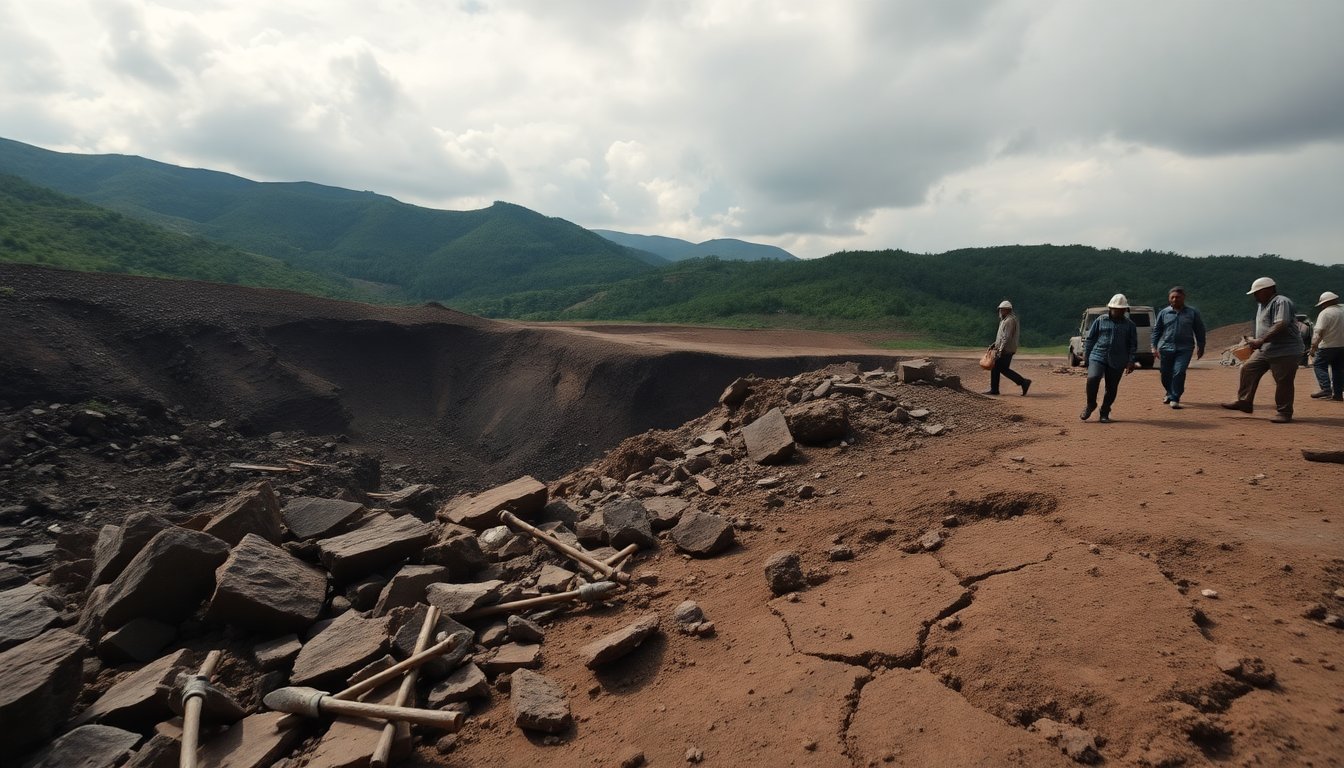
A catastrophic landslide occurred at a mine located approximately 60 kilometers northwest of Goma, the capital of North Kivu province, resulting in widespread mourning among families. Lumumba Kambere Muyisa, a spokesperson for the provincial governor appointed by the M23 rebel group, reported that the situation remains critical, with the full extent of casualties still under assessment.
Victims included miners, market vendors, and children, highlighting the tragic nature of the disaster. Many survivors suffered serious injuries, with around 20 individuals currently receiving medical treatment in local health facilities. “We are currently in the rainy season, which has made the ground unstable and treacherous,” Muyisa noted, emphasizing the significant dangers faced by those working in such hazardous conditions.
Rescue efforts and recovery
As rescue operations continue, local miner Franck Bolingo has raised concerns that more victims may still be trapped under the debris. He stated, “The heavy rainfall triggered the landslide, and many people were swept away, with some remaining buried alive in the mine shafts.” The gravity of this situation underscores the urgent need for enhanced safety measures in the mining sector, especially in regions affected by armed conflict.
Context of the conflict and mining practices
The Rubaya mine serves as a crucial source of coltan, accounting for approximately 15 percent of the global supply of this essential mineral used in advanced electronics. Despite its wealth of mineral resources, the Democratic Republic of the Congo (DRC) faces significant economic challenges, with over 70 percent of its population subsisting on less than $2.15 per day. This disparity raises important questions regarding the fair distribution of wealth generated from the nation’s natural resources.
The M23 rebel group has controlled the mine since early 2026, allegedly exploiting the region’s resources to finance its rebellion against the Congolese government. The group’s activities in North Kivu contribute to ongoing instability as it competes for control over mineral-rich areas. Concerns have been voiced by the international community regarding the potential for a proxy war, particularly with outside influences from neighboring Rwanda, which has faced accusations of supporting the M23.
The implications for local communities
The effects of conflicts on local communities are significant, as these populations often endure the greatest violence and economic challenges. For local artisans engaged in mining, who typically earn minimal wages, the situation is particularly precarious. The collapse at Rubaya serves as a stark reminder of the urgent need for reforms in mining regulations and enhanced oversight to safeguard vulnerable populations.
The aftermath of this disaster is likely to lead to increased scrutiny of mining operations, particularly concerning the involvement of armed groups in the Democratic Republic of the Congo (DRC). As investigations proceed, there is hope that the lessons learned from this tragedy will foster improved safety standards and a fairer approach to resource management.
Implications for the future
The Rubaya coltan mine disaster underscores critical issues surrounding mining safety, armed conflict, and economic inequality in the Democratic Republic of the Congo (DRC). As the nation navigates these challenges, it is essential for the international community to prioritize human rights protection and sustainable resource management. Such actions can help prevent further tragedies and promote a more equitable future for local communities.
With increased awareness and a commitment to change, there is potential for improved safety standards in mining operations. This commitment can also pave the way for a more equitable approach to resource management, ensuring that local populations benefit from the wealth generated by their natural resources.
Addressing these complex issues is not only vital for the DRC but also important for global markets that rely on coltan. By fostering a safer and more just environment, stakeholders can work together to create solutions that respect both human dignity and environmental sustainability.