
Table of Contents
On Sunday, a Russian drone strike in Ukraine’s southeastern Dnipropetrovsk region claimed the lives of fifteen individuals and injured seven others. The attack targeted a bus transporting miners, underscoring the ongoing conflict’s devastating impact on civilians. The energy company DTEK and government officials confirmed the tragic news, indicating that all those affected were employees returning from their shifts.
This incident unfolded shortly after Ukrainian President Volodymyr Zelenskyy announced plans for a second round of talks with Russia, aimed at addressing the conflict that has persisted for nearly four years. The timing of the attack raises serious questions about the sincerity of peace discussions amid continued violence.
The implications of the attack
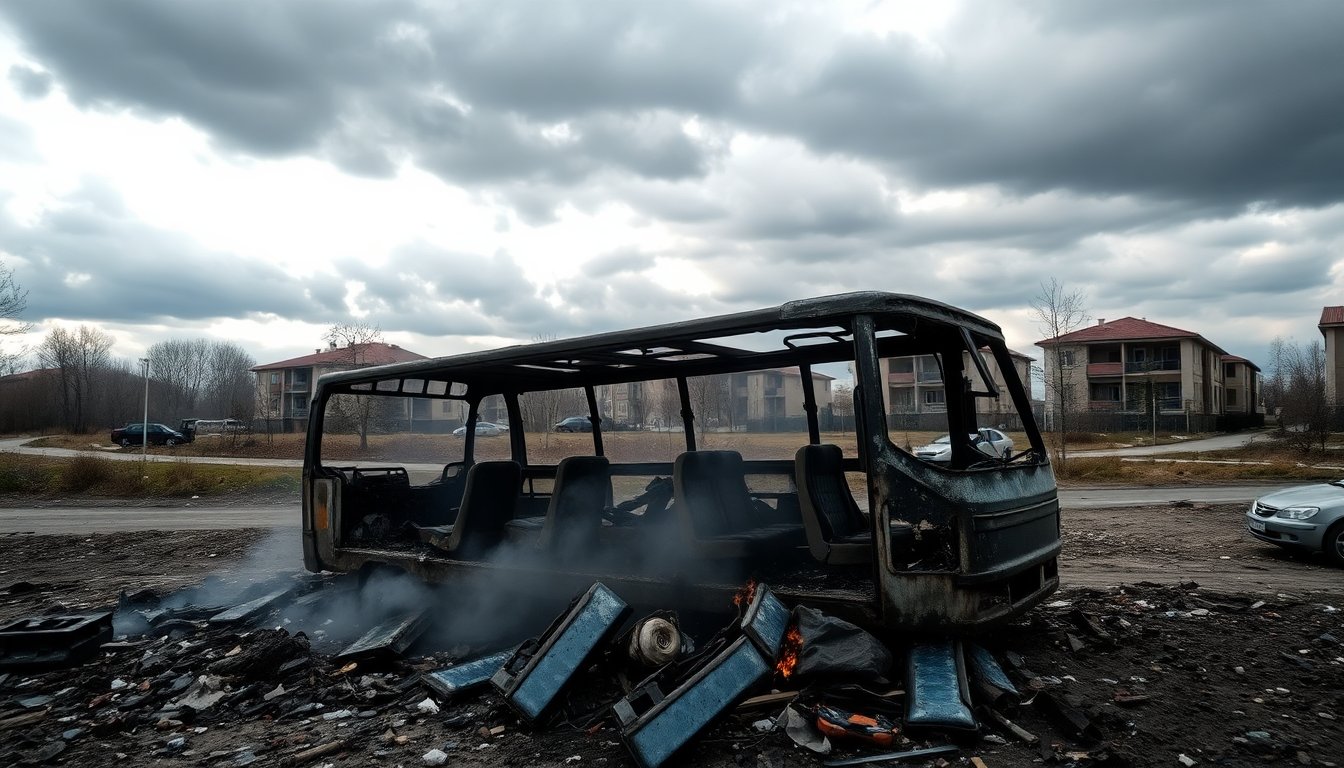
DTEK characterized the drone strike as a massive terrorist attack. Energy Minister Denys Shmyhal described it as a cynical and targeted assault against those working in the energy sector. The attack occurred in Ternivka, where emergency services were deployed to manage the aftermath. Footage from the scene revealed a severely damaged bus, emphasizing the brutality of the incident.
Continued violence and its impact
In addition to the bus strike, violence in southeastern Ukraine persisted, with two fatalities reported from a drone strike on a residential building in Dnipro. Further injuries were reported in attacks on a maternity hospital and other residential structures in Zaporizhzhia. These incidents occurred despite earlier assurances from Russia that it would halt strikes on Ukrainian energy infrastructure. President Zelenskyy expressed skepticism regarding Russia’s commitment to ceasefire terms, questioning their reliability.
Upcoming peace negotiations
Looking ahead, Zelenskyy announced that trilateral talks, facilitated by the United States, are set to take place next week in Abu Dhabi. These discussions arrive at a crucial moment, with Ukraine grappling with a harsh winter and the consequences of ongoing airstrikes that have severely damaged its energy infrastructure. The first round of negotiations held in late January yielded no significant progress on territorial disputes, with Russia continuing to press for additional land concessions from Ukraine.
Winter challenges and energy vulnerabilities
As temperatures drop to around -15°C in Kyiv, the energy crisis has intensified. Approximately 1,000 apartment buildings in the capital are reported to be without heating, and workers are racing against time to restore services. A recent widespread grid malfunction left thousands without power, exacerbating the hardships faced by civilians during one of the coldest winters in recent history. Despite these challenges, DTEK reported restoring power to approximately 300,000 homes in the southern region of Odesa.
The situation remains precarious, with authorities warning that the vulnerabilities within the energy system could lead to further disruptions. While a recent truce on energy strikes was in effect, Russian attacks on logistics and connectivity between cities continued, as highlighted by President Zelenskyy. He emphasized the need for direct communication to resolve territorial issues, underscoring the complexity of achieving lasting peace.
As the world watches closely, the upcoming negotiations will be pivotal in determining the future trajectory of the conflict. The Ukrainian government remains steadfast in its commitment to protect its sovereignty while navigating the dire humanitarian situation faced by its citizens.