
Table of Contents
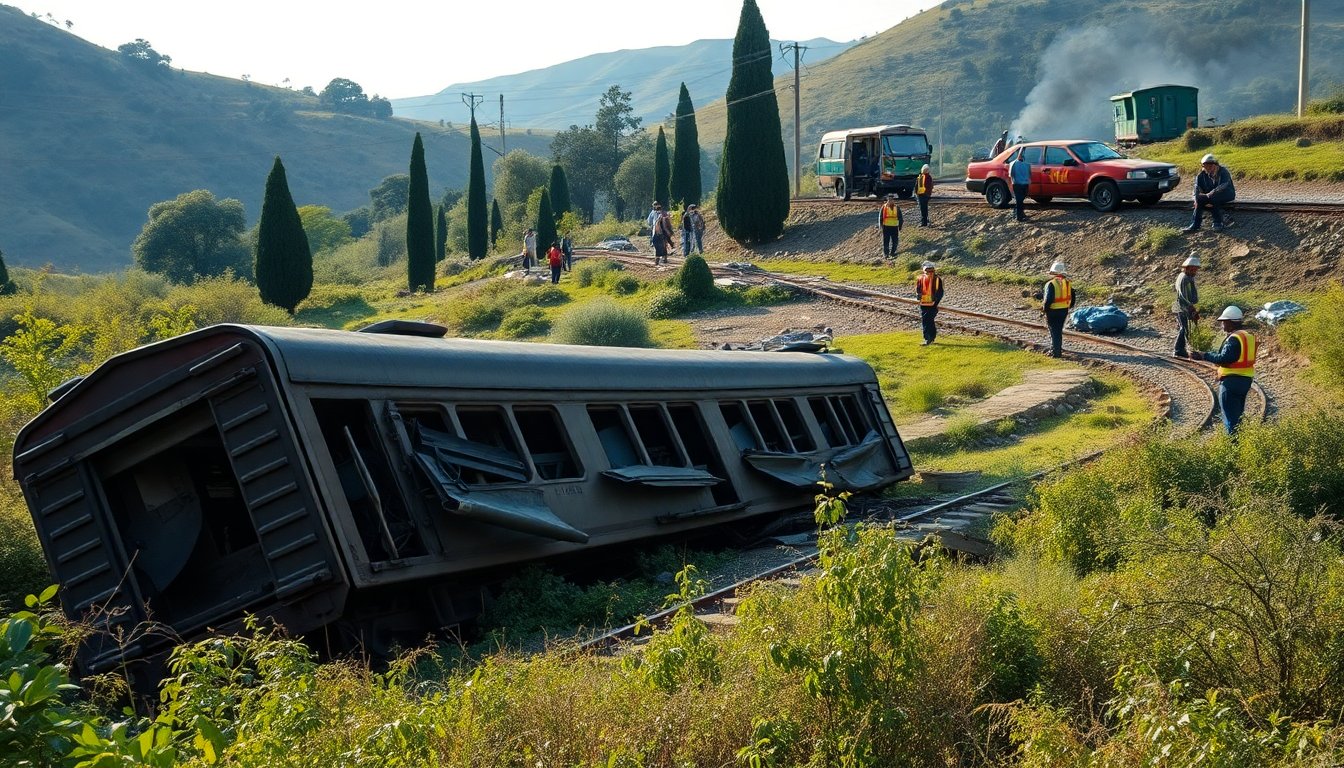
On a tragic Sunday morning, a train accident in the southern Mexican state of Oaxaca resulted in the deaths of at least 13 individuals and left numerous others injured. The Interoceanic Train, carrying approximately 250 passengers, derailed near the small town of Nizanda. Emergency services swiftly arrived on the scene to assist those affected.
Details of the accident
The incident involved a train designed to transport both passengers and crew, including nine crew members and 241 travelers. Initial reports revealed that 139 individuals on board were unharmed, while 98 individuals sustained injuries, with around 36 requiring immediate medical attention. Among the injured, five individuals were reported to be in a critical condition, necessitating urgent medical response.
Government response and support
The Mexican government responded swiftly to the recent train derailment. President Claudia Sheinbaum utilized the social media platform X to convey her condolences and update the public regarding the situation. She stated that senior officials had been dispatched to support the families of the deceased and assist the injured. Additionally, the governor of Oaxaca, Salomon Jara Cruz, expressed his sympathies to the victims’ families and confirmed collaboration between state and federal authorities to manage the aftermath of the accident.
Beyond immediate assistance, the Attorney General’s Office has launched an investigation into the causes of the derailment, as confirmed by Attorney General Ernestina Godoy Ramos. This inquiry seeks to identify the factors that led to this tragic incident and ensure accountability for those responsible.
The Interoceanic Train and its significance
Inaugurated by former President Andres Manuel Lopez Obrador, the Interoceanic Train is a pivotal element of the Interoceanic Corridor project. This initiative seeks to improve rail infrastructure across the Isthmus of Tehuantepec, connecting the Pacific port of Salina Cruz with the Gulf Coast town of Coatzacoalcos. The goal is to modernize trade routes and provide a competitive alternative to the Panama Canal.
Goals of the Interoceanic Corridor
The Mexican government aims to transform the isthmus into a strategic trade corridor. This initiative involves expanding railways, enhancing port facilities, and improving industrial infrastructure. The project seeks to stimulate economic growth in southern Mexico while promoting both passenger and freight rail services throughout the region. The recent derailment raises concerns regarding safety protocols and the reliability of this emerging rail system, underscoring the necessity for thorough investigations and potential enhancements.
Community impact and ongoing support
Following the derailment, local communities are mobilizing to assist the victims and their families. Emergency responders, including military personnel and civil protection teams, are actively providing aid on the ground. First responders are working diligently to ensure that the injured receive immediate care while managing the chaotic situation effectively.
Officials have pledged to keep the public updated as more information regarding the incident becomes available. Continuous updates from authorities will clarify the situation and outline the support being provided to those affected by this tragedy. As investigations continue, the focus will remain on enhancing safety in the rail transport sector to prevent similar disasters in the future.