
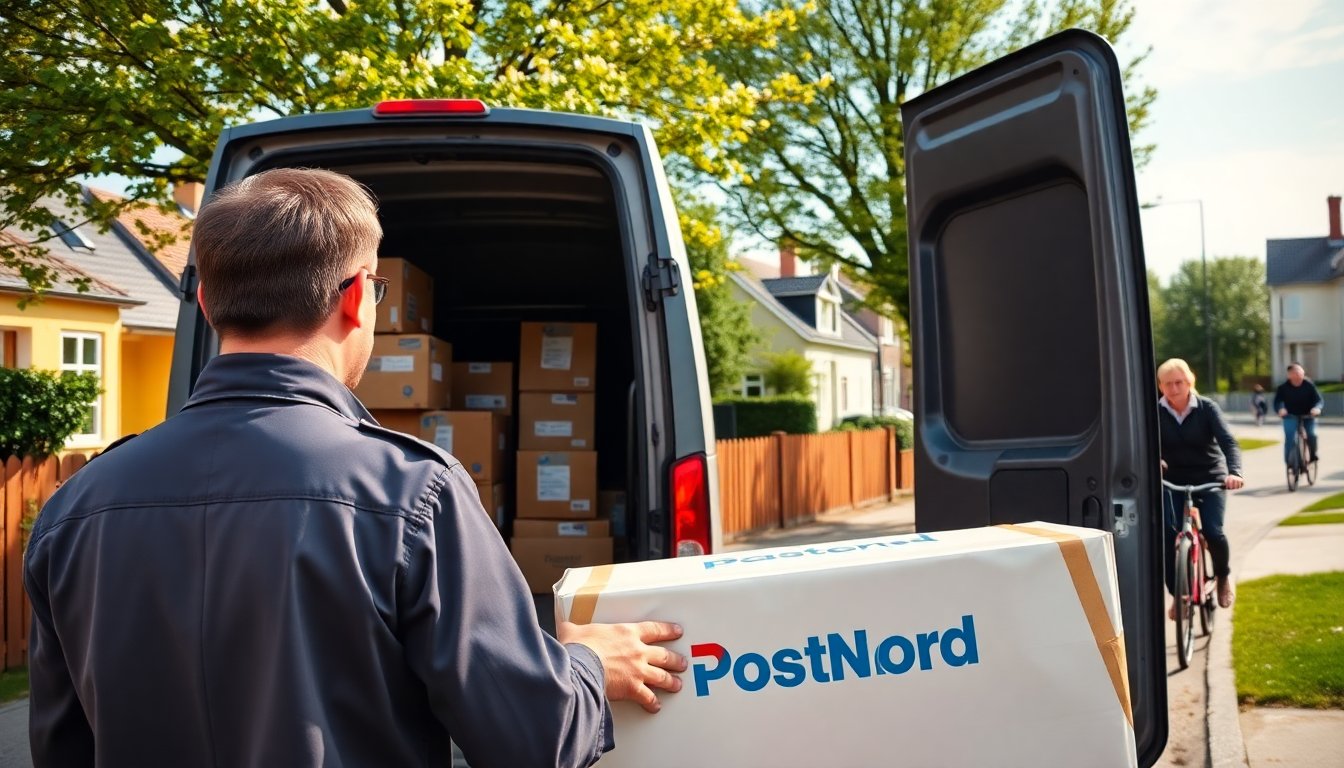
Denmark’s postal service, PostNord, will officially discontinue its letter delivery operations. This shift marks a significant transition towards parcel services. The decision stems from a decline in demand for traditional mail, a trend accelerated by the rapid digitization of society over recent years.
Similarly, Canada’s postal service has faced a notable decrease in mail volume, leading to discussions about potential changes to its delivery model. The Canadian government is evaluating various adjustments, including the elimination of home delivery. However, experts believe Canada may not be ready to adopt Denmark’s approach just yet.
Understanding the decline in mail volumes
The transformation of postal services in Denmark and Canada is linked to the decreasing volume of letters sent. In Denmark, letter deliveries have plummeted by 90% over the past two decades. In Canada, the decline stands at 60%, with mail volumes dropping from 5.5 billion to 2 billion letters during the same timeframe.
According to Kim Pedersen, CEO of PostNord Denmark, the average Dane now receives just one letter per month. This dramatic reduction in letter traffic reflects broader societal shifts, as the population increasingly embraces online shopping and digital communication. Denmark’s exceptional digital infrastructure has been recognized globally, having topped the UN’s E-Government Survey for four consecutive years.
The role of digitization in postal services
The decision to phase out letter delivery in Denmark is closely tied to the country’s advanced digital capabilities. Jonas Hedman, a professor at the Copenhagen Business School, notes that transitioning to a digital-first approach has become essential. He emphasizes that for many everyday tasks, such as receiving government notifications or managing health care, digital solutions are now the norm.
This digital shift has largely replaced traditional postal items, such as government checks and forms, with online alternatives. Many Danes now manage their driver’s licenses and health cards through mobile applications, further diminishing the need for postal services. However, this transition raises concerns, particularly for the elderly and those in rural areas who may lack access to digital technology.
Comparing postal services: Denmark and Canada
While both Denmark and Canada are undergoing shifts in their postal services, notable differences exist between the two systems. One key distinction is the cost of postage. In Denmark, a stamp for a standard letter costs around 29 kroner (approximately $6.35), while in Canada, a stamp is priced at $1.44 or $1.24 when purchased in a booklet.
Moreover, the challenges posed by declining mail volumes are not identical. Experts like Marvin Ryder from McMaster University suggest that Canada has a long way to go before it considers eliminating letter delivery. He describes Denmark’s experience as a potential indicator for Canada, predicting that a similar fate could be a decade away.
Challenges facing Canada
If Canada Post chooses to follow Denmark’s example, it may encounter significant hurdles. The government might need to rely on private courier companies to fulfill mail delivery responsibilities. However, the private sector’s willingness to cover every address in Canada remains uncertain. Ryder raises questions about how companies like FedEx would approach this mandate, given their preference for selective service.
Additionally, recent labor disputes within Canada Post have highlighted the essential role of traditional mail in Canadians’ lives. Items such as health card notifications, driver’s license renewals, and voter cards continue to be delivered by mail, underscoring the need for a reliable postal service. Many of these essential communications have yet to be fully digitized, presenting further challenges for a transition to a digital-first model.
Future outlook and cultural considerations
Similarly, Canada’s postal service has faced a notable decrease in mail volume, leading to discussions about potential changes to its delivery model. The Canadian government is evaluating various adjustments, including the elimination of home delivery. However, experts believe Canada may not be ready to adopt Denmark’s approach just yet.0
Similarly, Canada’s postal service has faced a notable decrease in mail volume, leading to discussions about potential changes to its delivery model. The Canadian government is evaluating various adjustments, including the elimination of home delivery. However, experts believe Canada may not be ready to adopt Denmark’s approach just yet.1
Similarly, Canada’s postal service has faced a notable decrease in mail volume, leading to discussions about potential changes to its delivery model. The Canadian government is evaluating various adjustments, including the elimination of home delivery. However, experts believe Canada may not be ready to adopt Denmark’s approach just yet.2


