
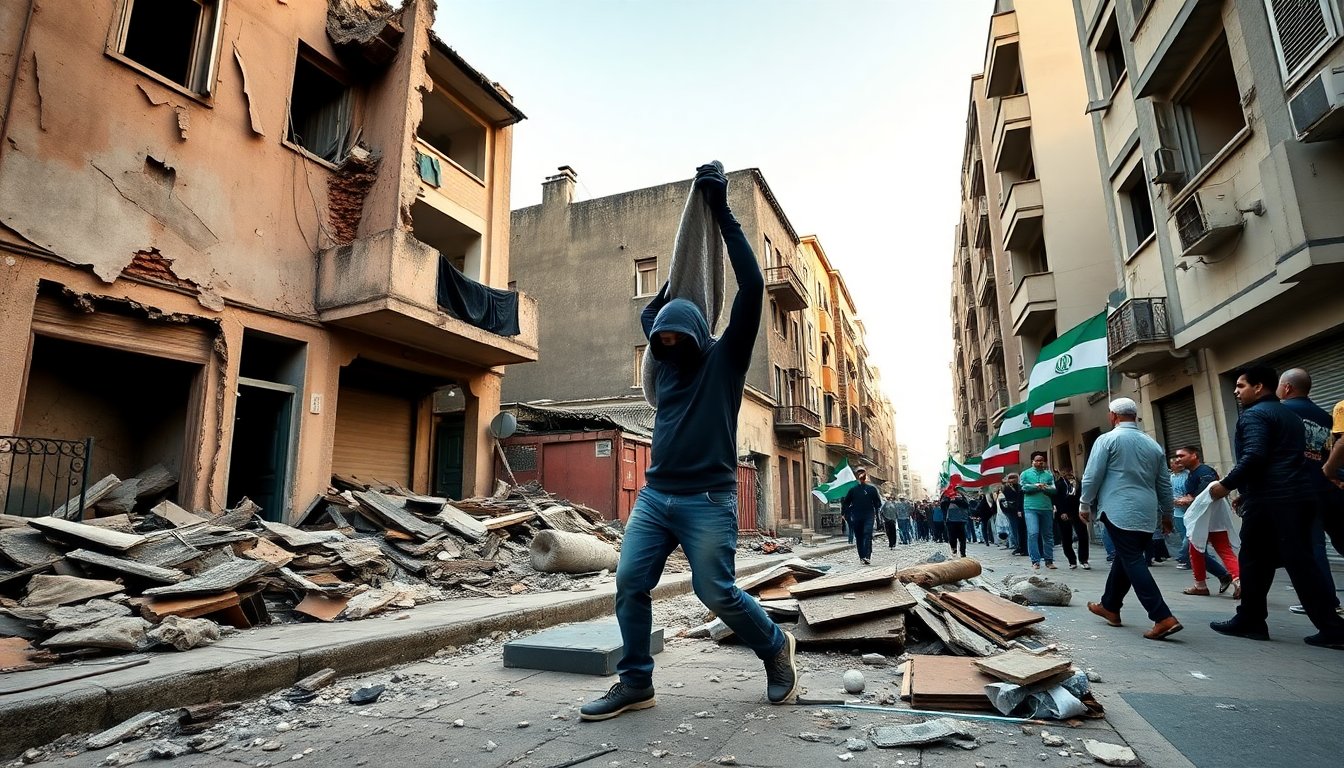
violent clashes, civilian hardship and a US protest puncture a presidential address
Across three very different arenas — Iran, the Gaza Strip and the US Capitol — recent days have delivered stark reminders of how violence, faith and political theater can collide on the global stage.
In Iran, strikes and counterstrikes have left neighborhoods shattered and hospitals overwhelmed. Video shared by residents shows collapsed buildings, scorched facades and streets littered with debris. Local accounts say an attack struck a girls’ elementary school, killing dozens and provoking immediate condemnation from Iranian officials. Rescue teams continue sifting through wreckage as medical facilities struggle to cope with the influx of wounded.
Alongside those images are scenes of missile exchanges and air-defense interceptions. Social media clips captured intercepts over Haifa, falling debris in Hebron, explosions ringing through Tehran and a hit on a US installation in Bahrain. Those sights underscore how modern conflicts play out not just on the ground but across multiple domains — sensors, interceptors and command links determine when and where civilians suddenly find themselves in peril.
In Gaza, the rhythm of Ramadan has been forced into a new, painful choreography. Families break their fast amid ruins or at the edge of cemeteries, trying to preserve ritual and