
Table of Contents
Immigration enforcement incident in Tucson raises tensions
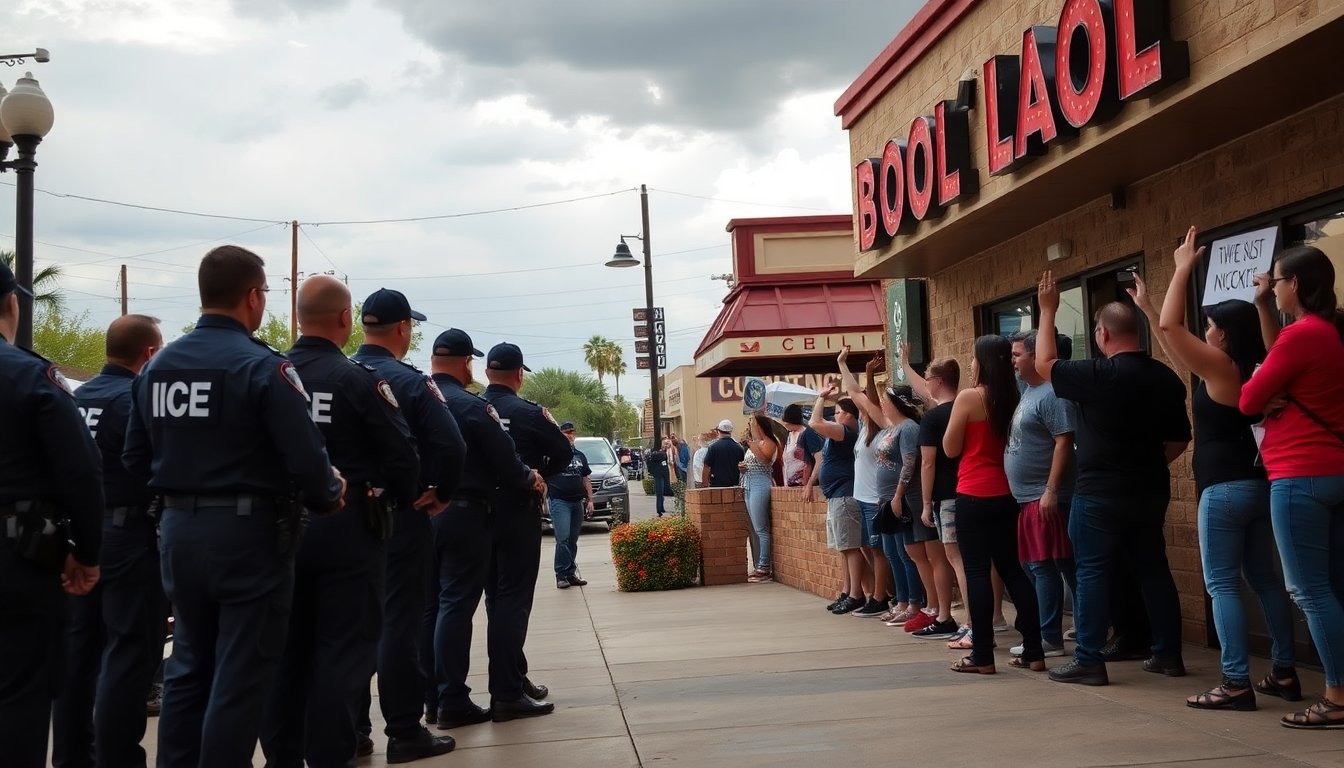
The debate over immigration enforcement in the United States has intensified following an incident in Tucson, Arizona. Representative Adelita Grijalva, a Democrat from Arizona, has alleged that she was pepper sprayed during a raid conducted by U.S. Immigration and Customs Enforcement (ICE) at a local restaurant. This claim has drawn a strong response from the Department of Homeland Security (DHS), which disputes Grijalva’s account of the events.
On social media, Grijalva detailed her experience, stating that she was “pushed aside and pepper sprayed” while identifying herself as a member of Congress. The incident occurred near Taco Giro, a popular restaurant in the community. Grijalva criticized ICE’s actions, describing the agency as “lawless” and accusing it of lacking transparency and accountability in its immigration enforcement practices.
Contention over the incident
In response to claims made by Congresswoman Grijalva, DHS Assistant Secretary Tricia McLaughlin firmly denied the accusations. She stated that Grijalva was not directly affected by the spray but was in proximity to another individual who was impacted. McLaughlin emphasized, “If her claims were true, this would be a medical marvel,” suggesting that Grijalva’s assertions lack accuracy. Additionally, she pointed out that two law enforcement officers suffered serious injuries during the raid, indicating that Grijalva’s involvement was not as innocent as she suggested.
Debate on law enforcement tactics
McLaughlin’s remarks highlight a significant conflict regarding the tactics used by ICE and the rights of individuals during enforcement operations. She emphasized that being a member of Congress does not exempt one from interfering with law enforcement activities. This incident raises critical questions about the balance between law enforcement actions and citizens’ rights, particularly amid rising tensions surrounding immigration policy.
The situation has drawn attention from the Congressional Progressive Caucus, which includes almost 100 Democratic lawmakers now demanding a formal investigation into ICE’s practices. This development reflects ongoing concerns about the agency’s operational methods and their impact on civil liberties.
Political reactions and implications
Representative Ilhan Omar, a member of the Congressional Progressive Caucus, criticized the recent incident, labeling it a “disgusting display of violence” aimed at Grijalva. Omar emphasized that such occurrences represent a pivotal moment for American democracy, suggesting the implications reach far beyond this single event and address broader concerns regarding governance and civil rights.
The timing of this incident is noteworthy, as it coincides with a larger ICE operation known as Operation Metro Surge. This initiative targeted criminal illegal immigrants across multiple locations, including Minneapolis. The operation aimed to apprehend individuals with significant criminal records, adding complexity to the ongoing discussion regarding ICE’s enforcement strategies and their effects on local communities.
Perspectives on immigration enforcement
The Department of Homeland Security (DHS) remains steadfast in its commitment to enforcing immigration laws. McLaughlin has stated that the agency’s primary objective is to locate and deport criminal illegal aliens. However, such assertions have faced scrutiny and criticism from various groups, particularly concerning the methods used and the potential for overreach in enforcement actions.
As discussions surrounding immigration policy evolve, the tension between lawmakers and enforcement agencies is anticipated to escalate. The challenge of ensuring public safety while respecting civil liberties continues to be a contentious issue, likely to dominate political discourse in the upcoming months.
The confrontation between Representative Grijalva and DHS underscores the complexities and challenges of immigration law enforcement in the United States. As the nation navigates these issues, the demand for accountability and transparency in operations, such as those conducted by Immigration and Customs Enforcement (ICE), becomes increasingly vital.