
Table of Contents
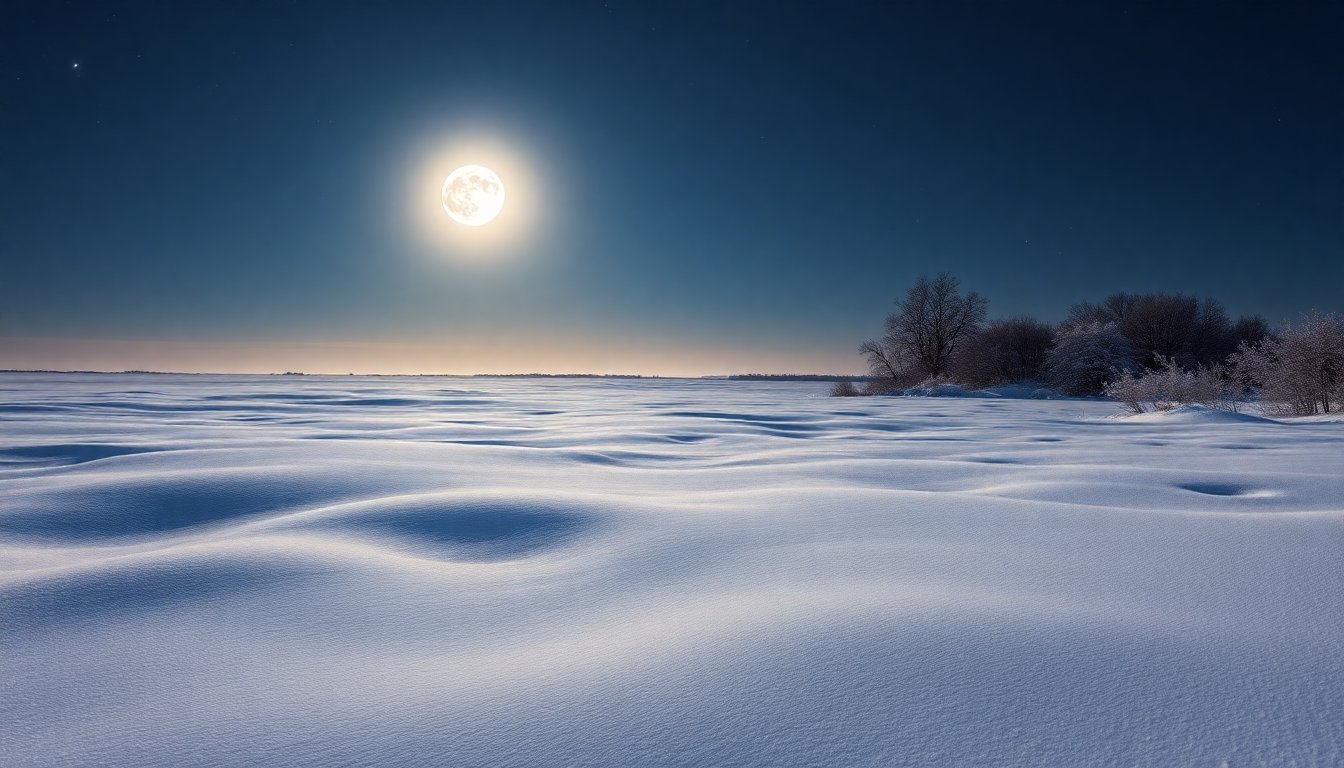
As February begins, skywatchers in Ontario can look forward to the appearance of the full snow moon. This significant celestial event will reach its peak brightness on February 1st at 5:09 p.m. EST. This time of year is typically marked by heavy snowfall, which inspired the moon’s evocative name.
For those eager to witness this stunning spectacle, it is advisable to find an open area with a clear view of the eastern horizon. As the moon ascends into the night sky, viewers may also spot Regulus, a prominent star shining nearby.
Understanding the significance of the snow moon
The February full moon is commonly referred to as the snow moon due to the significant snowfall characteristic of the month. This tradition of naming moons has been passed down through generations, particularly among various Native American tribes and early colonial settlers. The connection between the moon and weather underscores the challenges faced by communities during this time of year.
Alternative names and cultural associations
In addition to the snow moon, February’s full moon is known by several other names. The Cree people refer to it as the Eagle Moon, while the Ojibwe and Tlingit tribes call it the Bear Moon and Black Bear Moon, respectively. These names reflect the presence of bears and eagles during this time and align with the natural cycles observed by these cultures.
Other evocative names include the Raccoon Moon, the Groundhog Moon, and the Goose Moon. These names often mirror animal behavior in February and highlight the difficulties of finding food during the harsh winter months, leading the Cherokee to refer to it as the Hungry Moon or the Month of the Bony Moon.
Viewing the snow moon
Those wishing to catch a glimpse of the snow moon will find it visible soon after sunset on February 1st. The moon will shine brightly throughout the night, providing ample opportunity for skywatchers to appreciate its beauty. In areas such as Middletown and Poughkeepsie, moonrise is expected around 5:03 p.m. and 5:00 p.m., respectively, making it an excellent evening for outdoor viewing.
However, it is important to check the weather forecast, as conditions may include cloud cover and a chance of snow. Temperatures are expected to drop significantly, so dressing warmly is advisable for those planning to stargaze.
Upcoming lunar events
After the snow moon, lunar enthusiasts can anticipate the next full moon, known as the worm moon, scheduled for March 3rd. This lunar phase will feature a notable total lunar eclipse, captivating viewers across the Americas, East Asia, and Australia.
As February continues, the snow moon will not be the only highlight. A planetary parade is also set to occur towards the end of the month, showcasing several planets in the twilight sky. This celestial alignment, which includes Mercury, Venus, Saturn, and Jupiter, offers an additional reason to look up at the night sky.