
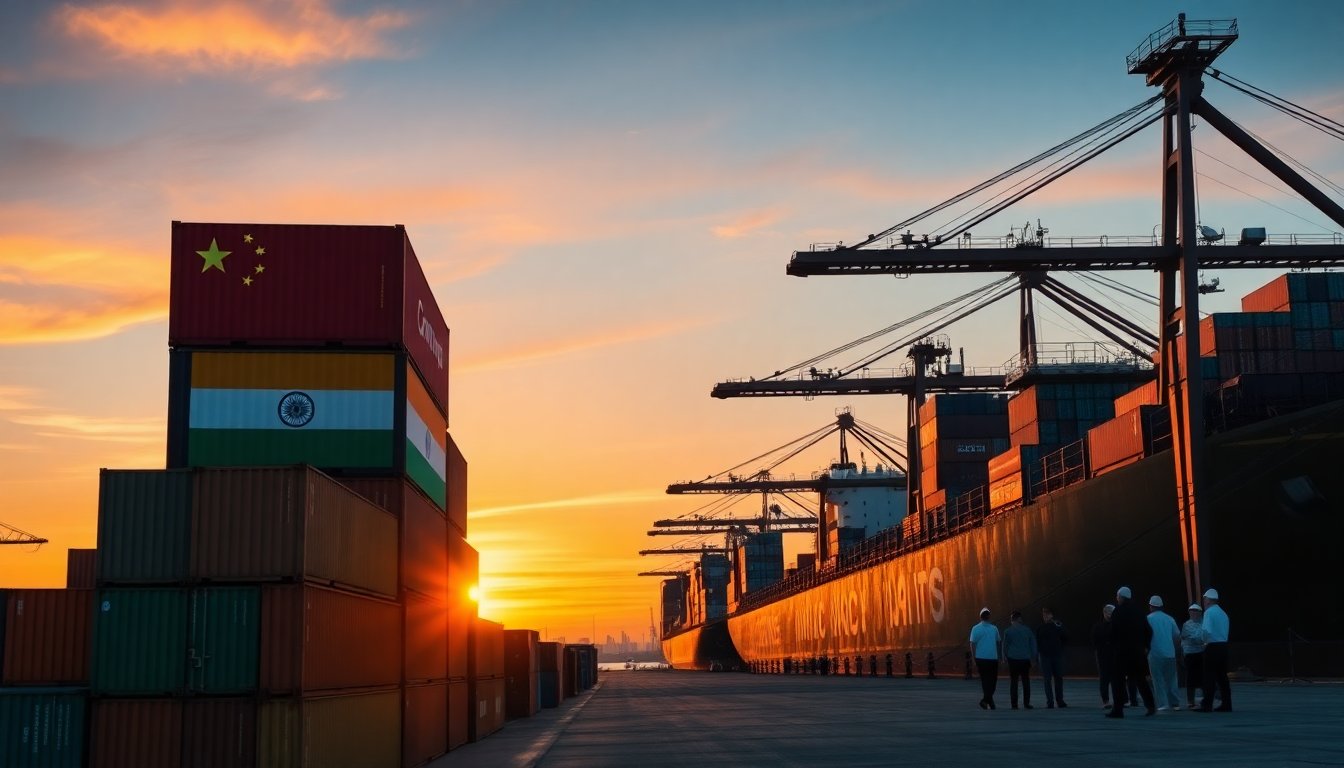
In light of recent trade tensions and tariffs imposed by the United States, Canada is initiating a transformative journey to diversify its export markets. Prime Minister Mark Carney has set an ambitious target to double non-U.S. exports by 2035. This strategy requires mending ties with nations that have historically posed challenges, particularly China and India. The evolving global landscape is prompting Canada to reassess its international partnerships and explore new avenues for economic growth.
As the U.S. moves towards an isolationist stance, Canada recognizes the necessity for a robust trade framework that includes strong relationships with emerging economies. The aim is not merely to offset losses from U.S. trade but to establish a balanced and sustainable economic future that prioritizes cooperation with China and India.
Strengthening Canada-China relations
Recent diplomatic efforts indicate a significant shift in Canada’s approach to China. Prime Minister Carney’s meeting with Chinese President Xi Jinping at the Asia-Pacific Economic Cooperation summit marked a pivotal moment, described by Carney as a “turning point” in bilateral relations. This meeting is not solely about formal ties; it is about laying the groundwork for a mutually beneficial economic partnership.
Revisiting trade tariffs
A crucial aspect of this renewed relationship involves re-evaluating existing trade barriers. Currently, Canada imposes a substantial tariff on Chinese electric vehicles, which is under review. Analysts suggest that removing these tariffs could stimulate increased trade flows between the two nations. With China already being Canada’s second-largest trading partner, the growth potential is significant, especially as Canadian exports to China represent only about five percent of the total.
In contrast, approximately 75 percent of Canada’s exports currently flow to the United States. By expanding trade with China, Canada can reduce risks associated with over-reliance on a single market. The Canada-China Business Council estimates that the ongoing trade war has cost both countries billions, underscoring the urgency for a resolution.
Exploring opportunities in India
In parallel with strengthening ties with China, Canada is also turning its attention to India as a key partner in its trade diversification strategy. With a rapidly growing economy and an expanding middle class, India offers numerous opportunities for Canadian businesses. The Indian market is primed for Canadian exports, particularly in sectors such as natural resources, agriculture, and technology.
Building economic partnerships
Establishing partnerships in research and development, as well as manufacturing, will be essential for Canada. The country can leverage its expertise in areas like clean technology and sustainable practices to create synergies with Indian firms. This collaborative approach not only strengthens economic ties but also addresses global challenges such as climate change.
Former Canadian diplomat Colin Robertson emphasizes the importance of recognizing Canada’s own interests in these partnerships. He suggests that collaborating with China and India can enhance Canada’s competitive edge across various industries, especially as the U.S. continues to reassess its global role.
Navigating the risks
While the potential for growth in these new markets is considerable, Canada must proceed with caution. Strengthening ties with China and India requires an understanding and balancing of various risks. Diplomatic relations can be complex, and Canada must safeguard its interests while fostering cooperation. Being late to the table with China does not preclude opportunities; it instead necessitates strategic planning and execution.
Moreover, the political landscape in both China and India presents challenges that Canada must navigate prudently. Ensuring that economic partnerships are built on mutual respect and understanding will be vital for long-term success.
As the U.S. moves towards an isolationist stance, Canada recognizes the necessity for a robust trade framework that includes strong relationships with emerging economies. The aim is not merely to offset losses from U.S. trade but to establish a balanced and sustainable economic future that prioritizes cooperation with China and India.0


