
Table of Contents
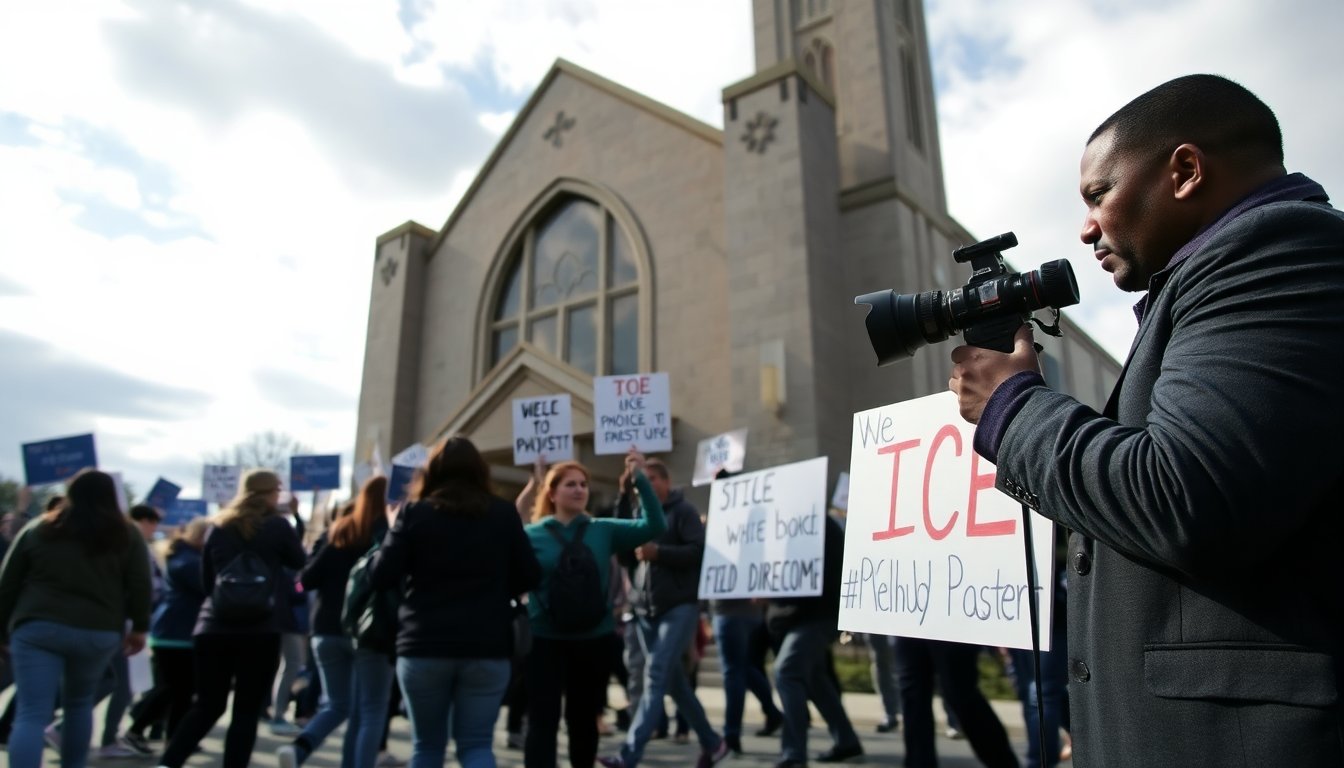
In a significant development, former CNN anchor Don Lemon was arrested while reporting on the Grammy Awards in Los Angeles. The arrest is linked to his coverage of a protest against U.S. Immigration and Customs Enforcement (ICE) in Minnesota. The incident took place on January 18, when demonstrators interrupted a church service at Cities Church in St. Paul, voicing their opposition to the pastor, who is also an ICE field director. This arrest has raised serious concerns among advocates for press freedom.
Lemon’s attorney, Abbe Lowell, stated that his client intends to challenge the charges vigorously, asserting that Lemon’s actions were consistent with his journalistic duties. The case highlights the significance of the First Amendment of the U.S. Constitution, which protects journalists’ rights. The unfolding situation raises profound implications for media freedom.
The facts
The protest at Cities Church stemmed from public backlash against ICE’s controversial policies. Activists, including Lemon, sought to highlight what they perceive as the agency’s aggressive tactics that infringe on civil rights. Protesters chanted slogans like “ICE out” and “Justice for Renee Good,” referring to a local case that has attracted significant attention.
Government response
The arrest on January 30 was confirmed by Attorney General Pam Bondi, who labeled the protest a “coordinated attack” on the church. Lemon and three other activists were taken into custody by federal agents. This arrest follows previous attempts to charge Lemon, which had stalled in the judicial system, including a federal magistrate’s refusal to issue an arrest warrant against him. This situation has sparked controversy regarding the Justice Department’s actions.
Lowell stresses that the focus should be on the federal agents responsible for violence against peaceful protesters, rather than on journalists like Lemon. He criticized the Justice Department for prioritizing Lemon’s arrest over investigating the deaths of individuals during protests, indicating a troubling trend in the government’s handling of dissent.
The implications for press freedom
This incident raises significant concerns about the state of press freedom in the United States. Advocacy groups have reacted strongly to Lemon’s arrest, viewing it as a dangerous precedent. Seth Stern from the Freedom of the Press Foundation stated that journalists must proceed with caution as government scrutiny intensifies.
Reactions from press organizations
The National Press Club issued a statement reflecting these concerns, emphasizing that the detainment of journalists covering public events poses a serious threat to media freedom. They cautioned that such actions could create a chilling effect on reporting nationwide, discouraging journalists from covering protests due to fears of legal repercussions.
Lemon’s commitment to journalistic integrity has been evident throughout his career. During the protest, he identified himself as a reporter, asserting, “I’m not here as an activist; I’m here as a journalist.” This statement underscores the vital distinction between activism and journalism, a principle that advocates for the protection of reporters in the field.
The broader context of civil rights
The protest leading to Lemon’s arrest is part of a larger movement against ICE practices, viewed by many as harmful to community safety and civil rights. Critics emphasize the urgency of addressing these issues, especially regarding recent incidents involving federal agents and the deaths of peaceful protesters.
As legal proceedings against Lemon progress, the implications for civil rights and journalism remain a critical point of discussion. Observers are closely monitoring how this case will influence the relationship between the media and the government, particularly in a time when press freedoms are increasingly at risk.
Lemon’s attorney, Abbe Lowell, stated that his client intends to challenge the charges vigorously, asserting that Lemon’s actions were consistent with his journalistic duties. The case highlights the significance of the First Amendment of the U.S. Constitution, which protects journalists’ rights. The unfolding situation raises profound implications for media freedom.0