
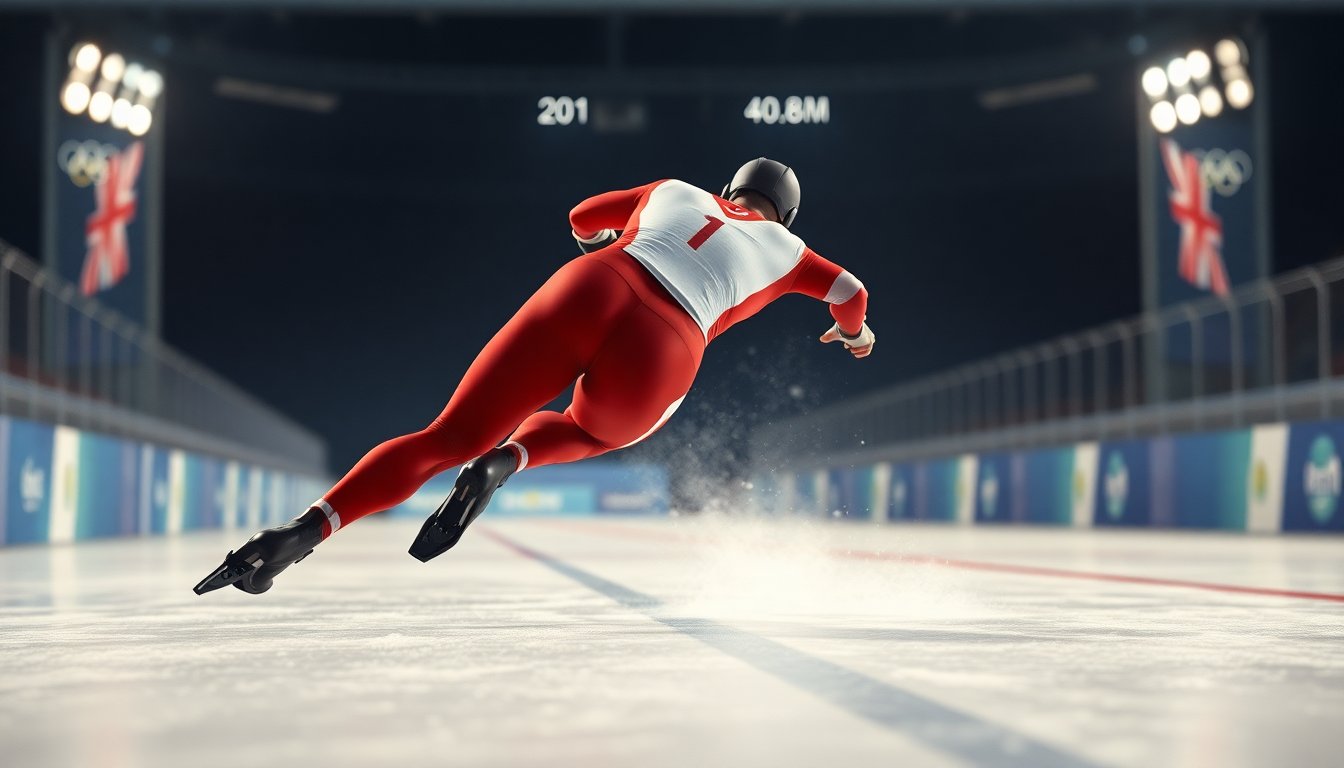
Milano Cortina 2026 gave Canada a night to remember on the short-track ice. Steven Dubois topped the podium in the men’s 500 metres, and the women’s 3,000-metre relay team fought through contact and chaos to secure bronze.
Dubois, from Terrebonne, Quebec, crossed the line in 40.835 seconds after betting on an unconventional race plan. Rather than bide his time for a late sprint, he set a steady, controlled tempo and then opened up in the closing laps. The gamble worked: teammates swarmed him at the finish and draped him in the Canadian flag, a raw, concise moment of joy after a race run with both nerve and calculation.
The final wasn’t without drama. William Dandjinou initially finished on the podium but was later penalized, reshuffling the results. Teun Boer’s fall—triggered by an aggressive inside maneuver—helped fragment the chase pack, underlining how quickly fortunes can flip in short track when one risky move changes the race dynamic.
Dubois’s front-running approach paid off because it limited passing lanes and forced opponents into tight, high-risk attempts. By occupying the inside and dictating pace, he turned the contest into a test of who could execute under pressure rather than who could produce the single fastest lap. In short track, position and timing often trump raw speed; one judged infraction can erase a faster finish.
The women’s relay—Courtney Sarault, Kim Boutin, Florence Brunelle and Danaé Blais—survived a chaotic sequence of contact and slips to clinch bronze. A Dutch skater clipped Brunelle’s blade early, and Blais stumbled later, opening the door for Italy and Korea. Still, the Canadians kept their composure, relying on practiced exchanges and smart positioning to turn disruption into a podium.
Coaches praised the teams’ discipline and split-second decision-making, while also acknowledging the fine margins that separated victory from frustration. For Canada, these results highlight depth and resilience: squads that can absorb mid-race collisions and keep exchanges clean are the ones that convert pressure into medals.
Behind the scenes, selectors and support staff will be dissecting footage, tweaking relay rotations, and calibrating recovery plans. The performance offers momentum for funding and high-performance programs to emphasize race simulation, corner technique, and load management—small refinements that can decide outcomes when competitions come down to hundredths of a second.