
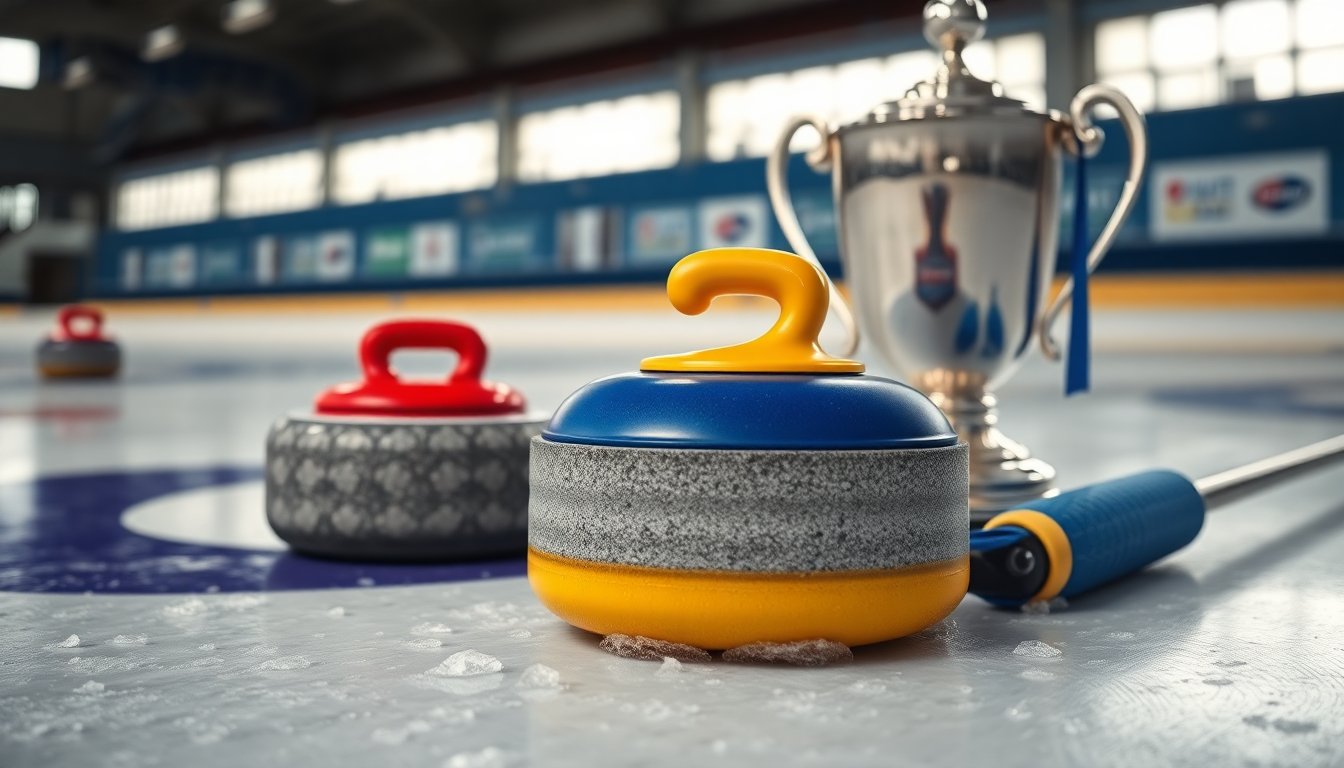
In Ogden, Utah, on April 4, 2026, the world men’s curling final produced a clear winner and a string of storylines that will be dissected for weeks. Niklas Edin and his Swedish rink completed the tournament with a 9-6 victory over Matt Dunstone and Team Canada, handing Edin an unprecedented eighth world title. The result marked another milestone in a career already decorated with Olympic medals of every colour, and it kept alive a nine-year gap since Canada last won the men’s world championship in 2017.
The match itself was a study in timing and shotmaking. Sweden repeatedly converted possession into multi-point ends, while the Canadian rink from Winnipeg’s Granite Curling Club fought back but could not unsettle the champions. Throughout the final, key technical metrics told part of the story: Edin personally posted exceptional numbers, and the Swedish unit curled at a high clip overall. These details underscored not only individual excellence but also the precise teamwork required at the sport’s highest level.
How the final unfolded
The championship hinged on repeated conversions of the hammer — the advantage of throwing last in an end — and Sweden made those moments count. On four separate occasions the Swedes turned their hammer into a two-point score, a pattern that kept Canada chasing. One pivotal moment came in the eighth end when Edin’s draw to the four-foot area grazed another stone and spun inward just enough to produce a deuce and an 8-5 lead. Canada responded in the ninth with a draw that earned a single point, leaving them down two without the hammer in the final end.
Key shots and statistics
Shot selection and execution separated the teams. Edin’s final accuracy in the match reached approximately 95 percent, while Sweden as a team curled near 90 percent compared with Canada’s roughly 87 percent. Dunstone, who finished at about 78 percent individually, attempted a difficult angle raise in the 10th end that would have positioned Canada to score two, but the stone missed and Edin did not need to deliver a closing stone. Those margins illustrate how a handful of precise throws can decide a championship match.
Roads to the podium
Both finalists arrived at the gold-medal game after demanding playoff runs. During pool play Sweden, Canada and Scotland finished with identical 10-2 records, but a tiebreak based on the last-stone draw ranking placed the Swedes and Scots ahead of Canada. Dunstone’s rink overcame adversity in the knockout stages, rallying to beat Italy 9-7 in a playoff and then edging Scotland 9-7 in the semifinal. Sweden had a bye into the semis and advanced by defeating the United States 8-6 in an extra end, setting up the final showdown against Canada.
Bronze and other outcomes
Earlier on the final day Scotland’s Ross Whyte secured the bronze with an 11-6 win over John Shuster’s United States squad. On the women’s side, Canada also collected a silver when Kerri Einarson’s team finished runner-up in Calgary, mirroring the host nation’s second-place results at both events. These podiums reflect the depth of international competition and how narrow margins separate medal positions in modern curling.
People and legacies
The rosters and personal stories added extra weight to the outcome. Sweden’s lineup of Niklas Edin, vice-skip Oskar Eriksson, second Rasmus Wranå and lead Christoffer Sundgren rebounded after a difficult Olympic showing in February to reclaim world form. Canada’s squad featured skip Matt Dunstone, vice Colton Lott (making his world-championship debut), second E.J. Harnden and lead Ryan Harnden. E.J. Harnden, who played his final competitive game in this event at age 42, left with a tearful embrace from his brother and a fifth world silver medal to add to an Olympic gold from 2013 with Brad Jacobs and multiple national titles accrued alongside teammates such as Dunstone, Jacobs and Gushue.
The wider context included references to history and broadcasting milestones: Brad Gushue was the last Canadian skip to win the men’s world crown in 2017 in Edmonton, and veteran broadcaster Vic Rauter called his final curling match after a 40-year run with TSN, having joined the network in 1985. For Sweden, Edin’s eighth world championship cements a legacy that will shape how future teams measure success.
What it means going forward
Beyond the headline scoreline, the match highlighted the thin line between victory and defeat at elite levels: strategic decisions, ice-reading, and execution under pressure determine outcomes. Sweden’s ability to convert possession into multiple-point ends, combined with near-flawless shotmaking from its skip, proved decisive. For Canada, the result extends a title drought but also showcases a young core gaining valuable experience on the global stage. The 2026 world championship will be remembered for Edin’s record and for the shifting dynamics of international curling competition.


