
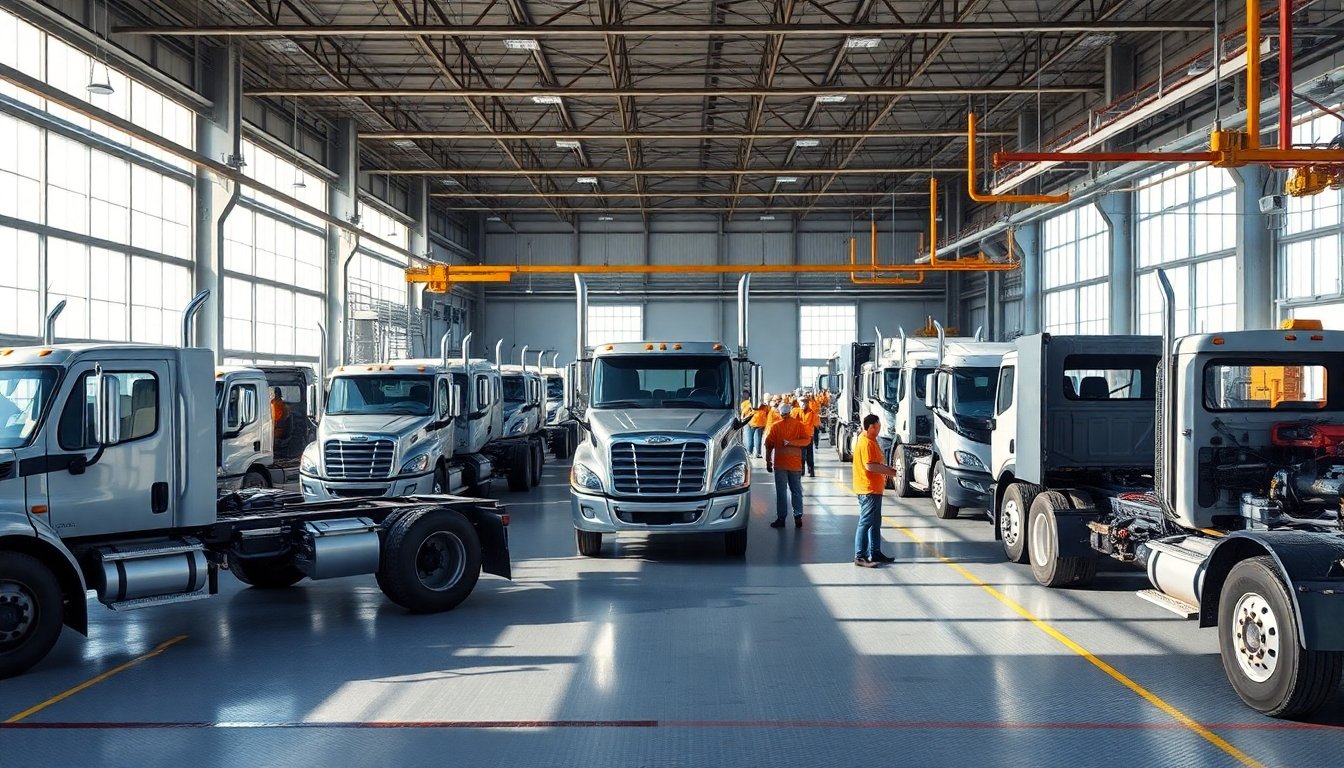
In a significant move aimed at enhancing the domestic manufacturing sector, President Donald Trump has announced that all medium- and heavy-duty trucks imported into the United States will be subject to a 25 percent tariff, effective November 1. This decision represents a marked escalation in Trump’s ongoing efforts to protect American companies from foreign competition.
Previously, Trump indicated this initiative as a necessary measure to safeguard national interests and ensure that U.S. manufacturers, such as Paccar, which owns Peterbilt and Kenworth, along with Daimler Truck and its Freightliner brand, remain competitive in the marketplace.
Details of the tariff implementation
During a recent press briefing, the President reaffirmed his dedication to protecting the manufacturing industry by announcing the specific implementation date for the tariffs. He articulated that the rationale behind this decision is grounded in national security, asserting that these tariffs are intended to counter what he perceives as unfair competition from abroad.
While the United States has negotiated trade agreements with countries such as Japan and the European Union, which include a standard 15 percent tariff on light-duty vehicles, the situation remains ambiguous regarding larger vehicles. The White House has yet to clarify whether this same rate will apply to the new tariffs on heavy-duty trucks.
Implications of the new tariffs
The implications of these tariffs extend beyond manufacturers. They could potentially disrupt the supply chain and affect various stakeholders, including companies that rely on imported components. Under the United States-Mexico-Canada Agreement (USMCA), tariffs on medium and heavy-duty trucks are waived if at least 64 percent of the vehicle’s value originates from North American sources, which includes essential parts like engines and axles.
Impact on key players in the industry
This new tariff structure may have significant repercussions for manufacturers such as Stellantis, the parent company of Chrysler, which assembles heavy-duty Ram trucks and commercial vans in Mexico. Stellantis has actively lobbied against the imposition of high tariffs on its Mexican-made vehicles, fearing potential adverse effects on its operations.
Additionally, Volvo Group from Sweden is investing heavily in a new $700 million heavy-truck factory in Monterrey, Mexico, which is expected to commence operations by 2026. This investment highlights the growing trend of truck manufacturing shifting to Mexico, driven by lower production costs.
Reactions from industry and trade partners
The announcement of new tariffs has elicited mixed reactions among industry stakeholders. The U.S. Chamber of Commerce previously urged the Commerce Department to reconsider the implementation of these tariffs, emphasizing that the primary sources of truck imports—Mexico, Canada, Japan, Germany, and Finland—are allies of the United States and do not pose a threat to its national security.
Statistics reveal that Mexico is the largest exporter of medium and heavy-duty trucks to the U.S., with imports from the country tripling since 2019 to approximately 340,000 units today. A report from the previous year indicated that imports of heavy vehicle parts from Mexico totaled nearly $128 billion, accounting for about 28 percent of total U.S. imports.
Mexican response to tariffs
In response to the impending tariffs, the Mexican government has expressed strong opposition. Officials noted that, on average, 50 percent of the content in trucks exported to the U.S. originates from the U.S. itself, including crucial components such as diesel engines. This statistic underscores the interconnected nature of manufacturing operations across North American borders.
Previously, Trump indicated this initiative as a necessary measure to safeguard national interests and ensure that U.S. manufacturers, such as Paccar, which owns Peterbilt and Kenworth, along with Daimler Truck and its Freightliner brand, remain competitive in the marketplace.0


