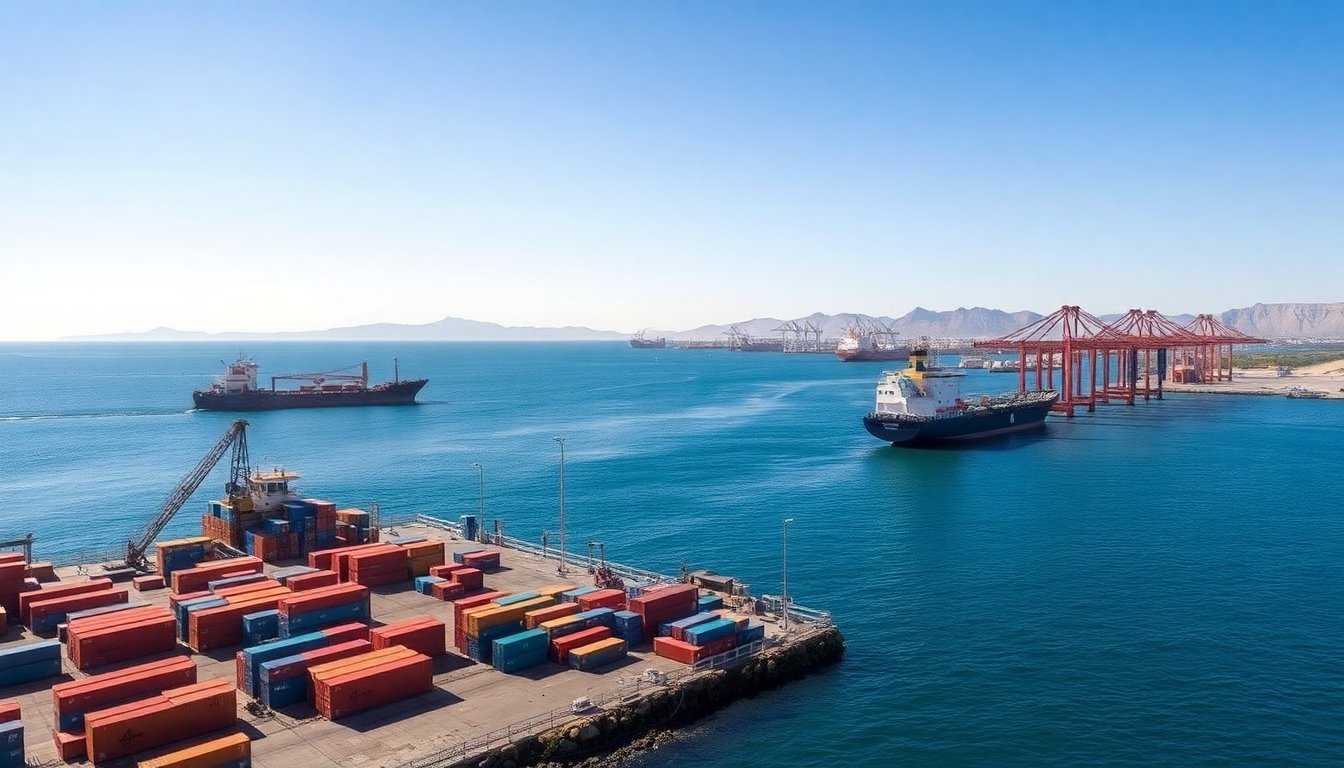
The recent lifting of a waiver on sanctions concerning the Chabahar port by the United States has prompted India to reevaluate its trade strategy with neighboring countries. This shift may hinder India’s ambitions to bolster economic ties with Afghanistan and other regions, as analysts predict a return to reliance on land routes through Pakistan, its long-standing rival.
This waiver, initially granted in 2018 under President Donald Trump’s administration, allowed the Chabahar port to operate without the repercussions of sanctions imposed on Iran’s infrastructure. However, the US’s recent decision, framed within its ongoing maximum pressure campaign against Iran regarding its nuclear activities, has created a complex situation for India.
The significance of Chabahar port
Situated on Iran’s southeastern coastline along the Gulf of Oman, the Chabahar port is an essential asset for India. It comprises two distinct ports, namely Shahid Kalantari and Shahid Beheshti. This facility represents Iran’s only gateway to the Indian Ocean, making it a critical component of the International North-South Transport Corridor. This extensive transport network spans approximately 7,200 kilometers (or about 4,473 miles) and links India, Russia, and Iran through a combination of road, rail, and maritime routes.
The port was intended to facilitate the delivery of essential goods, including humanitarian aid, particularly aimed at supporting reconstruction efforts in Afghanistan. However, the recent withdrawal of the waiver complicates these efforts significantly.
Consequences of the US sanctions
With the sanctions now in effect, the implications for those involved with the Chabahar port are serious. The US Department of State has stated that any individuals or entities operating in this port may face potential sanctions under the Iran Freedom and Counter-Proliferation Act (IFCA). This legal framework is designed to curb Iran’s nuclear proliferation and has far-reaching consequences for international trade.
Revisiting trade routes
As India confronts these challenges, it may revert to less favorable overland trade routes through Pakistan. This scenario is not only economically disadvantageous but also politically sensitive, given the historical tensions between the two nations. Reliance on these routes could limit India’s ability to engage effectively with Afghanistan and other regional markets, undermining its strategic goals for enhancing trade.
Future outlook for India’s trade endeavors
India’s aspirations for increased trade with its western neighbors are now clouded by uncertainty. The country had previously positioned Chabahar as a pivotal point for accessing landlocked Afghanistan and extending its influence in Central Asia. However, the reinstatement of sanctions complicates this vision and may prompt India to explore alternative strategies.
Strategic partnerships and alternatives
In light of these developments, India might need to consider building stronger partnerships with alternative trade routes or fostering relationships with other regional players to mitigate the impact of the sanctions. Strengthening economic ties with countries such as Russia and looking for new avenues to engage with Central Asian nations could prove vital for India as it navigates these turbulent waters.
Ultimately, the recent US sanctions on the Chabahar port signify a turning point for India’s trade ambitions with its western neighbors. As the geopolitical landscape evolves, India must adapt its strategies to ensure that its economic goals are not severely hampered. The resilience of India’s trade policies in the face of these challenges will be crucial for maintaining its regional influence and economic stability.