
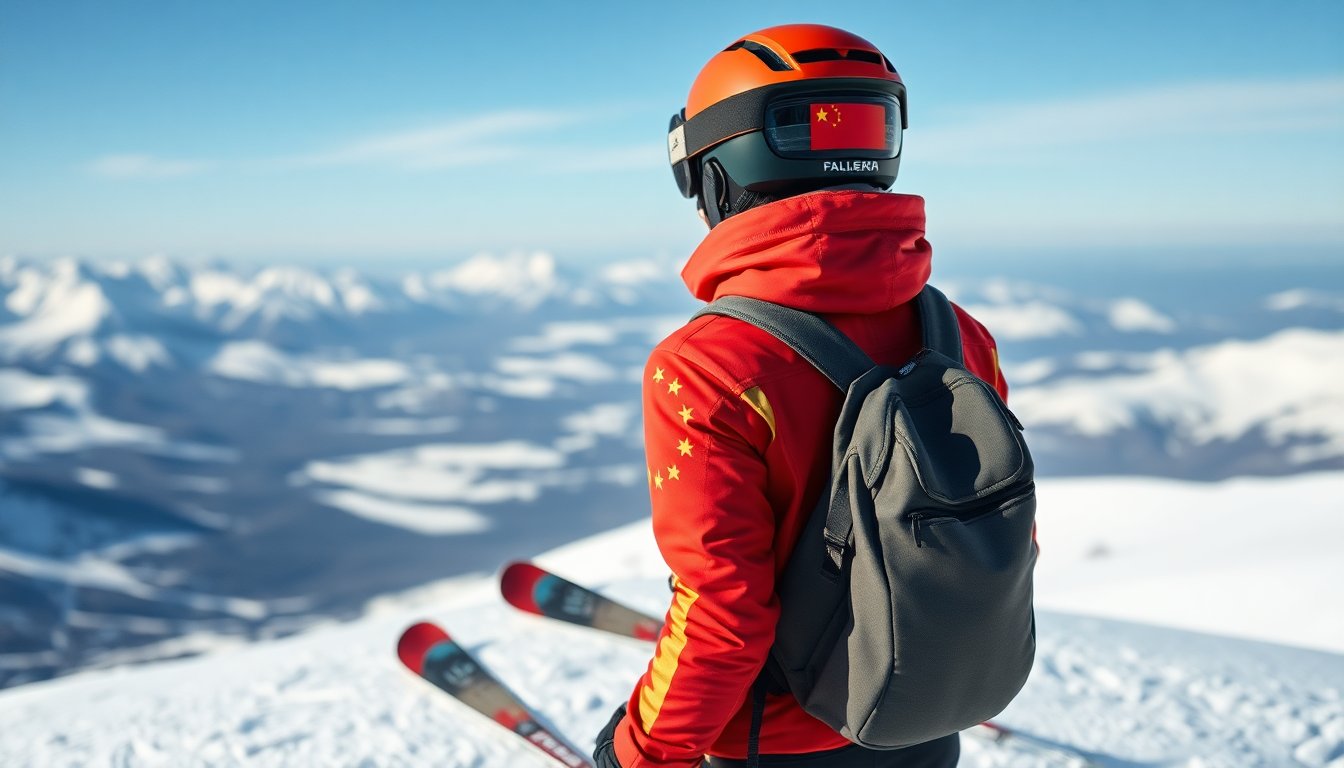
When Eileen Gu announced she would compete for China, the freeskiing world did more than notice a new uniform — it watched a deliberate reframing. Raised in California and trained in the U.S., Gu presented the switch not as a mere change of teams but as a mission: to introduce freeskiing to millions and to give girls a visible role model who looks like them on the slopes.
Her determination traces back to childhood. As the lone girl on her local ski team, she first encountered questions about access and fairness. Those early seasons, when conversations about Title IX and equal opportunity crept into her life, helped shape how she thinks about sport and representation. Gu stresses that her move isn’t a rejection of the American program; it’s an extension of relationships, lessons and a desire to pay forward what she received from coaches and teammates in the U.S.
She calls the decision strategic. Summers spent in China revealed how small freeskiing remained compared with the country’s population. Competing under China’s banner offered a rare lever: the chance to shine in front of an audience measured in the hundreds of millions. With Beijing 2026 approaching, that visibility could fast-track grassroots growth — kids who suddenly recognize a familiar face on a podium might decide a new sport is for them after all.
Success on the hill amplified the message. Medal-winning performances and frequent podium appearances did more than adorn a résumé; they sparked tangible interest. Registrations climbed, programs expanded beyond traditional mountain towns, and terrain parks began seeing more young women trying tricks they might once have hesitated to attempt. Coaches point to high-profile role models, paired with media campaigns and camps, as a key reason those numbers moved.
Advocacy has always been part of Gu’s public identity. Beyond the medals, she has used her platform to challenge stereotypes about what “skiing like a girl” means. Landing a trick can carry symbolic weight: a visible statement that reshapes expectations. For Gu, being present where visibility is rare often feels like the most direct route to change.
But she hasn’t erased the ties that nurtured her. Gu speaks warmly about her season with the U.S. program and the mentors who guided her. Rather than drawing a hard line between nations, she frames her path as a bridge: shared training, mentorship exchanges and collaboration that keep know-how flowing across borders even as she competes for a different federation.
Not everyone accepts that framing. Critics have faulted Gu for not speaking more forcefully about alleged human rights abuses in Xinjiang. She told Time she felt unqualified to make definitive claims without firsthand knowledge and didn’t want to amplify unverified reports. That response, instead of settling the matter, intensified debate — a reminder that visibility makes athletes lightning rods for broader political and ethical questions.
Money and optics added another layer. Reports about large payouts and lucrative deals with Chinese and global brands prompted speculation about whether commercial incentives played a role. Supporters note that big sponsorships are standard at the sport’s highest levels; skeptics worry that ties to state-affiliated entities blur lines around independence and loyalty. Those concerns aren’t merely rhetorical: sponsors weigh reputational risk, agencies tweak messaging strategies, and watchdogs call for clearer disclosures so the public can better understand who benefits and why.
The episode around Gu underscores a larger truth about modern sport: athletic choices quickly morph into cultural signals. For many, she’s an inspiring force expanding a sport’s reach and giving girls a new kind of possibility. For others, her silence on political issues and the scale of commercial ties provoke uncomfortable questions. Either way, her story illustrates how representation, commerce and geopolitics now intersect in ways that make every competitive decision about much more than competition.