
Table of Contents
In light of escalating tensions with Iran, the Pentagon is enhancing air defense measures across the Middle East. This initiative aims to protect Israel, regional Arab partners, and American military personnel from potential Iranian retaliation. Current assessments indicate that while a military strike on Iran is not imminent, the U.S. is preparing for future contingencies.
Military officials have clarified that any decision to engage in a broader conflict would require a comprehensive defensive strategy, especially given the significant potential for Iranian retaliation. Consequently, Washington is prioritizing the reinforcement of existing air defense systems to ensure the safety of its forces and allies.
Current military positioning in the region
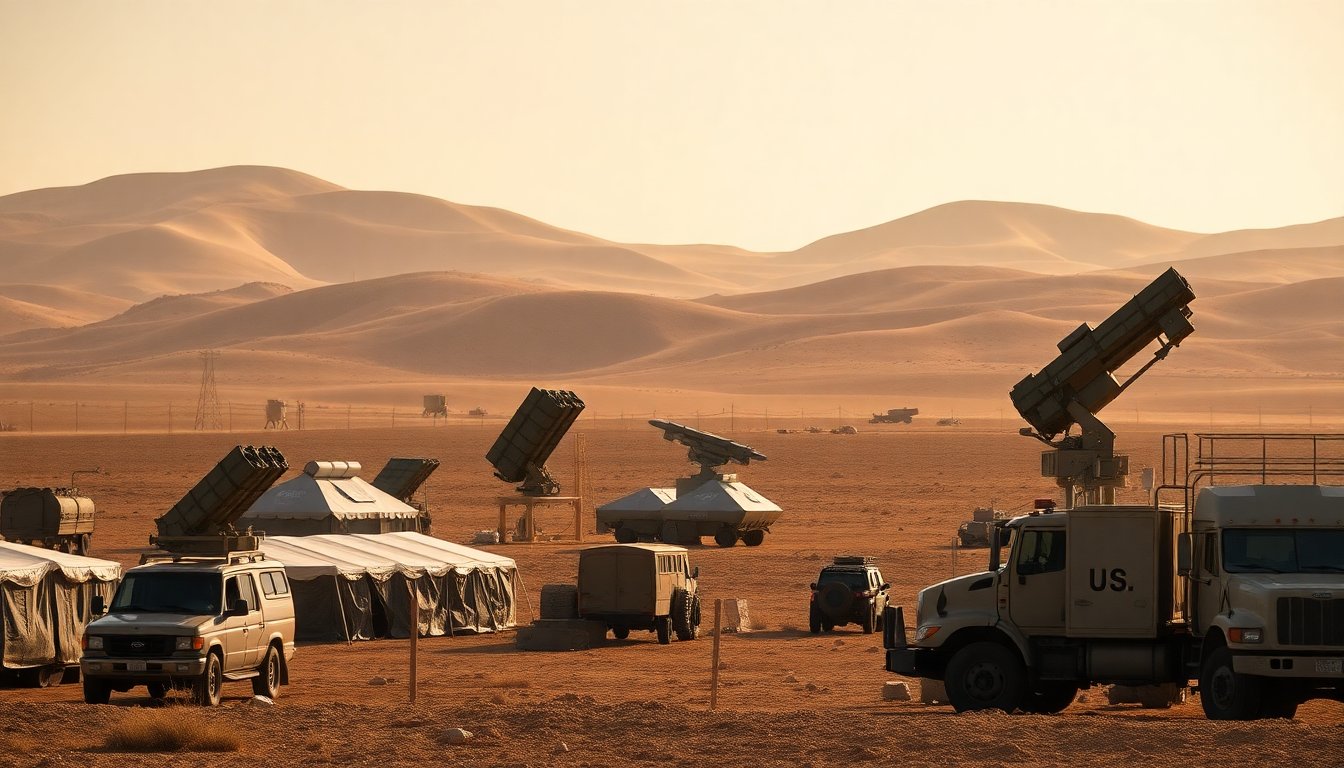
The United States maintains a substantial military presence in the Middle East, equipped with various air defense systems intended to intercept aerial threats. These include naval destroyers and advanced missile defense systems. However, the situation necessitates upgrades. The Pentagon has announced plans to deploy additional Patriot and THAAD missile systems, extending coverage at critical bases in Qatar, Saudi Arabia, and Jordan. These enhancements are vital as tensions with Iran continue to rise, with both diplomatic negotiations and military posturing occurring concurrently.
Regional allies ramping up defenses
In response to the potential for conflict, Gulf states are also taking steps to bolster their own missile defense capabilities. For instance, Saudi Arabia has expedited the acquisition of advanced missile defense systems, having already received several units of the THAAD batteries it previously ordered. The anticipation of U.S. military actions has prompted these nations to prepare for possible missile launches targeting U.S. installations and Israeli assets.
Strategic implications of U.S. military readiness
The ongoing discussions between U.S. officials and their Iranian counterparts illustrate a complex diplomatic landscape. President Trump has publicly expressed a preference for diplomatic solutions, suggesting that Iran is open to negotiations. This dual approach—balancing military readiness with diplomatic efforts—aims to deter Iran while avoiding escalation into a full-blown conflict.
However, lessons from recent military engagements highlight the necessity for the U.S. to maintain robust munitions stocks and production capabilities. Historical data indicates that during the brief conflict between Israel and Iran, U.S. and allied munitions were depleted alarmingly fast, underscoring the critical need for a sustainable supply chain for military resources.
The challenge of munitions depletion
As the Trump administration reflects on past military engagements, it recognizes the urgent need for increased munitions production. The Pentagon’s decision to boost Patriot PAC-3 interceptor production is a positive step, but it is essential to understand that even these measures may fall short during a high-intensity conflict. Previous conflicts have shown that the U.S. must expedite the production of vital munitions such as THAAD interceptors, Joint Direct Attack Munitions, and artillery shells.
The current military strategy emphasizes the importance of maintaining operational readiness while preparing for potential future conflicts. Allocating funds for factories capable of producing multiple types of munitions will help ensure that the U.S. military is equipped for any scenario that might arise.
Working collaboratively with allies
In addition to strengthening its own defenses, the U.S. acknowledges the need for collaboration with allies. Enhancing partnerships, particularly with Israel, can improve collective defense strategies. Joint projects and technology exchanges can lead to more effective production and deployment of air defense systems. Initiatives like co-producing advanced systems such as the Iron Dome will provide mutual benefits and ensure that both nations are prepared for any challenges.
As the geopolitical landscape evolves, it is imperative for the U.S. and its allies to act swiftly in replenishing munitions and enhancing production capabilities. The lessons learned from past conflicts serve as a reminder of the unpredictable nature of warfare and the necessity of being prepared for prolonged engagements.