
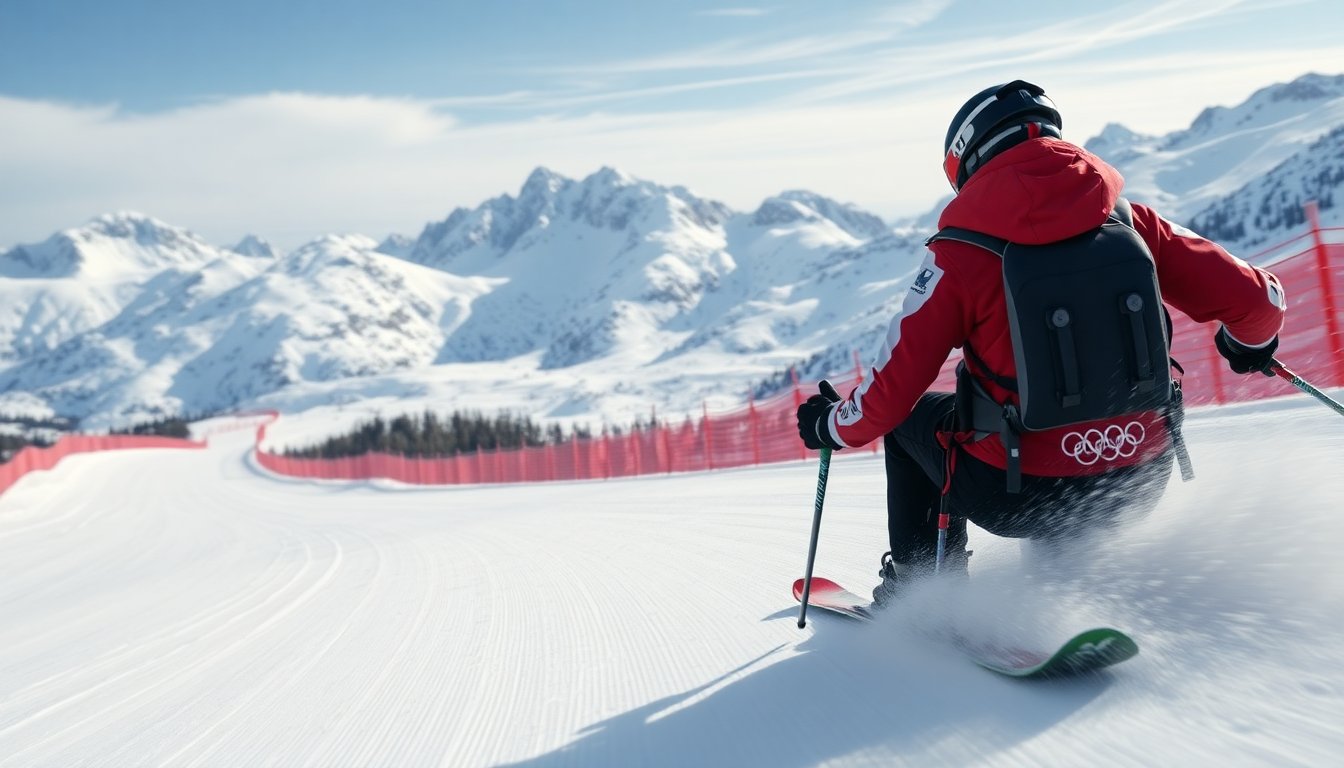
Kalle Eriksson and his guide Sierra Smith took bronze in the men’s visually impaired super‑G at the Milano–Cortina 2026 Paralympics, racing down the Tofane Alpine Skiing Centre in Cortina d’Ampezzo in 1:13.29. The podium finish adds to the duo’s silver from the downhill earlier in the Games, capping a remarkable few days for the Canadian pair.
Eriksson, from Kimberley, B.C, and Smith, from Ottawa, formed their partnership in 2026 and have quickly become one of Canada’s most reliable visually impaired teams. Their résumé already includes World Championship silver medals and numerous World Cup podiums — a record of steady progress that has now translated onto Paralympic turf.
How the super‑G played out The Tofane podium rewarded clean lines and calm nerves. Austria’s Johannes Aigner, guided by Nico Haberl, took gold in 1:11.99, while Italy’s Giacomo Bertagnolli and Andrea Ravelli edged out the Canadians for silver. Eriksson and Smith’s run stood out for its poise: using a two‑way headset system to communicate in real time, they threaded the course with tight, efficient turns and split‑second timing.
From partnership to podium Their partnership is relatively new, but the results are anything but accidental. Since teaming up they’ve amassed more than 20 World Cup medals and picked up silver in slalom and giant slalom at the most recent world championships. Those performances signalled they could handle the pressure that comes with big stages — and on Tofane, timing, trust and crisp guided calls made the difference.
Canada across the slopes and tracks Canada’s success at Milano–Cortina isn’t limited to Eriksson and Smith. In Tesero, Natalie Wilkie captured silver in the women’s standing sprint biathlon, shooting clean through both rounds and finishing the 7.5 km race in 18:46.4. Wilkie — already respected for her cross‑country speed — said the medal had been a clear objective from the start of her campaign.
In para‑alpine sit racing, Calgarian Kurt Oatway rallied to bronze in the downhill with a time of 1:19.42. His podium has an emotional edge: Oatway recovered from a serious crash at the 2026 World Championships that once put his career in doubt, and this comeback has become one of the team’s defining stories.
Team events have offered thrills, too. The mixed wheelchair curling crew survived a late Italian charge to win their round‑robin opener 9–8, holding on thanks to calm, strategic play in the closing ends. And Para ice hockey erupted for Canada in an 8–0 statement victory over Slovakia, with contributors including James Dunn and Vincent Boily firing the offence.
Wider storylines and shifting balance Milano–Cortina has also highlighted broader shifts in the Paralympic landscape. Russia returned to the podium for the first time since, with Varvara Voronchikhina and Aleksei Bugaev claiming bronzes in their downhill events under their national flag — a comeback with sporting and geopolitical resonance.
Not every story was rosy for Canada. Alexis Guimond suffered a DNF in the men’s standing downhill after an early fall, and Mollie Jepsen — the reigning gold medallist in the women’s standing downhill — slipped to fourth after re‑aggravating a recent lower‑body injury. Those results underscore how thin the margins are: one mistake or one misjudged turn can erase months of preparation.
What it means going forward Eriksson and Smith’s two‑medal weekend underscores Canada’s depth in para‑alpine skiing and the crucial role of seamless skier‑guide partnerships. With athletes like Wilkie still entered in multiple events and veterans such as Mark Arendz competing in his fifth Paralympics, Canada heads into the rest of the Games with momentum and real chances for more hardware.
Eriksson, from Kimberley, B.C, and Smith, from Ottawa, formed their partnership in 2026 and have quickly become one of Canada’s most reliable visually impaired teams. Their résumé already includes World Championship silver medals and numerous World Cup podiums — a record of steady progress that has now translated onto Paralympic turf.0