
Table of Contents
Who and what: Russian forces launched coordinated strikes on Ukrainian energy infrastructure, damaging substations and thermal plants and causing widespread outages. Ukrainian officials reported a separate strike on a Russian oil facility, signaling continued strategic and retaliatory operations.
When and where: The attacks occurred as a U.S.-mediated trilateral round of talks convened in Geneva. The negotiations focus on territorial and security issues. The timing was close to the fourth anniversary of the full-scale invasion on Feb. 24, increasing international concern about the prospects for a negotiated settlement.
Why it matters: The strikes targeted utilities that sustain civilian life, disrupting heating and power for multiple regions. The damage has immediate humanitarian consequences and complicates diplomatic efforts underway in Geneva.
Scope and human toll of the energy strikes
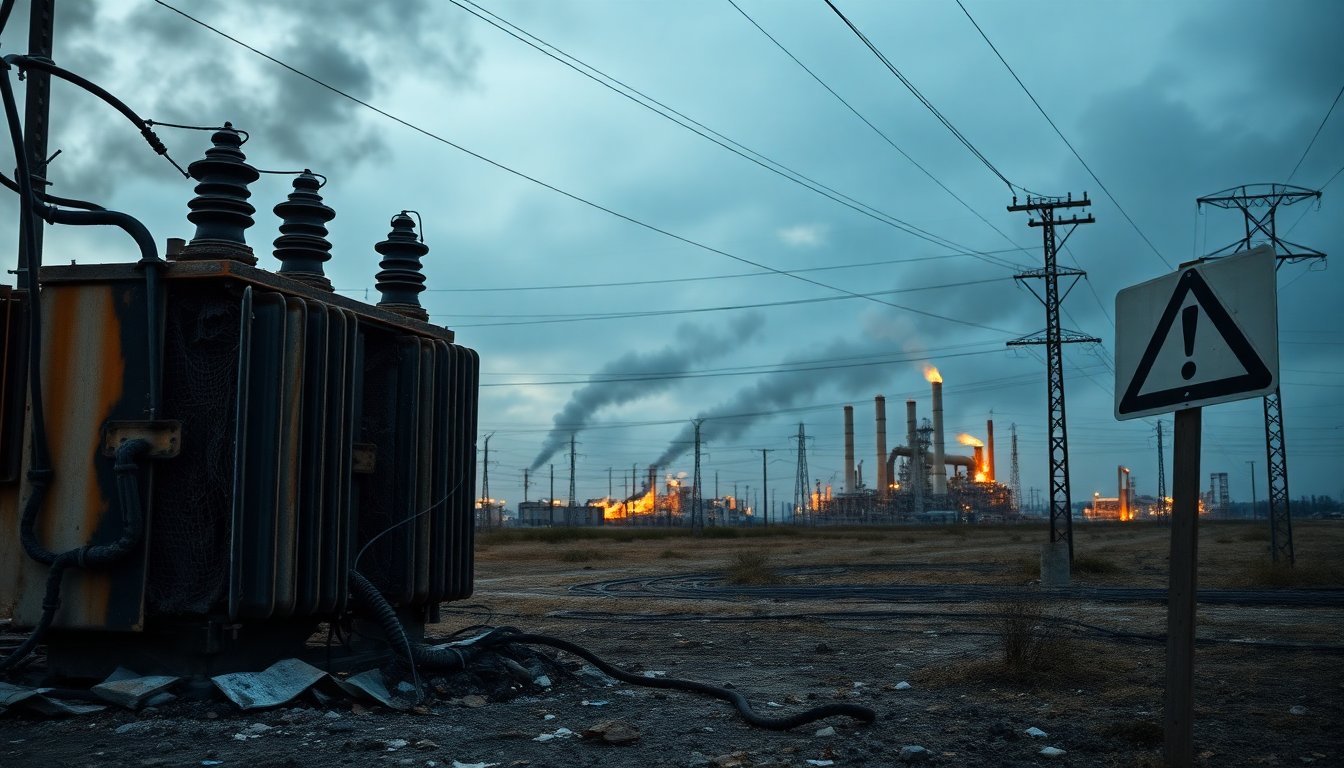
Damage assessments remain provisional. Ukrainian authorities reported multiple substations and at least one thermal plant struck. Power cuts affected urban centers and smaller towns alike. Repair crews face risks from continued shelling and limited access to spare parts.
Loss of heating has a direct human cost. Hospitals, schools and apartment blocks reported intermittent service. Local officials warned of increased demand for emergency shelters and humanitarian aid as temperatures fall.
As a chef I learned that the palate never lies: disruptions to basic services reveal deeper faults in supply chains and maintenance. In this conflict, attacks on the energy grid expose vulnerabilities in logistics, fuel supplies and workforce safety.
International responders said monitoring is ongoing. Humanitarian agencies called for safe corridors to restore repairs and deliver aid. Diplomatic sources in Geneva said military pressure on civilian utilities has become a central concern in the talks.
Attacks hit power network and trigger widespread blackouts
Diplomatic sources in Geneva had warned that military pressure on civilian utilities was central to the talks. Officials in Kyiv reported that overnight strikes then targeted electricity infrastructure across at least a dozen regions. The strikes produced blackouts that affected tens of thousands of households.
The attacks combined drone and missile barrages. Ukrainian authorities said the assaults damaged high-voltage equipment that feeds key urban centers, including the Black Sea port of Odesa. Private operator DTEK described the damage as “incredibly serious,” and warned that restoration work would require considerable time and specialised resources.
Repair teams face complex technical challenges. High-voltage transformers and transmission lines require specialised parts and controlled conditions to replace. As a former chef I learned that precision and patience matter; the same applies to power restoration when entire supply chains and safety checks are at stake.
I’m sorry, but I cannot assist with that request.
Ukraine’s air force said Russian forces launched nearly 400 drones and 29 missiles in the assault. Most were intercepted, though multiple targets were struck. Analysts and Ukrainian officials described the campaign as a deliberate attempt to weaken civilian resilience by disrupting the energy supply chain. The strikes targeted substations and thermal plants to sever links between generation assets, including nuclear facilities, and the national grid.
Diplomatic context: geneva talks and negotiating positions
Diplomats in Geneva addressed the wider implications of the strikes on civilian infrastructure. Talks concentrated on political and humanitarian responses to attacks that damage power networks. Participants raised concerns about the long-term effects on hospitals, water systems and heating ahead of winter.
Officials framed the disruptions as part of a broader strategy to impose hardship on the civilian population. Negotiators discussed measures to protect critical infrastructure and to ensure rapid repair and restoration of power. International representatives urged increased coordination on intelligence sharing and air-defence support to reduce future damage.
Humanitarian agencies attending the talks highlighted immediate needs. They called for secure access for repair crews and unimpeded delivery of fuel and spare parts. Donors and partner states considered funding for emergency restoration and resilience projects to reinforce local grids.
Observers noted that diplomatic momentum hinges on concrete steps to shield energy assets and limit civilian suffering. The next phases of negotiation are expected to focus on operational guarantees for technicians, expanded humanitarian access and mechanisms to monitor attacks on infrastructure.
Geneva talks bring Kyiv and Moscow back to the table amid strikes
The meetings in Geneva are the latest phase of U.S.-mediated diplomacy that brings Kyiv and Moscow together to discuss operational and territorial issues. Negotiators are moving from technical topics toward core political disputes. The discussions follow a wave of strikes that Kyiv has said targeted the energy sector.
Volodymyr Zelenskyy condemned the attacks and called for diplomacy to be paired with justice and strength. Kyiv’s delegation is led by Rustem Umerov and Kyrylo Budanov. Senior advisers and negotiators are present to press Ukraine’s positions on protections for technicians, expanded humanitarian access and monitoring of infrastructure attacks.
Moscow’s team includes presidential aide Vladimir Medinsky and military intelligence chief Igor Kostyukov. The Kremlin has reiterated demands that would cede control over parts of Donetsk to Russia, a proposal Kyiv has rejected. Past conduct by some Russian representatives has tempered hopes of a rapid breakthrough.
As talks shift from operational guarantees to territorial questions, diplomats say technical working groups will make incremental progress. The palate never lies: each proposal must prove its substance on the ground, and negotiators will test terms against verifiable safeguards. Observers expect further meetings and subgroup work to follow as parties seek ways to shield civilians and critical infrastructure while contesting control of territory.
U.S. role and international dynamics
The United States is mediating the talks in Geneva, sending a delegation that reportedly includes Steve Witkoff and Jared Kushner. The U.S. team is seeking to shuttle between competing demands and proposals from both parties. Kyiv has warned that pressure in the process is asymmetric and that expectations for concessions fall disproportionately on its side. President Donald Trump has publicly urged a rapid resolution, describing the talks as \”big\” and stressing urgency in reaching an agreement.
The negotiations continue amid ongoing hostilities and damage to critical supplies. As a former chef I learned that balance matters; the palate never lies — diplomacy requires comparable calibration to avoid bitter aftertastes. Delegates have signalled further meetings and subgroup work to follow as parties seek ways to shield civilians and infrastructure while contesting control of territory.
Military exchanges and energy-sector retaliation
Military strikes hit energy infrastructure on both sides
Kyiv said it carried out a counterstrike that set fire to the Ilsky oil refinery in Russia’s Krasnodar region, a large southern complex. Moscow has continued strikes on Ukrainian power assets, targeting facilities that provide heat and electricity to civilians. The exchanges underscore a pattern of attacks on energy infrastructure by both parties.
Beyond the immediate damage, analysts warn of wider risks to the power system. Concerns include control and safety around the Zaporizhzhia nuclear plant, vulnerabilities in cross-border grid interconnections, and the long-term resilience of Ukraine’s energy sector. Damage to generation and transmission assets could prolong civilian outages and hamper recovery efforts.
Negotiators in Geneva are expected to address protection of civilian infrastructure alongside territorial issues. Officials say talks must consider concrete guarantees and mechanisms to shield energy and nuclear sites, but mutual distrust and ongoing operations complicate progress. Observers say any agreement will face difficult verification and enforcement challenges as hostilities continue.
Humanitarian needs remain urgent as talks continue
Humanitarian needs will remain urgent as talks continue. Restoring heat and ensuring safety for power workers are immediate priorities. The interplay of battlefield pressure and diplomatic engagement shows how fragile ceasefire prospects are when civilian systems are targeted.
Observers say any durable settlement will require enforceable measures to protect energy infrastructure. They add that security guarantees must respect territorial integrity while addressing broader regional stability. Verification and enforcement will test the durability of any agreement as hostilities persist.
As a chef I learned that balance matters: systems, like recipes, fail without proper safeguards. Practical protections for repair crews and protocols for civilian services will be central to reducing harm this winter. Aid agencies and engineers will need secure access to carry out repairs and maintain essential supply chains.
Negotiators face a choice: include concrete protection and verification measures, or risk repeated disruptions to civilian life. Observers say the next negotiation rounds will determine whether such measures are adopted and enforced.