
Table of Contents
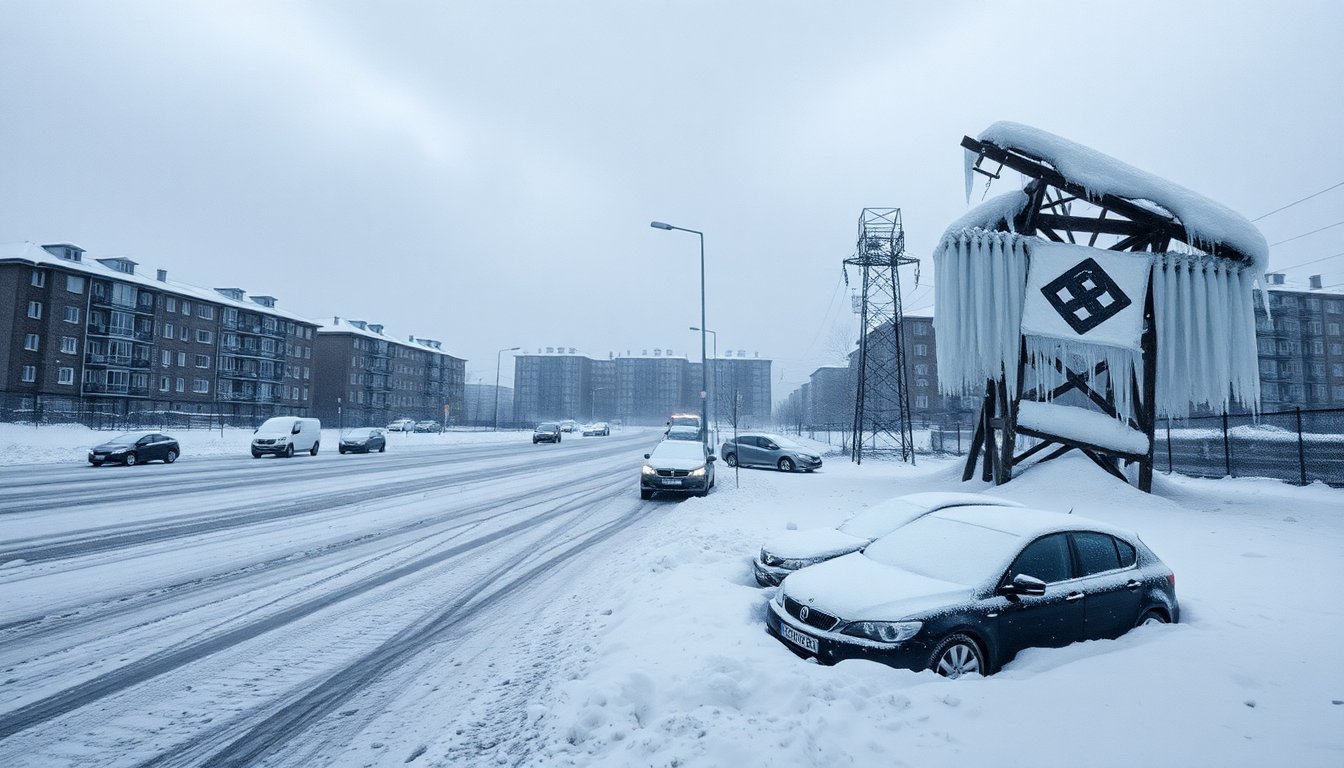
In the Arctic region of Russia, the cities of Murmansk and Severomorsk are grappling with a severe power crisis that began on January 23. A significant power outage has left thousands of residents without heating or hot water after five power transmission towers collapsed under heavy ice, compounded by blizzard conditions and fierce winds. With temperatures dropping sharply, residents are struggling to maintain warmth and access basic utilities.
The local government estimates that around 73,000 residents currently lack electricity. In light of the ongoing crisis, officials have declared a state of emergency in the region. Governor Andrey Chibis claimed that power had been restored to 80% of households by January 26, but many residents have expressed doubts about the accuracy of this statement.
Impact of the power outages
Since the outages began, Murmansk has recorded daytime temperatures around 14°F (-10°C) and nighttime lows dropping to 1°F (-17°C). These freezing conditions have forced many residents to seek alternative heating solutions. Local businesses have established support centers where individuals can charge mobile devices, access boiling water, and heat meals. However, the long lines at these facilities indicate a significant demand for assistance.
Community response to the crisis
To mitigate the impact of the outages, authorities have waived bus fares for all riders, and several educational institutions have shifted to remote learning to ensure student safety. In Murmansk alone, over a thousand homes are at risk of having their heating systems freeze due to ongoing utility disruptions. Many residents have taken to social media to express their frustrations regarding the local government’s response, reporting that they are still without power and heating.
One resident shared their experience, stating, “We’re cooking on a gas camping stove. Some people still have no water or heating, while others experience frequent outages with no clear schedules for restoration.” This sentiment underscores the uncertainty and frustration that many face amid this crisis.
Investigation into the power failure
The Federal Investigative Committee of Russia has launched a criminal investigation into the circumstances surrounding the collapse of the transmission towers. Preliminary reports suggest that these towers, operational since the 1960s and 1980s, were overdue for inspection, raising concerns about the maintenance practices of the power company Rosseti. Officials are currently reviewing records and conducting interviews to evaluate potential negligence.
Restoration efforts and future outlook
As restoration efforts progress, Rosseti has begun installing temporary wooden transmission towers to replace those that collapsed. These structures are being assembled on-site and, in some cases, transported via helicopter to expedite the process. Governor Chibis has indicated that stable power should be restored within a week, although adverse weather conditions may present additional challenges.
Despite ongoing efforts, the situation remains precarious. While officials claim that critical infrastructure has power, reports indicate that the main naval base of Russia’s Northern Fleet has also experienced outages, forcing military vessels to rely on autonomous energy supplies. National media coverage of the crisis has been limited, raising concerns about public awareness and accountability.
The current power crisis in Murmansk and Severomorsk underscores the vulnerabilities of infrastructure in extreme weather conditions and highlights the necessity for timely maintenance and emergency preparedness. As residents continue to endure the harsh winter, the community’s resilience is being tested.