
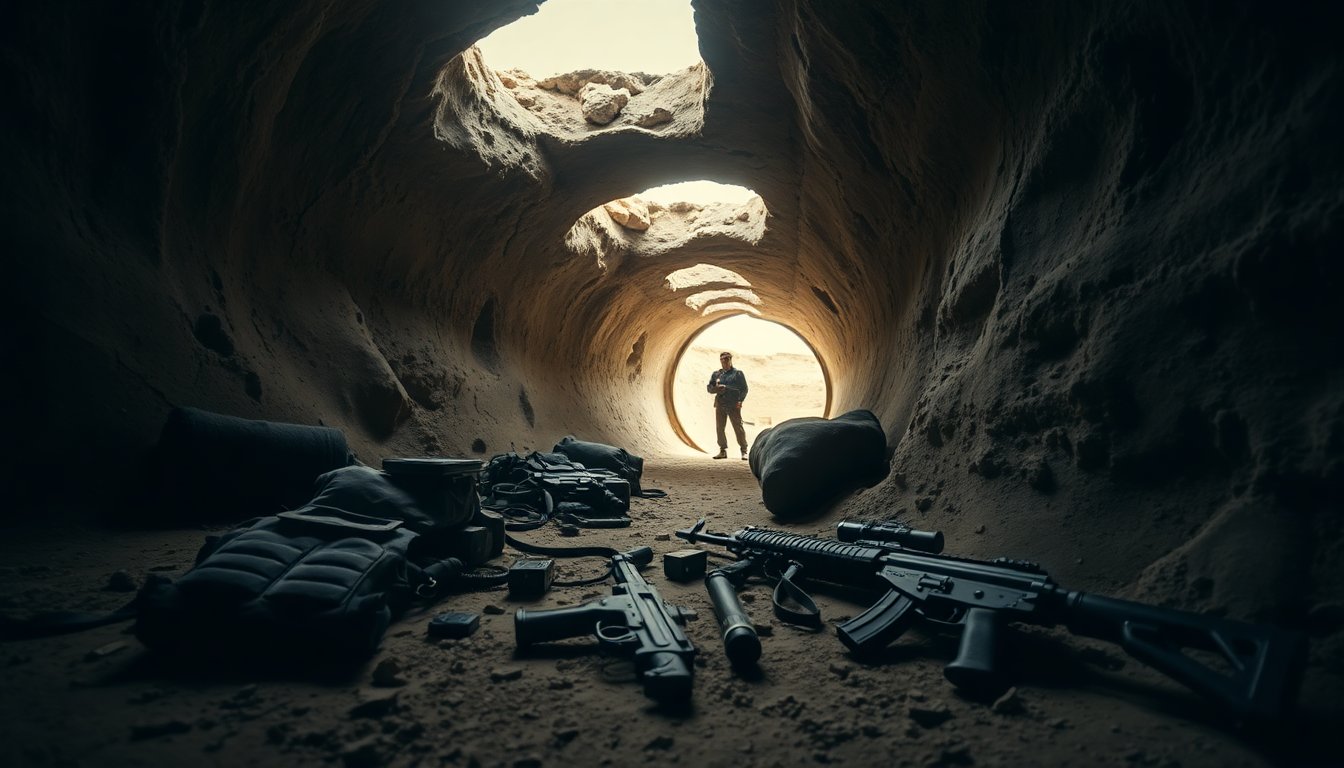
The ongoing conflict in Gaza has reached a critical juncture, with hundreds of Hamas militants trapped within an intricate network of tunnels. This situation poses a significant threat to the fragile ceasefire that has been established in the region. As tensions escalate, both the Israeli government and Hamas are under pressure to address the implications of this standoff.
Reports indicate that approximately 200 Hamas fighters are currently ensnared in the labyrinthine tunnel systems, particularly in the city of Rafah. Israeli officials maintain that allowing these militants to escape without consequences would undermine their efforts to dismantle Hamas’ military capabilities and restore security.
Ceasefire tensions and military operations
In response to the tense situation, Israeli Prime Minister Benjamin Netanyahu has firmly stated that no safe passage will be granted to the trapped militants. His office has dismissed rumors suggesting that Hamas could exit the tunnels unarmed, emphasizing a commitment to the demilitarization of Gaza.
The Israeli Defense Forces (IDF) have made it clear that their operations will continue unabated, targeting Hamas and destroying the tunnels that facilitate their movements. The IDF’s strategy is aimed at neutralizing threats posed by Hamas and preventing any reorganization of their forces, particularly as the ceasefire remains precarious.
Political ramifications and public sentiment
Netanyahu’s hardline stance has faced criticism from various factions within his coalition, particularly from far-right members who believe that allowing any Hamas militants to escape would be a grave mistake. The Israeli National Security Minister, Itamar Ben Gvir, has insisted on a zero-tolerance approach, demanding that any Hamas fighters detected beyond a demarcation line known as the Yellow Line should either face lethal force or be arrested.
Moreover, the situation is complicated by political opposition within Israel. Lawmaker Benny Gantz has voiced concerns about the repercussions of granting amnesty to militants, especially those accused of attacking Israeli soldiers during the ceasefire. His statements highlight a growing unease about the potential for Hamas to regroup if they are allowed to escape the tunnels.
Humanitarian considerations amid conflict
While military operations continue, the humanitarian aspects of the conflict cannot be overlooked. The ceasefire agreement, which was initially intended to facilitate the exchange of hostages and improve aid deliveries to Gaza, is at risk of collapsing due to the ongoing violence. Since the ceasefire began, there have been reports of continued airstrikes and military actions that have resulted in significant casualties among Palestinians.
According to Gaza’s health authorities, since the ceasefire’s initiation, around 240 Palestinians have been killed, and hundreds more have sustained injuries from Israeli strikes. This continuing violence raises questions about the effectiveness of the ceasefire and the potential for future negotiations.
The future of the ceasefire and regional stability
The future of the ceasefire remains uncertain as both sides navigate a complex web of military and political challenges. Hamas has consistently denied any involvement in the recent attacks on Israeli soldiers, claiming that communication with their operatives in occupied areas has been severed.
As the situation unfolds, the international community is closely monitoring developments, urging both Israel and Hamas to prioritize the safety of civilians and work towards a lasting resolution. The ongoing conflict serves as a stark reminder of the volatility in the region and the urgent need for a sustainable peace agreement.


