
Table of Contents
“`html
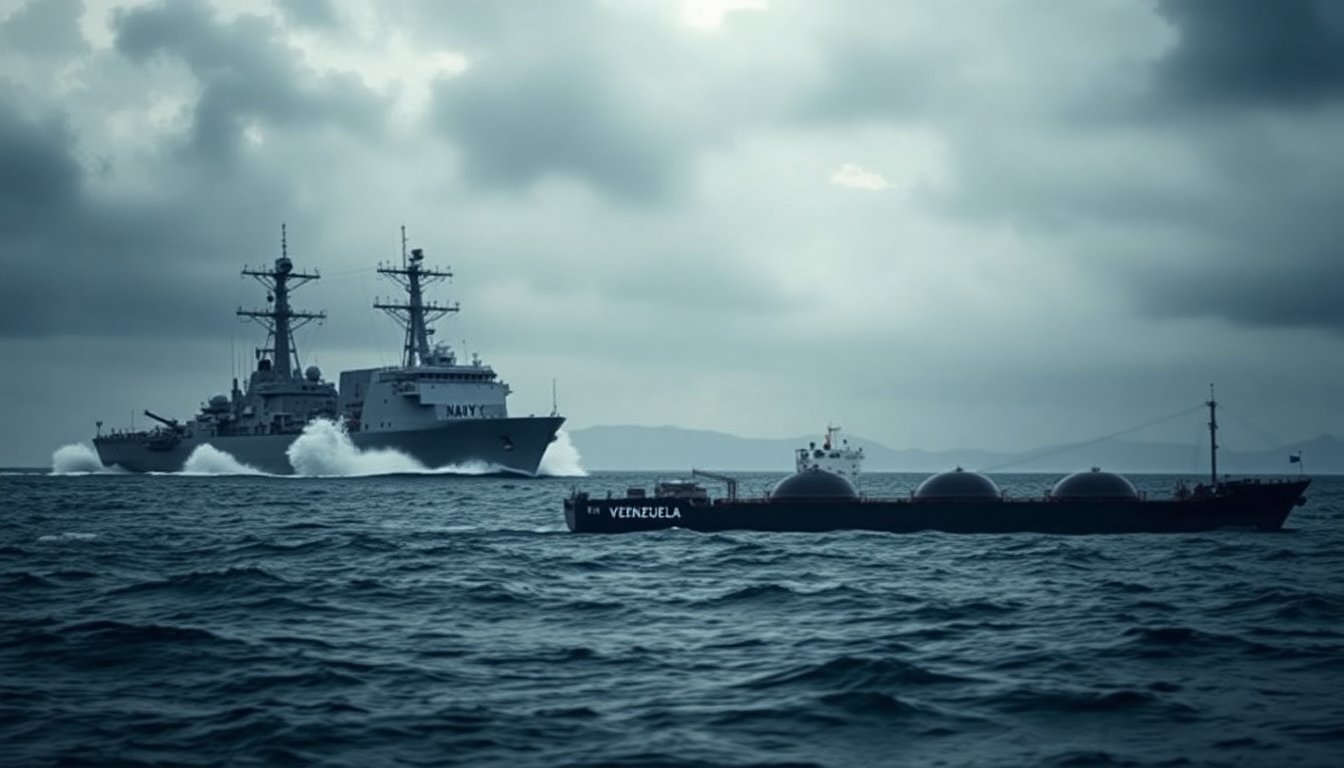
The geopolitical landscape surrounding Venezuela is undergoing a dramatic transformation, primarily driven by the United States’ intensified military operations in the region. Recent actions have included the seizure of a large oil tanker off the Venezuelan coast, a move that signals a new phase in the U.S. strategy towards President Nicolás Maduro’s government. This escalation is part of a broader campaign aimed at undermining Maduro’s authority, which is heavily reliant on oil exports amid a crumbling economy.
Increased military presence and its implications
Since August, the U.S. has significantly ramped up its military presence in the Caribbean Sea, deploying advanced assets such as the USS Gerald R. Ford, the Navy’s cutting-edge aircraft carrier. This deployment is not merely a show of force but an integral part of a larger strategy to bring the Maduro regime to the negotiating table. The Trump administration has made it clear that military action will be a part of its approach to combat drug trafficking and restore stability in the region.
Consequences for diplomatic negotiations
The United States’ newfound role as a direct participant in Venezuelan affairs complicates the relationship between Maduro and the opposition. Historically, previous negotiations have struggled due to a lack of U.S. commitment and internal divisions within both the government and opposition factions. However, with the U.S. now positioned as a key player, there is an opportunity to leverage military presence to encourage dialogue and potentially reach a resolution.
The historical context of U.S. involvement
Over the years, various attempts to mediate the Venezuelan crisis have faltered. Notably, four significant negotiation efforts between 2014 and 2019 were undermined by U.S. ambivalence and a lack of coherent strategy. These included dialogues facilitated by the Vatican and UNASUR, which ultimately failed due to insufficient support from the U.S. and the Maduro regime’s failure to uphold agreements.
For instance, during the 2014 UNASUR-Vatican dialogue, the U.S. did not fully back the initiative, leading to a lack of progress amid widespread protests. Similarly, the 2016 Vatican talks collapsed when Maduro reneged on a crucial agreement. The U.S. must learn from these past missteps to effectively support any future negotiations.
The path forward
The recent military deployments and effective sanctions have failed to change the regime in Venezuela, prompting a reevaluation of U.S. tactics. With the opposition now gaining traction under leaders like María Corina Machado, who has received significant international recognition, there is renewed hope for a more unified front against Maduro. The U.S. can play a crucial role by fostering international support and ensuring that both sides have a vested interest in peace talks.
The role of international stakeholders
As the U.S. establishes itself at the forefront of negotiations, it is essential to consider the perspectives of other international players. Countries like Russia and China have historically supported Maduro, but their influence appears to be waning as they focus on other geopolitical priorities. This shift could provide the U.S. with a strategic advantage to shape the outcome of negotiations.
Moreover, the recent communications between Maduro and Russian President Vladimir Putin reveal that while there is still support, it is coupled with a growing sense of isolation for the Venezuelan leader. The U.S. must capitalize on this opportunity to present itself as a reliable partner for Venezuela’s future, contrasting with the dwindling support from other nations.
Conditions for a successful negotiation
For negotiations to be productive, the U.S. should establish clear objectives that address the concerns of both parties. Issues such as the return of Venezuelan migrants, economic cooperation, and resource access could form the basis of a comprehensive agreement. The U.S. military’s presence should not only serve as a deterrent but also as a platform for fostering diplomatic dialogue.
As the situation evolves, it will be crucial for the U.S. to maintain open channels of communication with all stakeholders involved. The lessons learned from previous negotiations must inform the new strategy, ensuring that the U.S. does not repeat past mistakes but instead works towards a peaceful resolution that benefits the Venezuelan people.
“`