
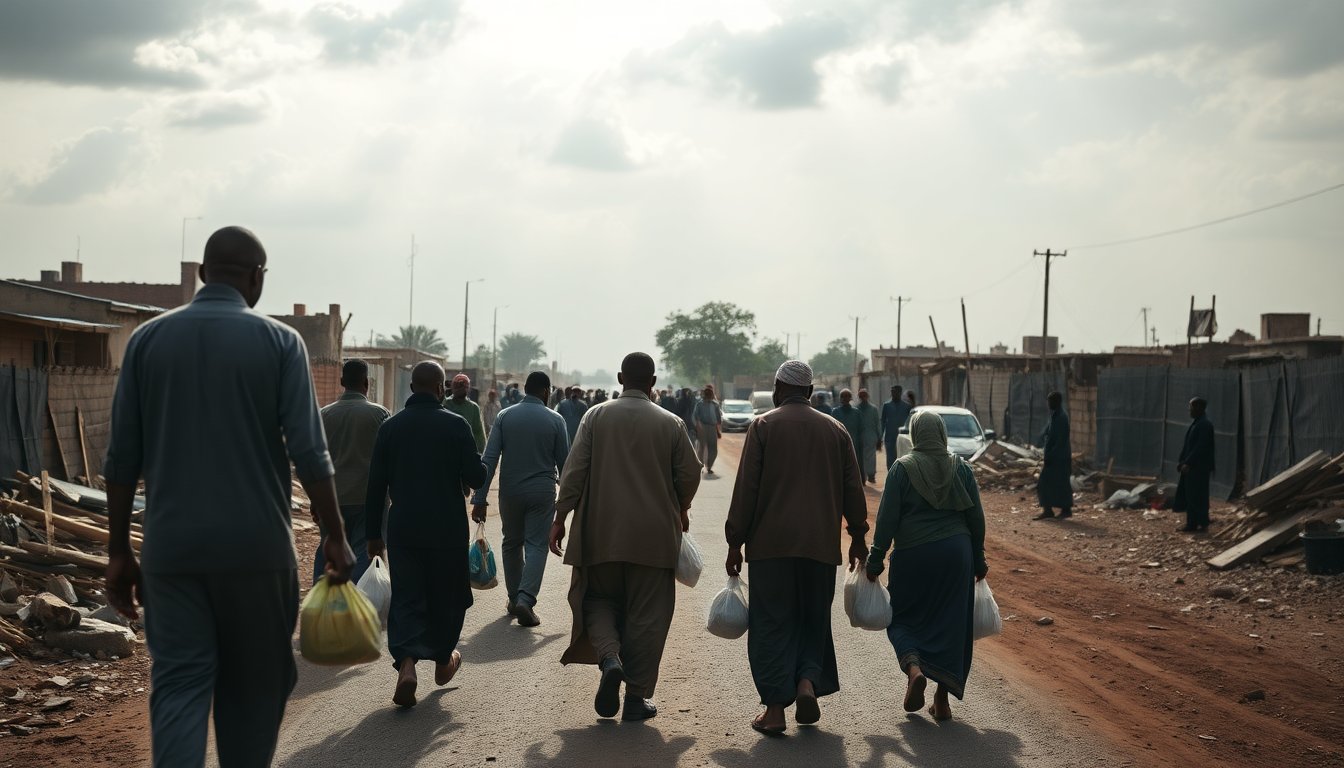
In the heart of North Darfur, the city of El Fashir has become a focal point of escalating violence as the Rapid Support Forces (RSF) have gained control over the last significant stronghold of the Sudanese military. This shift not only signifies a tactical advantage for the RSF but also raises grave concerns about the safety and well-being of the civilian population caught in the crossfire.
The ongoing conflict has led to horrific consequences, with civilians enduring immense hardships as combatants vie for dominance. With the RSF advancing further into the city, the United Nations and various humanitarian organizations are sounding alarms over the deteriorating situation, urging immediate action to protect innocent lives.
The alarming situation in El Fashir
Reports indicate that the RSF has been conducting operations that involve forcibly recruiting young men from the streets of El Fashir. Witnesses have shared harrowing accounts of at least 65 individuals taken from checkpoints in the area, many of whom had previously fled the city to escape the violence. Tragically, upon their return, they were captured and thrust into the conflict.
Forced recruitment and civilian casualties
The Darfur Network for Human Rights (DNHR) has corroborated these testimonies, revealing a grim reality where individuals are armed and sent to fight on the frontlines, often with deadly consequences. Many of those who attempt to escape the chaos are captured again by Sudanese forces, further entrenching the cycle of violence.
Families in El Fashir have been left distraught, having lost loved ones to the brutality of this conflict. Videos circulating online depict RSF fighters gathering groups of young men, validating the claims of forced enlistment. This alarming trend highlights the desperation and ruthlessness that define the current state of affairs in North Darfur.
International response and humanitarian implications
The situation has drawn significant attention from international bodies, particularly the United Nations. Tom Fletcher, the UN Emergency Relief Coordinator, has expressed deep concern over the rising civilian casualties and the increasing attacks on healthcare facilities. He emphasized that with escape routes blocked and hundreds of thousands of civilians trapped, the conditions have become dire.
“Civilians are being shelled, starved, and denied access to essential services,” Fletcher stated. He has called for an immediate ceasefire not only in El Fashir but across all of Darfur and Sudan, underscoring the urgent need for humanitarian access to those in need.
Humanitarian aid efforts hindered
Despite the readiness of aid organizations to deliver lifesaving supplies, the ongoing violence has severely hampered their efforts. Reports indicate that the RSF’s control over El Fashir has impeded the delivery of essential humanitarian assistance, leaving many in dire need of food, medical care, and shelter.
The UN has documented a shocking rise in violence against civilians, with attacks on hospitals and facilities that provide critical care. Notably, a tragic incident resulted in at least 20 fatalities in a strike on a mosque and the city’s last operational hospital. This pattern of violence against non-combatants raises significant concerns regarding adherence to international humanitarian law.
A call for accountability and protection
Fletcher’s statements highlight the necessity for all parties involved in the conflict to respect the principles of international law. He advocates for accountability for those violating humanitarian norms, reminding stakeholders of their obligations to protect civilians and facilitate humanitarian access.
As El Fashir stands on the brink of a humanitarian catastrophe, the international community must act decisively to prevent further loss of life and suffering. The protection of civilians and the provision of humanitarian aid must be prioritized to mitigate the devastating impact of this conflict.


