
Table of Contents
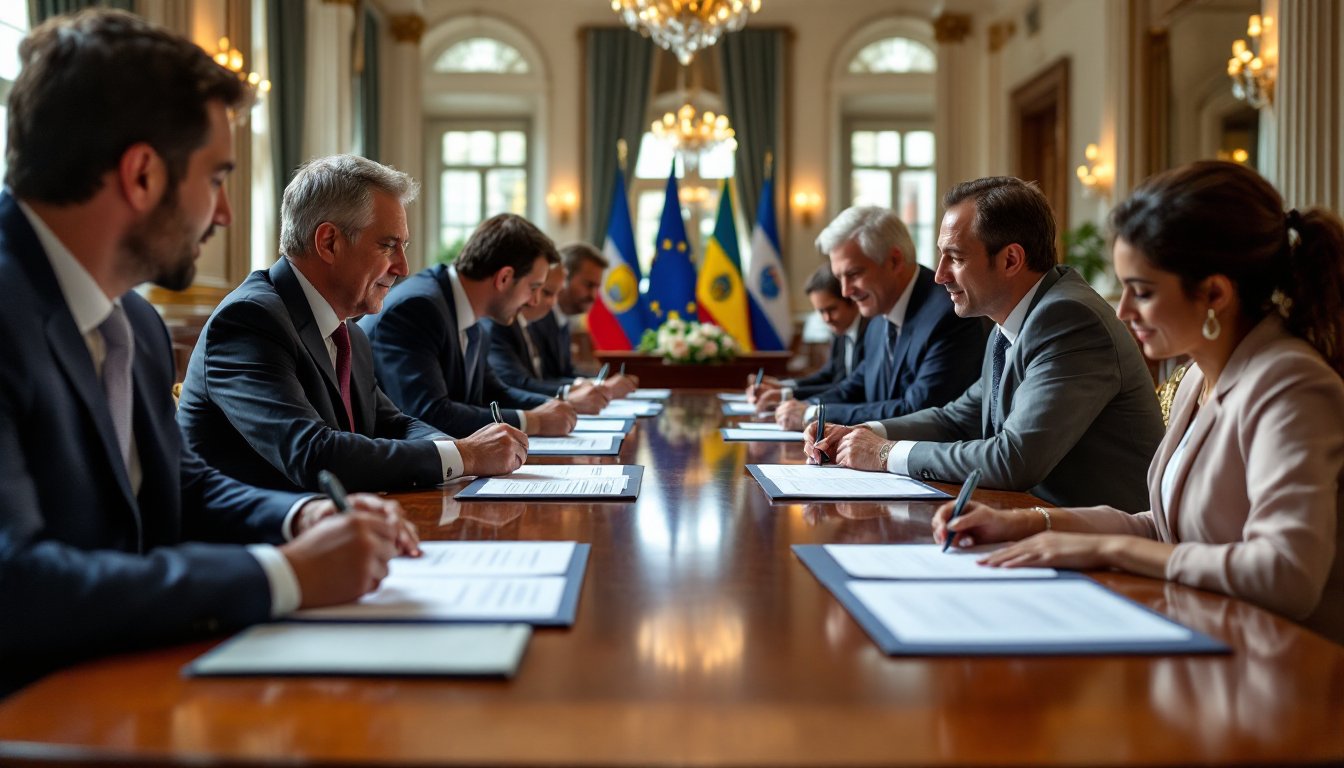
In a momentous development for international trade, the European Union (EU) and the Mercosur bloc, which includes nations from South America, have formalized a long-anticipated free trade agreement. This landmark accord, signed in Asunción, Paraguay, culminates over 25 years of complex negotiations aimed at fostering stronger commercial ties amidst a backdrop of rising protectionism and global trade tensions.
Significance of the agreement
The signing of this agreement represents a remarkable geopolitical achievement for the EU, particularly as it seeks to expand its influence in a region that is rich in natural resources and increasingly contested by major powers like the United States and China. European Commission President Ursula von der Leyen emphasized the deal’s importance by stating, “The geopolitical significance of this agreement cannot be overstated.” She expressed a commitment to fair trade as a means to foster productive long-term partnerships rather than resorting to isolationist measures.
Challenges and opportunities
Despite the celebratory atmosphere surrounding the signing, the agreement still faces significant hurdles before it can come into effect. The European Parliament must ratify the deal, and there are considerable protectionist sentiments on both sides of the Atlantic. European farmers, particularly concerned about the influx of inexpensive agricultural products from South America, have expressed strong reservations. This tension underscores a critical dynamic in the negotiation process, where the interests of domestic producers must be balanced against the potential benefits of increased market access.
Economic implications
By establishing one of the world’s largest free trade zones, the EU-Mercosur agreement is poised to eliminate over 90% of tariffs on goods exchanged between Europe and the South American bloc. This initiative is particularly beneficial for Mercosur nations known for their strong agricultural sectors, such as Brazil and Argentina, as well as for European industries seeking new markets for their manufactured goods.
The potential market created by this agreement encompasses over 700 million consumers and accounts for nearly a quarter of the global gross domestic product. The removal of trade barriers is expected to stimulate economic growth, enhance trade volumes, and ultimately lead to lower prices for consumers in both regions.
Implementation timeline and key products
While the agreement is ambitious, its implementation will unfold gradually over a period of 10 to 15 years. Some tariffs will be phased out progressively, and specific products, including beef from South America, will face strict quotas to alleviate concerns from European farmers about market flooding. Additionally, the EU has pledged to offer generous subsidies to support farmers who may be adversely affected by increased competition.
Italy, a significant player in the EU’s agricultural sector, recently showed support for the agreement, citing the safeguards in place to protect its farmers. However, France has expressed ongoing opposition, highlighting the complexities and differing viewpoints within the EU regarding this expansive trade deal.
Conclusion
The EU-Mercosur trade agreement marks a critical juncture in international relations, reflecting a shift towards enhanced cooperation between Europe and South America. As both regions navigate the challenges posed by rising protectionism globally, this agreement stands as a testament to their commitment to fostering mutual prosperity through trade. The successful implementation of this deal will depend on the ability to address internal concerns while harnessing the vast economic potential that lies ahead.