
Table of Contents
On a pivotal Saturday, leaders from the European Union (EU) and the Mercosur bloc of South America celebrated the signing of a historic free trade agreement, after over 25 years of complex negotiations. This landmark accord addresses the growing wave of protectionism and escalating trade disputes globally, aiming to strengthen economic ties between these two significant regions.
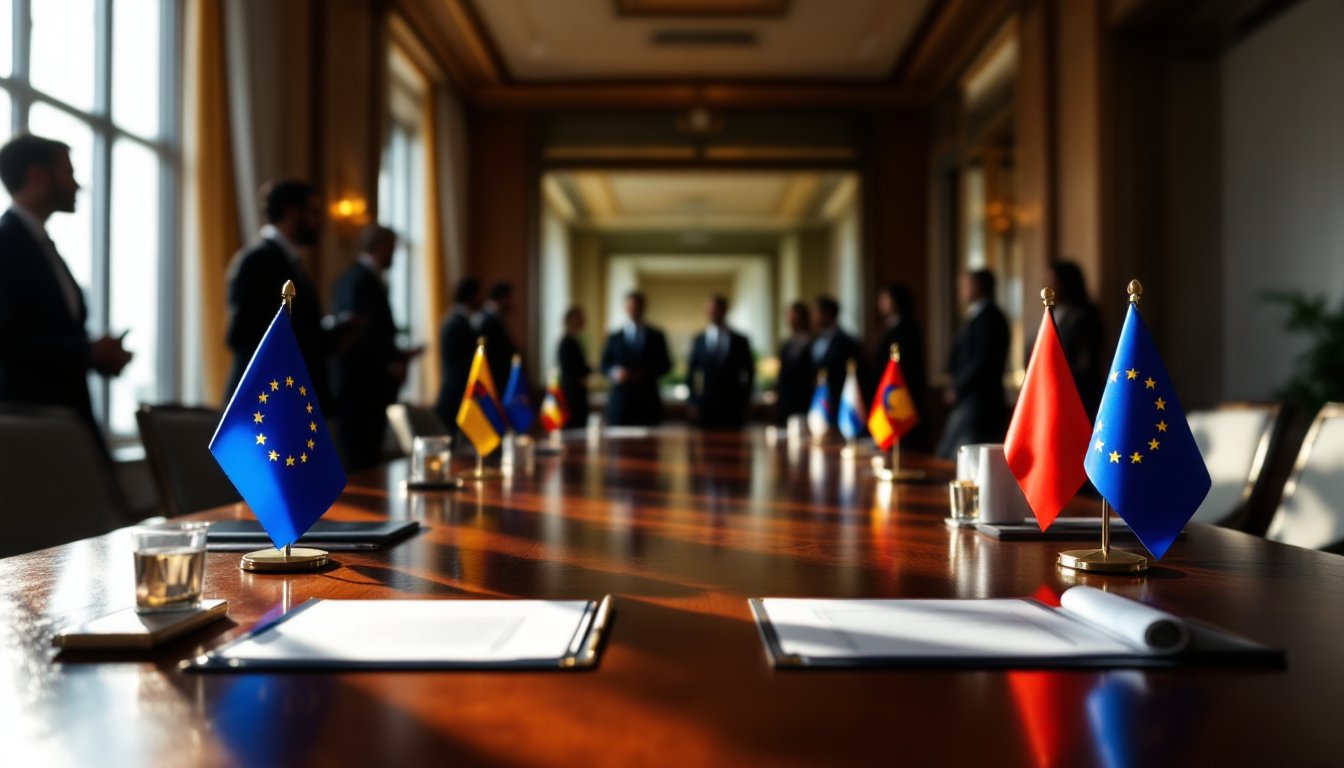
The signing ceremony occurred in the vibrant capital of Asunción, Paraguay, marking a notable achievement for the EU amid rising tariffs from the United States and increased competitiveness from China. This agreement not only enhances the EU’s presence in a resource-rich area but also signals South America’s commitment to maintaining diverse trade partnerships as geopolitical dynamics evolve.
Geopolitical implications of the agreement
European Commission President Ursula von der Leyen emphasized the deal’s profound geopolitical ramifications, stating that the significance of this agreement cannot be overstated in the current climate of skepticism surrounding free trade. At the signing, she remarked, “We prioritize fair trade over tariffs, choosing a cooperative and sustainable partnership over isolationism.”
This sentiment was echoed by leaders of Mercosur nations, including Argentina, Uruguay, and Paraguay, as well as Brazil’s foreign minister. Their collective message underscored a shared vision to enhance prosperity for their citizens through collaboration.
Creating a vast free trade zone
The agreement aims to establish one of the world’s largest free trade zones, linking over 700 million consumers and accounting for approximately a quarter of global GDP. This ambitious initiative leverages South America’s agricultural strengths, particularly its renowned beef production, while addressing Europe’s industrial demands for new markets for automobiles and machinery.
Despite the enthusiasm surrounding the deal, it faces a critical challenge: approval by the European Parliament. Numerous protective interests, particularly from European farmers concerned about the influx of inexpensive South American agricultural products, could pose significant obstacles to the agreement’s ratification.
Details of the trade agreement
The agreement stipulates that over 90% of tariffs on goods and services exchanged between the EU and Mercosur will be eliminated, fostering a more dynamic trading environment. However, some tariffs will gradually reduce over the next 10 to 15 years, with strict quotas applied to sensitive agricultural products such as beef.
These provisions have garnered support from various factions within Europe, including Italian agricultural representatives who back the agreement due to accompanying safeguards and EU subsidies for struggling farmers. Nonetheless, opposition persists, particularly from France, which continues to voice concerns about potential impacts on local agriculture.
Future of global trade relations
This trade agreement stands as a beacon of hope amid the uncertainties plaguing international commerce today. As expressed by Christine Lagarde, President of the European Central Bank, during recent discussions among G7 finance ministers, the focus should be on eliminating uncertainties and establishing fair trade rules that benefit all parties involved.
The signing of this agreement is a crucial step toward reshaping global trade relations, positioning both the EU and Mercosur as formidable players in an increasingly interconnected world. As they move forward, the emphasis will be on translating this agreement into tangible benefits for their respective economies while navigating the challenges of protectionist sentiments.