
Table of Contents
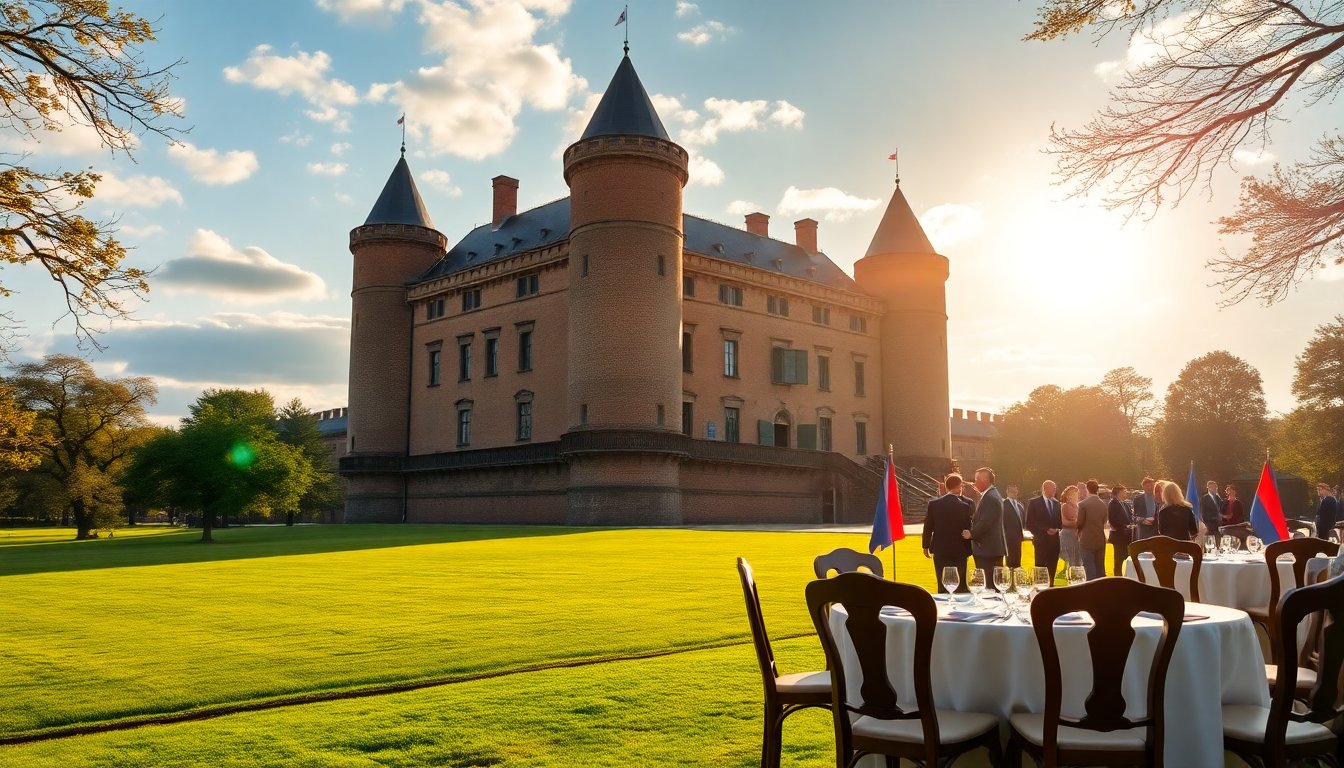
The landscape of European politics is poised for transformation as leaders of EU member states prepare for an informal retreat to address a pressing issue: enhancing competitiveness. This meeting is scheduled for February 12 at the historic Alden Biesen Castle, a 16th-century fortress located in the scenic Limburg region of Eastern Belgium. European Council President António Costa is organizing this gathering to encourage collaborative dialogue among the bloc’s heads of state and government.
This summit follows a recent discussion regarding the European Commission’s ambitious proposal aimed at revitalizing the industrial sector across Europe. By integrating funding for research, defense, and innovation from the EU’s forthcoming 2028-2035 budget, leaders intend to ignite a pan-European industrial revival. Costa’s initiative to establish informal summits serves as a strategic approach to foster open discussions on broad, strategic topics without the pressure for immediate resolutions.
Creating a space for open dialogue
Recognizing the challenges associated with formal negotiations, Costa emphasized the importance of holding these informal meetings outside traditional bureaucratic environments. Initially, security concerns necessitated that the first retreat occur at the Egmont Palace in Brussels last February. During this inaugural session, EU leaders addressed various issues related to European defense. Subsequently, the bloc’s leaders convened in Luanda, Angola, to discuss peace efforts in Ukraine, highlighting the necessity of maintaining open lines of communication during turbulent times.
A focus on competitiveness
As the February meeting approaches, the focus will be firmly set on enhancing European competitiveness. Costa envisions these informal gatherings not merely as updates but as opportunities for substantive debates that often get sidelined in formal settings. By moving away from conventional summit formats, he aims to cultivate an environment conducive to brainstorming and exploring innovative solutions to Europe’s economic challenges.
In a recent interview with the Portuguese daily Expresso, Costa reflected on his first year in office, noting the stabilization of EU-U.S. relations as a significant achievement. He observed that while there is a collective European voice, the dynamics of negotiation differ significantly between a union of 27 nations and a singular federal entity like the United States. This distinction is crucial as Europe charts its course in a complex global landscape.
Challenges ahead
Despite these positive developments, the EU faces considerable challenges, particularly in governance. The ongoing political turmoil in Spain, exemplified by the imprisonment of notable political figures such as José Luis Ábalos, presents substantial obstacles for Prime Minister Pedro Sánchez. This situation complicates legislative processes and reflects broader issues within the EU regarding judicial independence and political accountability.
Moreover, the recent removal of the attorney general by Spain’s top court has exacerbated tensions between the judiciary and the prime minister’s office, raising concerns about the integrity of judicial processes. Such events underscore the delicate balance of power present in democratic systems and the potential implications for governance throughout the EU.
Shifting political tides in Copenhagen
The political landscape in Denmark also reveals evolving dynamics, as for the first time in over a century, the Social Democrats will not govern Copenhagen. This transition to a left-wing mayor signifies a pivotal shift in local politics, reflecting broader trends in European governance where citizens increasingly demand progressive change and accountability.
As the informal retreat approaches, the emphasis remains on developing strategies to enhance competitiveness while navigating the complexities of internal and external political challenges. The discussions at Alden Biesen Castle will provide a vital platform for EU leaders to align priorities and present a united front amid global competition.