
Table of Contents
In a recent escalation of diplomatic tensions, U.S. President Donald Trump has threatened to impose tariffs on several European nations over military activities in Greenland. This situation has prompted a strong response from European leaders, emphasizing their commitment to solidarity and cooperative security in the Arctic region.
At the World Economic Forum held in Davos, Ursula von der Leyen, President of the European Commission, articulated the EU’s collective stance against Trump’s proposed tariffs. She underscored the importance of maintaining transatlantic relations and warned that any unilateral actions from the U.S. would be met with a united front from Europe.
Trump’s tariff threats and their implications
In a series of announcements, Trump declared that starting February 1, a 10 percent tariff would be applied to goods imported from Denmark, Norway, Sweden, France, Germany, the U.K., the Netherlands, and Finland, escalating to 25 percent by June 1. These tariffs are ostensibly linked to the U.S. pursuit of acquiring Greenland, a territory currently governed by Denmark.
Despite Trump’s assertions, polls reveal that the American public largely disapproves of his ambitions regarding Greenland. Many view the proposed acquisition as unrealistic and detrimental to international relations. The Danish and Greenlandic governments have consistently rejected Trump’s overtures, reinforcing their commitment to sovereignty.
The European response
In light of these developments, European leaders have rallied in support of Denmark and Greenland. Von der Leyen emphasized that tariffs would only serve to undermine the strong bonds between Europe and the U.S., potentially leading to a dangerous downward spiral in diplomatic relations. The EU’s commitment to a collective response highlights a significant shift in how Europe views its relationship with the U.S.
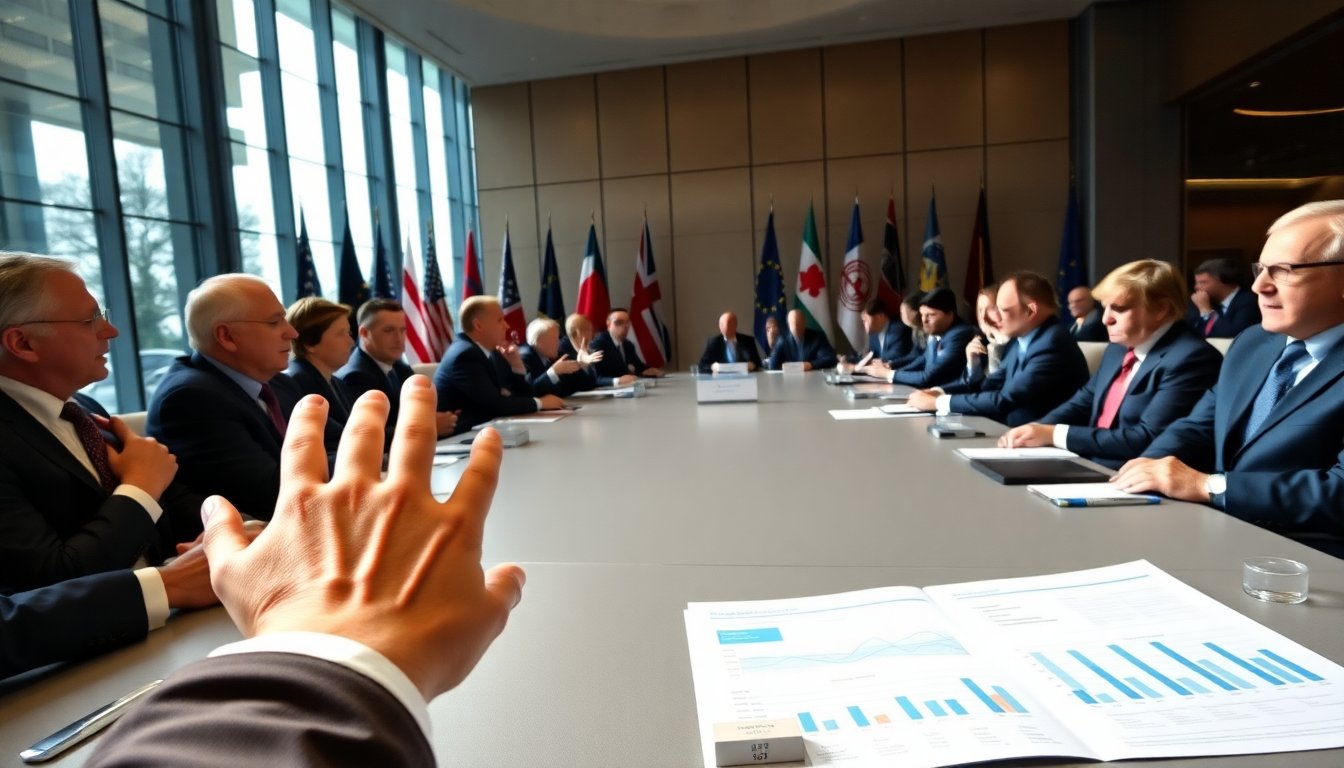
European Council President Antonio Costa announced plans for an extraordinary meeting of the Council to address the significance of the situation in Greenland. This meeting aims to reaffirm the EU’s unified stance and strategize on how to counteract U.S. pressure.
The geopolitical landscape of Greenland
Greenland’s strategic position, nestled between North America and Europe, makes it a focal point for both military and economic interests. The territory holds vast natural resources and is crucial for the U.S. ballistic missile defense strategy. Trump’s interest in Greenland has been framed within a larger narrative of securing American interests in the Arctic.
However, Trump’s approach has drawn criticism not only from European leaders but also from analysts who argue that his tactics may inadvertently strengthen adversarial nations like Russia and China. The EU’s foreign affairs chief, Kaja Kallas, remarked that escalating tensions could provide opportunities for these nations to exploit divisions among Western allies.
Calls for diplomatic resolution
French President Emmanuel Macron reiterated the need for respect regarding national sovereignty, asserting that threats and intimidation tactics will not influence European policies. He called for a coordinated response should the tariffs be enacted, emphasizing that Europe stands firm in protecting its interests.
Meanwhile, British Prime Minister Keir Starmer and other leaders have voiced their opposition to Trump’s tariff strategy, framing it as detrimental to the principles of NATO and collective security. Discussions among the affected nations are ongoing, with a focus on crafting a unified approach to counteract U.S. actions.
In conclusion, the situation surrounding Trump’s Greenland ambitions has prompted a significant response from Europe. As leaders emphasize unity and the importance of diplomacy, the future of transatlantic relations hangs in the balance. The unfolding events highlight the complexities of international politics and the delicate balance of power in the Arctic region.