
Table of Contents
Gulf flare-up upends Dubai’s image of effortless luxury and seamless movement
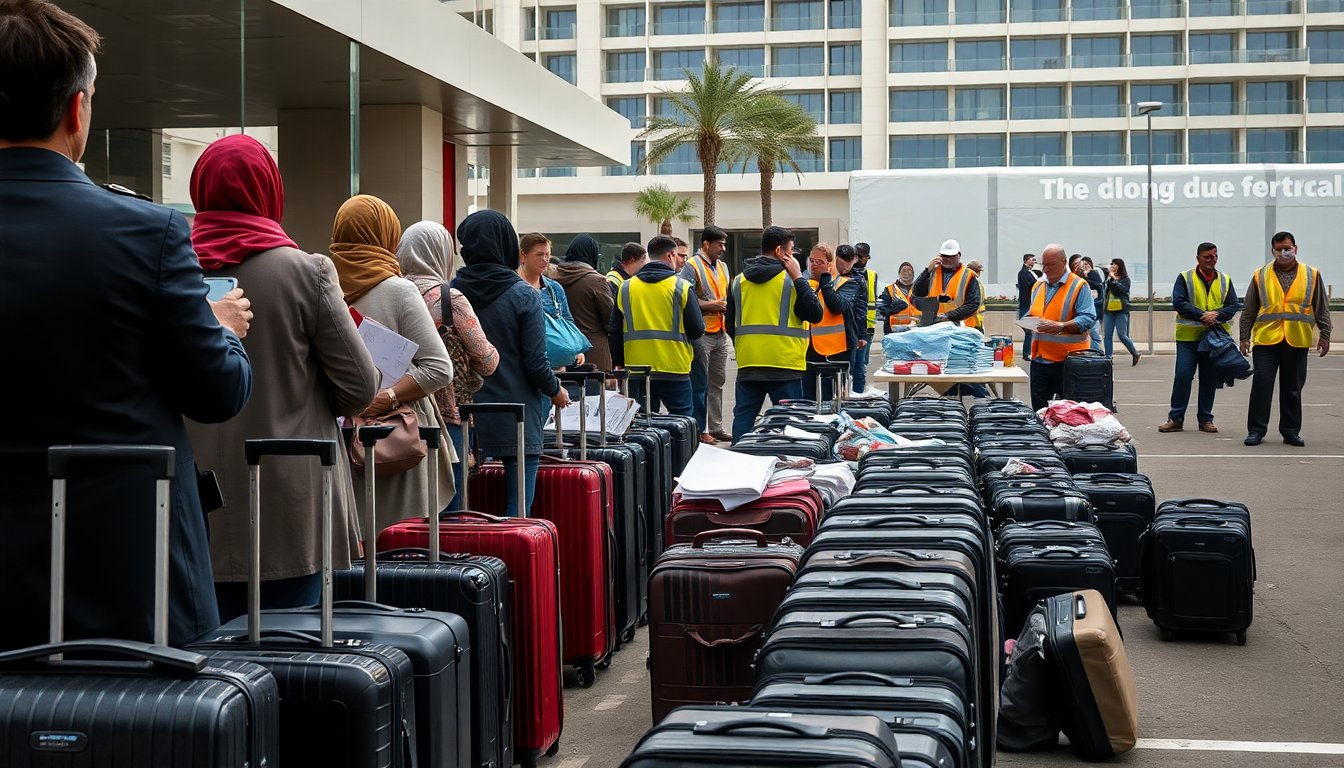
When violence flared in the Gulf, Dubai’s glossy façade of perpetual motion and comfort splintered. A city marketed as an international stage for luxury living and frictionless travel suddenly had to contend with lines at makeshift processing centers, chartered flights and frantic visa checks. For many residents and visitors—tourists, expats, influencers and cruise passengers—the choreography of arrivals and departures became the day’s only performance.
Evacuations and emergency responses
Large employers, cruise operators and private companies activated emergency plans almost immediately. One tech firm moved roughly 1,000 staff in a rapid extraction reported on 6 March 2026. Cruise lines scrambled charters, buying commercial seats where they could, to get hundreds of passengers off ships and home.
These operations mixed commercial aviation, private charters and local logistics. Ground teams ferried people from hotels and marinas to ad hoc terminals; airports and nearby airspace were stretched thin. Embassies coordinated with carriers to secure seats and temporary travel documents. Medical checks, identity screening and luggage tracking were integrated into the process to cut delays. Volunteers and nonprofits filled gaps, offering translation, welfare support and triage.
Organizers had to juggle aircraft availability, crew-rest rules and regulatory clearances while managing fuel supplies and berthing space at crowded ports. Officials cautioned that final passenger counts and timetables would only emerge after reconciling manifests and corporate lists.
How charters and coordination were put together
Coordination began with verifying who could travel and under what conditions. Companies contracted private carriers and negotiated slots with aviation authorities. Ground teams established secure transfer routes from hotels and piers; temporary permits allowed aircraft to land and depart. Embassies maintained lists of nationals and worked with airlines to prioritise vulnerable people.
Scheduling was a fast-moving puzzle: refueling, customs, crew briefings and quick turnarounds had to be synchronized. Organisers set up hotlines and online portals to keep families informed. Alongside the technical challenges, there were human ones—confusion at night, anxiety as military aircraft patrolled overhead, and the very real stress of people trying to figure out how to reach safety.
Influencers, expats and the sudden unravelling of a brand
For years Dubai has been a magnet for creators and entrepreneurs drawn by low taxation, permissive residency rules and endless backdrops for content. Towering skylines, marinas and five-star hotels make for efficient, aspirational storytelling. But when the security picture shifts, those same features can concentrate vulnerability.
Some high-profile social-media figures, with audiences in the hundreds of millions, swapped polished lifestyle reels for unfiltered clips from hotels and shelters—appeals for help, footage of movement restrictions, firsthand accounts of fear. The line between glossy promotion and on-the-ground reporting disappeared overnight. That shift forced a reckoning: what responsibilities do creators have when their platforms become emergency channels? And how resilient are personal brands tied to a particular place?
Why Dubai attracts and why that matters
The city’s appeal is practical as well as aesthetic: low personal taxation, newly introduced low corporate taxes, dense networks of collaborators and comparatively affordable luxury housing for certain standards. These conditions make it easy to build lucrative digital businesses fast. But they also create concentrated exposure. When borders close or flights stop, entire business models—based on continuous movement and instant access—feel the strain.
Some creators will decide the benefits still outweigh the risks. Others may reconsider residency and continuity planning, adding legal counsel and contingency clauses to contracts. The episode highlighted how mobility, tax strategy and personal security intersect—and how quickly perception of safety can shift.
Practical lessons for businesses, creators and policymakers
Large employers, cruise operators and private companies activated emergency plans almost immediately. One tech firm moved roughly 1,000 staff in a rapid extraction reported on 6 March 2026. Cruise lines scrambled charters, buying commercial seats where they could, to get hundreds of passengers off ships and home.0
- – Organizations should formalize contingency plans for staff mobility in higher-risk regions. Clear lines of authority, emergency communication protocols and legal support shorten delays and reduce confusion during evacuations. – Travel operators and hotels need adaptive operational models: pre-arranged repatriation channels, flexible booking and liaison roles with consular services speed responses when demand spikes. – Creators and talent managers ought to bake risk advisers and legal counsel into relocation decisions. Contracts should include jurisdiction clauses, insurance details and data-handling protocols for crises. – Policymakers and platforms should clarify rules around tax residency, digital nomad status and cross-border monetization. Greater transparency would reduce loopholes and the operational fragility they create.
Operational fixes and reputational risk
Large employers, cruise operators and private companies activated emergency plans almost immediately. One tech firm moved roughly 1,000 staff in a rapid extraction reported on 6 March 2026. Cruise lines scrambled charters, buying commercial seats where they could, to get hundreds of passengers off ships and home.1
Large employers, cruise operators and private companies activated emergency plans almost immediately. One tech firm moved roughly 1,000 staff in a rapid extraction reported on 6 March 2026. Cruise lines scrambled charters, buying commercial seats where they could, to get hundreds of passengers off ships and home.2
A sensory closing — what a chef notices
Large employers, cruise operators and private companies activated emergency plans almost immediately. One tech firm moved roughly 1,000 staff in a rapid extraction reported on 6 March 2026. Cruise lines scrambled charters, buying commercial seats where they could, to get hundreds of passengers off ships and home.3