
Table of Contents
In a recent commentary, Sarah Saldaña, the former director of Immigration and Customs Enforcement (ICE) under President Obama, expressed strong disapproval of the enforcement strategies implemented during the Trump administration. She argues that these measures resemble those found in a police state, raising significant concerns about civil liberties and community safety.
The transition from the Obama administration’s approach to immigration enforcement to that of Trump has sparked considerable discussion, particularly due to Trump’s aggressive stance on mass deportations. While Obama’s tenure resulted in a significant number of deportations, critics often labeled him as the “Deporter-in-Chief.” However, Saldaña contends that the operational tactics employed by Trump’s ICE differ markedly, suggesting they are an outlier compared to previous practices.
Concerns over identity verification practices
In an interview with CNN, Saldaña responded to a clip featuring Department of Homeland Security (DHS) Secretary Kristi Noem, who discussed the necessity for ICE agents to verify the identities of individuals, including those nearby. When asked whether this was standard protocol, Saldaña firmly disagreed, stating, “That is not the practice. That’s not part of the protocol.”
She elaborated that the objective of the Obama administration was to enhance community safety, rather than conducting indiscriminate sweeps in neighborhoods. Saldaña emphasized the importance of reframing the conversation around immigration enforcement, stating, “I always object to the term ‘raids’ because what we conducted were targeted operations.”
The implications of requiring identification
Saldaña highlighted that demanding identification from American citizens during ICE operations represents a significant policy shift. She remarked that this practice is alarming and poses potential violations of civil rights, stating, “It is putting an onus and getting very close to infringing on the civil rights of the ordinary citizen.”
Furthermore, she raised concerns regarding a recent legal decision, the Vasquez Perdomo case, which she believes has paved the way for these troubling identification requirements. “Police officers can ask you to prove your identity,” she noted, “but that is very different from proving you’re a citizen of the United States.”
Escalating tensions in Minneapolis
As the situation intensifies, Minneapolis Mayor Jacob Frey has also entered the fray, calling for peace amidst ongoing protests against ICE operations. His previous statements demanding ICE to “get out” of the city followed an incident involving a Venezuelan immigrant who was shot after an altercation with federal agents.
During a press conference, Frey reiterated the need for calm, asserting, “We cannot be at a place right now in America where we have two governmental entities that are literally fighting one another.” His comments reflect the growing tensions between local authorities and federal immigration enforcement, highlighting the chaos that has ensued.
The role of community safety
Frey has criticized ICE’s actions, particularly in light of recent violence surrounding immigration enforcement efforts. He pointed out that the presence of ICE agents in the community has contributed to a sense of unrest rather than safety. “Your stated reason for being in this city is to create some kind of safety, and you are doing exactly the opposite,” he stated emphatically.
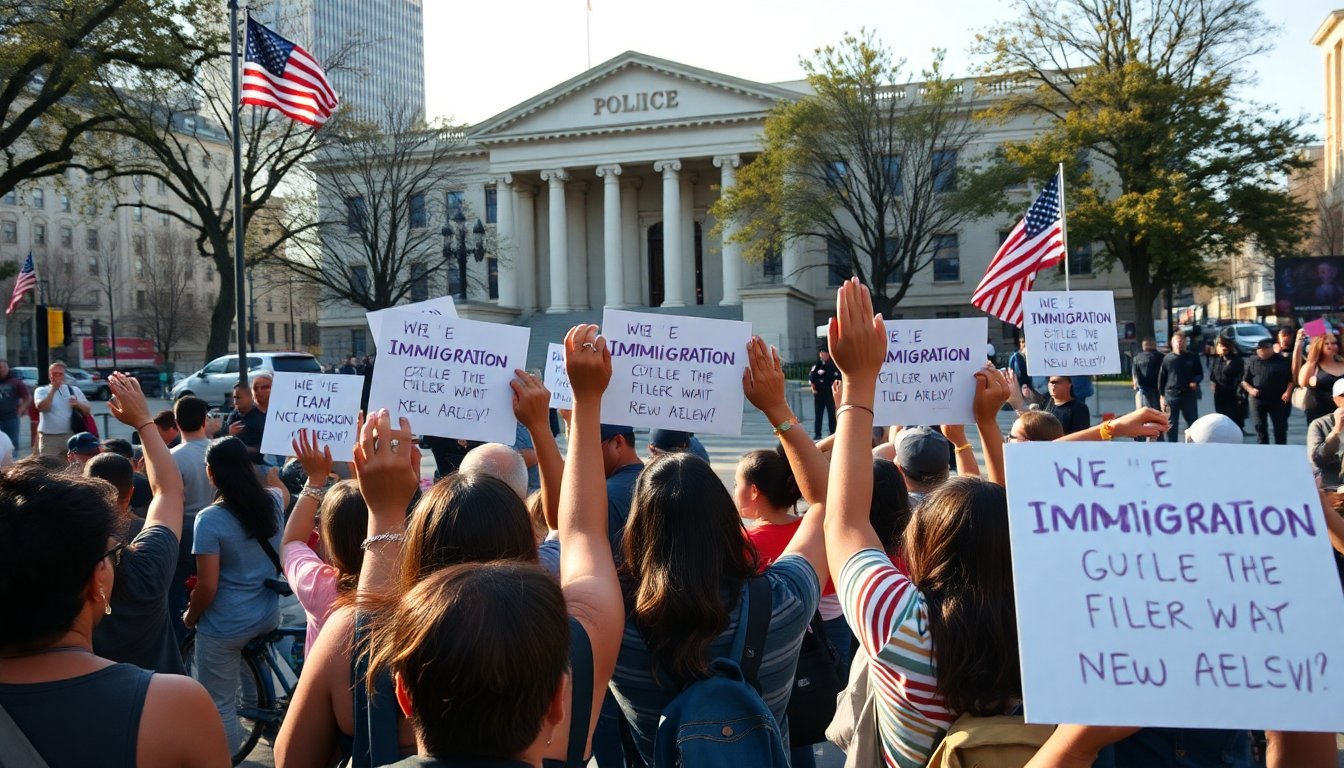
The escalating clashes between protesters and ICE agents showcase the broader national debate surrounding immigration policies and enforcement. With community safety at the forefront, Saldaña and Frey’s statements underscore the urgent need to reassess current practices and their implications for civil rights and public trust.
Calls for reform and accountability
The transition from the Obama administration’s approach to immigration enforcement to that of Trump has sparked considerable discussion, particularly due to Trump’s aggressive stance on mass deportations. While Obama’s tenure resulted in a significant number of deportations, critics often labeled him as the “Deporter-in-Chief.” However, Saldaña contends that the operational tactics employed by Trump’s ICE differ markedly, suggesting they are an outlier compared to previous practices.0
The transition from the Obama administration’s approach to immigration enforcement to that of Trump has sparked considerable discussion, particularly due to Trump’s aggressive stance on mass deportations. While Obama’s tenure resulted in a significant number of deportations, critics often labeled him as the “Deporter-in-Chief.” However, Saldaña contends that the operational tactics employed by Trump’s ICE differ markedly, suggesting they are an outlier compared to previous practices.1