
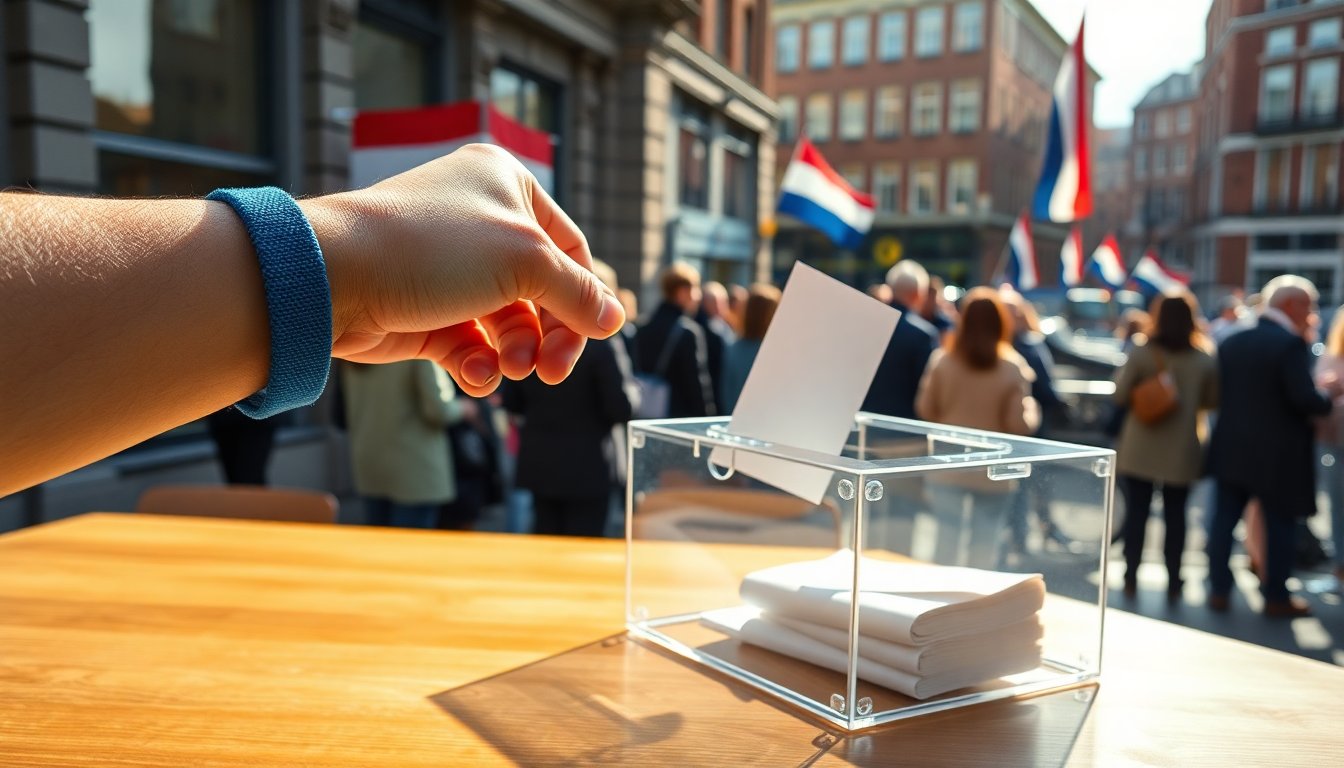
The recent elections in the Netherlands have marked a significant turning point in the country’s political landscape. Voters, seeking change after years of internal conflict and stagnation, delivered a dramatic electoral outcome. The emergence of new alliances and the decline of established figures have left observers considering the future direction of Dutch politics.
Despite this shift, the nation remains deeply divided. The contrasting fortunes of the centrist liberal party D66 and the far-right Party for Freedom (PVV) illustrate the complex environment, where collaboration may prove challenging.
Key players in the election
Rob Jetten’s rise to prominence
Rob Jetten, leader of D66, celebrated a triumphant evening as his party surged to the forefront of the election results. With a jubilant crowd chanting the slogan “It is possible,” Jetten expressed his excitement about what appears to be a historic achievement for D66. The party is projected to secure approximately 26 seats, a remarkable increase from the nine seats it held in the previous election.
Highlighting the significance of this victory, Jetten remarked, “We’ve shown not only to the Netherlands but also to the world that it’s possible to defeat populist and extreme-right movements.” His campaign focused on progressive issues such as housing and education, positioning himself as a counterforce to Geert Wilders, the leader of the PVV.
The VVD’s surprising resilience
Conversely, the People’s Party for Freedom and Democracy (VVD) faced a daunting electoral landscape. Initially bracing for a significant loss, the party managed to minimize its setbacks, losing only two seats compared to previous elections. This outcome, while not a victory, positioned the VVD as the least affected party from the outgoing government, showcasing its adaptability amidst a turbulent political climate.
Christian Democrat leader Henri Bontenbal echoed the sentiment for a return to “decent” politics, asserting that Dutch voters were seeking stability after years of political turmoil. His party’s campaign, advocating for respect and constructive dialogue, resonated well, resulting in an impressive gain of seats.
Frans Timmermans and the left’s struggles
The challenges faced by the left
In stark contrast, Frans Timmermans, who left his influential role at the European Commission to lead the leftist coalition, experienced a significant setback. Despite expectations that the chaotic tenure of the right-wing government would bolster support for left-leaning parties, the GreenLeft-Labor alliance suffered losses. The coalition fell short of its objectives, leading to Timmermans’s resignation as alliance leader following disappointing results.
This outcome raises critical questions about the future of left-wing politics in the Netherlands, as traditional parties like the Socialist Party (SP) also faced declines in their representation. The SP, which saw its seat count nearly halved, illustrates the broader struggle for leftist parties to galvanize support during a period of political upheaval.
Future prospects for the left
With the left now contemplating its next steps, the merging of GreenLeft and Labor into a single entity next year may signal an attempt to unify their efforts. However, the road ahead appears challenging, particularly as they may find themselves navigating a coalition led by Jetten.
The future of Geert Wilders
Wilders remains a key player
Despite suffering a significant loss of 11 seats, Geert Wilders’s political presence cannot be understated. His party, the PVV, did not hold an election watch party, leaving many curious about his immediate reactions. Nevertheless, when he eventually addressed the media, Wilders characterized the loss as a “heavy setback.”
Despite this shift, the nation remains deeply divided. The contrasting fortunes of the centrist liberal party D66 and the far-right Party for Freedom (PVV) illustrate the complex environment, where collaboration may prove challenging.0
Despite this shift, the nation remains deeply divided. The contrasting fortunes of the centrist liberal party D66 and the far-right Party for Freedom (PVV) illustrate the complex environment, where collaboration may prove challenging.1


