
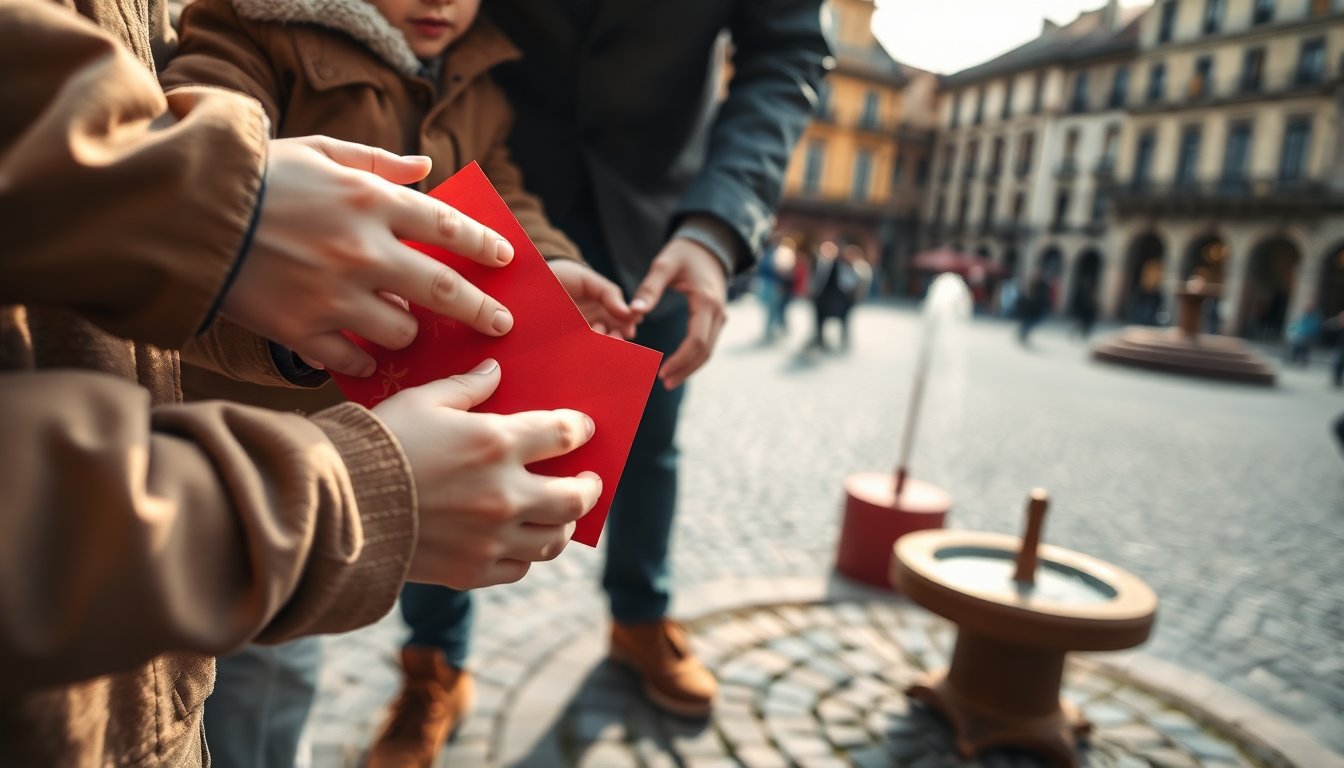
Cities come alive where ritual and design meet. Small, time-honored practices and carefully crafted public spaces both shape how urban life feels, how people gather, and even how money flows through neighborhoods. On one hand there are intimate domestic scenes—like the playful Lunar New Year’s Eve custom sometimes called “selling ignorance,” where children act coy to win sweets or red envelopes. On the other are the larger, built stages of everyday city life—Barcelona’s plazas, markets, parks and museums—where spontaneous encounters and formal events mingle. Together they show how performance and place knit social ties, focus demand, and produce measurable economic effects.
A playful ritual that moves a neighborhood
On Lunar New Year’s Eve in parts of East Asia, families stage a bit of mischief: children pretend not to know something or put on short skits, coaxing treats, lucky money or small tokens from amused adults. It’s theatre in miniature—part entertainment, part social schooling. Beyond the laughter, the ritual circulates generosity, allows temporary role reversals that reinforce family bonds, and hands down jokes and expectations from one generation to the next. Practically speaking, it also pushes evening activity into local streets and courtyards, nudging small-scale spending and strengthening a sense of belonging.
Barcelona’s public realm as a living theatre
Barcelona operates that same logic at city scale. Its plazas, leafy parks, beachfront promenades, bustling markets and cultural institutions are stages for daily life and planned spectacle alike. Plazas turn into casual meeting places, La Boqueria into a theater of food and trade, and museums or concert halls into scheduled performances. When these spaces are well cared for and thoughtfully programmed, they invite longer visits, increase nearby retail and hospitality income, and create hubs where planned programming and spontaneous encounters reinforce one another.
How rituals and places show up in the numbers
Studies repeatedly find that both small rituals and formal events cause noticeable rises in foot traffic and local spending. Streets near parade routes or major venues can see double-digit increases in visitors on event days, and nearby cafes, food stalls and vendors routinely report better takings. Regular, predictable programming helps businesses smooth revenue and attracts investor interest in cultural districts. Meanwhile, modest municipal investments—improved lighting, better sanitation, clear crowd management—often yield outsized returns by making visits safer, longer and more pleasant.
What makes a ritual or plaza economically and socially successful
Several practical factors shape whether a place or practice becomes an asset:
– Ease of access: good transport and walkability bring people in.
– Program variety and frequency: regular events create habits; diverse offerings draw different age groups.
– Maintenance and safety: clean, well-managed spaces keep people lingering.
– Community ownership: authentic, locally rooted traditions sustain long-term engagement.
– Seasonality and weather: these naturally influence attendance patterns.
Winners, losers and policy levers
Benefits are real but uneven. Hospitality venues and street vendors see immediate gains during ritual nights or programmed events; markets act as neighborhood anchors; museums sustain specialist jobs and attract cultural tourists; parks handle large family gatherings and festivals. For planners and funders, the practical lesson is clear: targeted spending on public infrastructure and programming—paired with transparent rules for commercial activity—can stabilize local economies and amplify social returns. Investors tend to favor projects that deliver repeatable footfall and multiple revenue streams—tickets, memberships, concessions.
A closer look at “selling ignorance”
The “selling ignorance” custom traces back to eras such as the Northern Song. It isn’t just a quaint moment of play: anthropologists note its role in redistributing small tokens, enlivening public space, and centering children in communal celebration. By temporarily loosening hierarchies through humor, the practice reinforces trust and social networks. In dense urban neighborhoods, that same play can concentrate evening activity in ways that help local shops and food sellers.
Barcelona in practice: parks, markets and cultural anchors
Barcelona shows how design multiplies cultural impact. Large green spaces like Parc Central and Parc del Fòrum accommodate both quiet leisure and large events; beaches such as Mar Bella and family hubs like Parc de Can Dragó anchor daily routines. La Boqueria remains a perennial draw, while institutions from CosmoCaixa to the Museu Nacional d’Art de Catalunya generate steady streams of visitors whose presence benefits nearby cafés, shops and services. Heritage viewpoints and landmarks stretch visitor flows along transit corridors, increasing demand for ancillary offerings.
Balancing economic gain with social value
Of course, there are downsides: overcrowding, wear on heritage, unequal distribution of benefits and rising upkeep costs. Informal transactions and volunteer labor can slip under the radar of conventional accounting, complicating measurement. Still, cities that pair community stewardship with robust data—footfall counts, dwell-time tracking and local revenue monitoring—can design policies that spread benefits more fairly. Modest capital investment, clear regulation and inclusive programming tend to produce resilient, long-lasting results.
Where cities should head next
The most robust urban models will use evidence to sustain footfall patterns, prioritize maintenance and safety, and build partnerships that mix public funding, private sponsorship and community input. Above all, programming that reflects and amplifies local traditions—like small household rituals or neighborhood festivals—will help cities stay socially and economically vibrant.