
Table of Contents
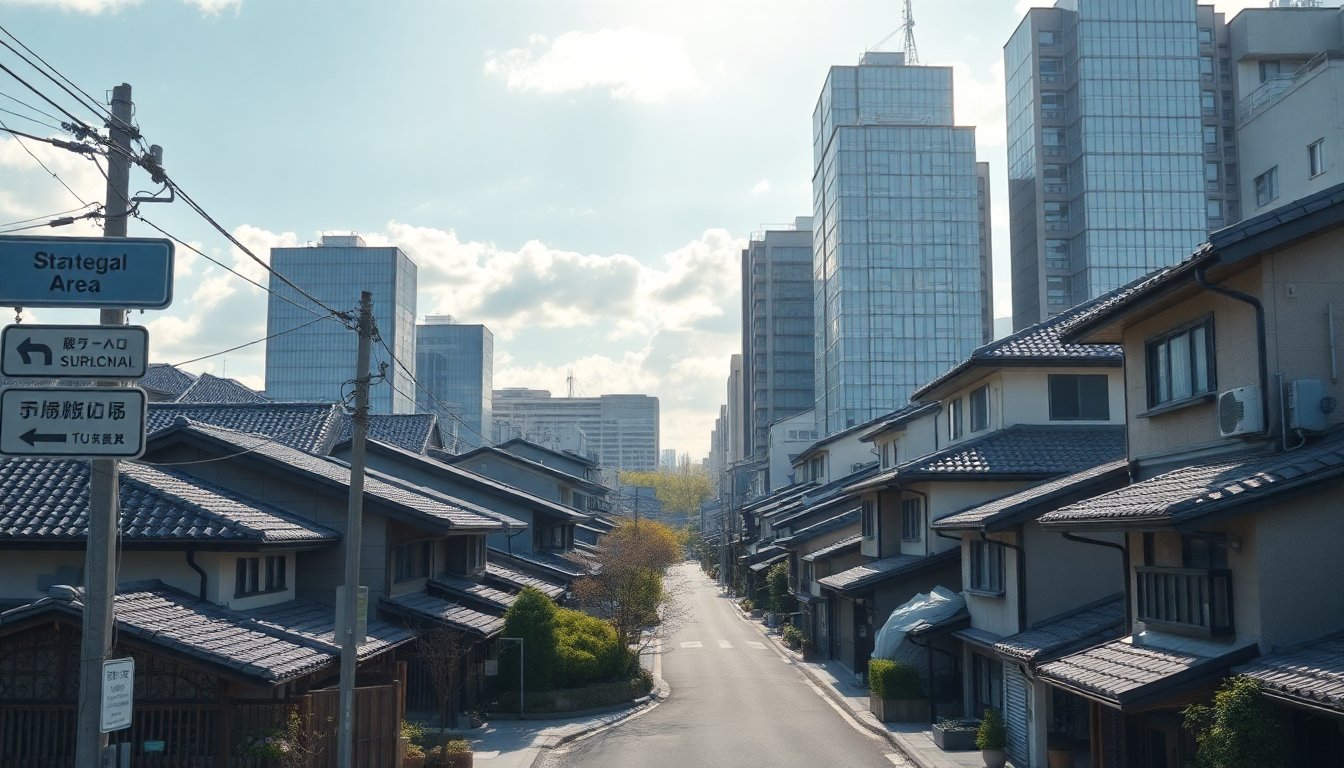
Japan is increasingly concerned about the trend of foreign nationals purchasing land and properties within its borders. This apprehension is particularly evident near strategically important locations, prompting a series of regulatory measures aimed at protecting national interests. The Japanese government is now taking steps to address these concerns and restore confidence among citizens regarding housing affordability and security.
A report from the Cabinet Office indicates that there were 113,827 property transactions<\/strong> in the fiscal year starting April 1, in areas within one kilometer of designated critical facilities<\/em>, including military bases and vital national security infrastructure. This surge in transactions has raised alarms about the impact of foreign ownership on local communities and property markets.
New regulations on foreign property ownership<\/h2>
In response to these concerns, Japan is implementing new regulations that will impose stricter controls on property acquisitions by foreign investors. The primary objective of these measures is to ensure that foreign ownership does not compromise national security or inflate local real estate prices beyond the means of ordinary Japanese citizens. The government aims to find a balance between attracting foreign investment and safeguarding its domestic market.
Monitoring foreign investments<\/h3>
The government will establish a comprehensive monitoring system requiring foreign buyers to disclose their intentions and business plans related to property purchases. This initiative aims to prevent the potential misuse of properties near sensitive sites and maintain transparency in the real estate market. Such measures reflect a growing trend among nations to scrutinize foreign investments, particularly in strategic areas.
Impact on the Japanese economy<\/h2>
The implications of these new regulations extend beyond immediate concerns about land ownership. As Japan gradually shifts its monetary policy, the recent decision by the Bank of Japan<\/strong> to increase interest rates has also sparked discussions about the future of the economy. With the benchmark rate now set at 0.75%<\/strong>, the highest in three decades, analysts are closely monitoring its effects on both domestic and foreign investment trends.
Rising interest rates and their consequences<\/h3>
As the Bank of Japan enters this new era of tighter monetary policy, the effects are already being felt across global bond markets. While the current interest rate remains low by international standards, it indicates a shift from the prolonged period of ultra-low borrowing costs that Japan has experienced. This transition could reshape capital flows and investment patterns, particularly concerning foreign bonds.
Historically, Japan has been a major net creditor globally, holding a net international investment position of approximately 3.66 trillion dollars<\/strong>. However, the recent rise in domestic yields may decrease the appetite for foreign bonds among Japanese institutional investors. As investment strategies adapt to these changing conditions, the potential for a capital repatriation trend could emerge, altering the landscape of global finance.
Future outlook for Japan’s property market<\/h2>
Looking ahead, the combination of stricter regulations on foreign property ownership and rising interest rates may lead to significant shifts within Japan’s real estate market. The government’s efforts to protect its citizens and ensure housing affordability while attracting foreign investment will be critical in the coming months. As these measures unfold, it will be essential to assess their effectiveness in stabilizing property prices and fostering a sustainable economic environment.
Moreover, the relationship between foreign investments and local affordability will remain a key topic among policymakers and economists. As Japan navigates these challenges, the insights gained may provide valuable lessons for other nations facing similar issues regarding foreign ownership and economic stability.