
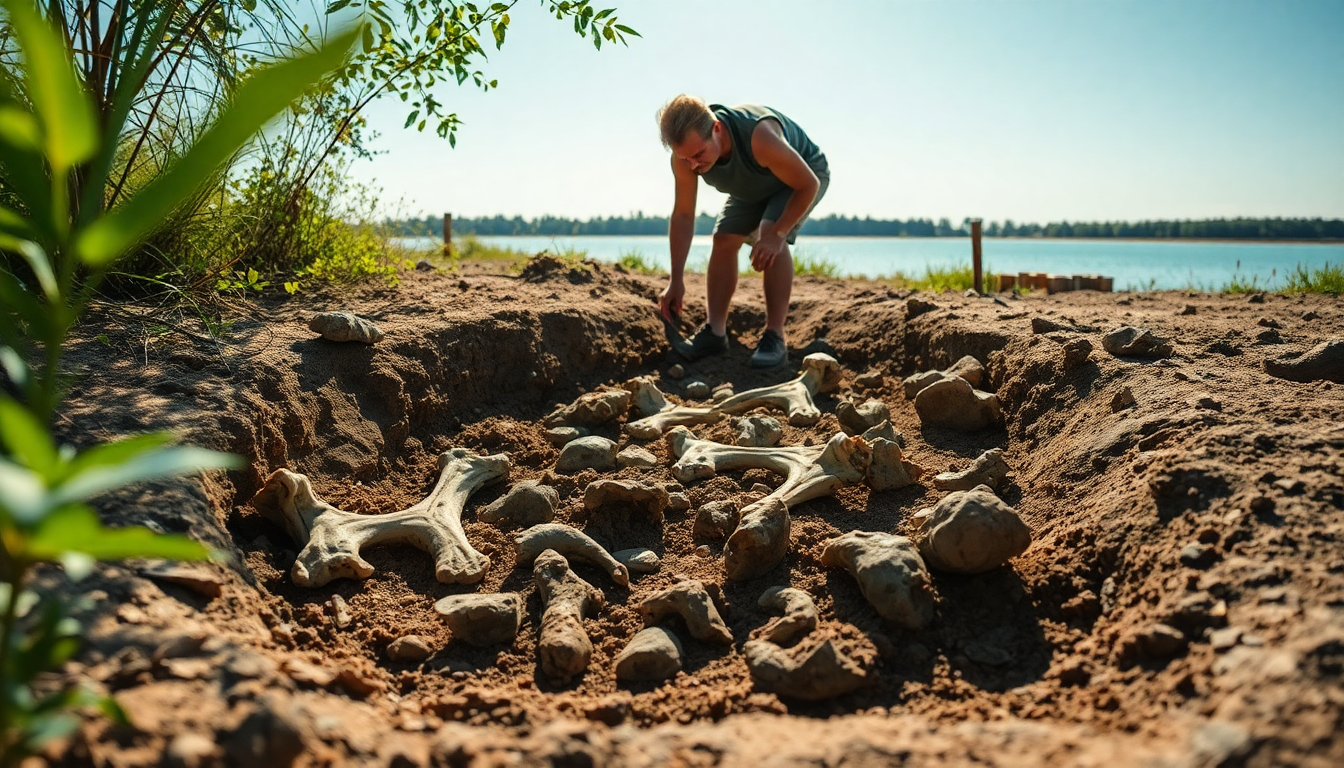
Recent archaeological digs in Germany have uncovered some really cool insights into how Neanderthals cooked and ate. Can you believe they had such advanced methods for extracting fat from animal bones? This discovery not only sheds light on how our ancient ancestors survived but also highlights their savvy resource management skills in tough conditions.
Archaeological Findings in Neumark-Nord
At the Neumark-Nord site, which used to be a lake landscape, researchers found thousands of bones from at least 172 large mammals, along with various flint tools. These remains, dating back about 125,000 years to a warm interglacial period, include species like red deer and horses, as detailed in a recent study published in Science Advances.
What’s particularly intriguing here is how the bones are spread out across the site. While many bones with less marrow content are scattered, those packed with marrow are clustered in specific spots dubbed “fat factories.” This suggests that Neanderthals had a strategic approach to how they used their resources, showing a keen understanding of their environment.
Resource Management and Culinary Techniques
Dr. Lutz Kindler, the study’s lead author, points out that Neanderthals were masters of resource management. They planned their hunts meticulously, moved carcasses strategically, and had designated spots for rendering fat. Evidence suggests they crushed bones into smaller pieces and boiled them for long periods, resulting in a rich grease that was a crucial calorie source, especially when other food was scarce.
It’s fascinating to note that similar practices have only been documented in much more recent archaeological sites, with earlier evidence dating back only about 28,000 years. This groundbreaking finding pushes the timeline back and shows that Neanderthals’ resource management skills were way ahead of their time.
The Significance of Fat in Neanderthal Diets
Fat was a game-changer for Neanderthals, especially during winter and spring when carbohydrates were hard to come by. Their diet was mostly animal protein, but too much protein without fats could lead to serious health problems, like protein poisoning. So, the ability to extract fat didn’t just add variety to their meals; it also provided essential energy during lean times.
The scale and preservation of the Neumark-Nord site give us an amazing opportunity to explore how Neanderthals interacted with their surroundings, including both animal and plant life. This discovery paves the way for further research, helping scientists dive deeper into the behaviors and ecological strategies of Neanderthals.
Expanding Our Understanding of Neanderthal Life
Besides the fat extraction techniques, recent studies have revealed other fascinating aspects of Neanderthal life, such as their possible diving for seashells to create sharp cutting tools and the potential practice of burying their dead with flowers. These findings suggest that Neanderthal society was more complex than we previously thought, indicating they had cultural practices that showed a deeper connection to their environment.
As research continues, the implications of these discoveries are huge. They challenge the old notion of Neanderthals as simple survivalists, instead painting them as intelligent beings with advanced resource management skills and cultural expressions. The Neumark-Nord site stands as a testament to the ingenuity of our ancient relatives, reshaping how we understand human evolution and adaptation.


