
Table of Contents
The plight of children in Gaza
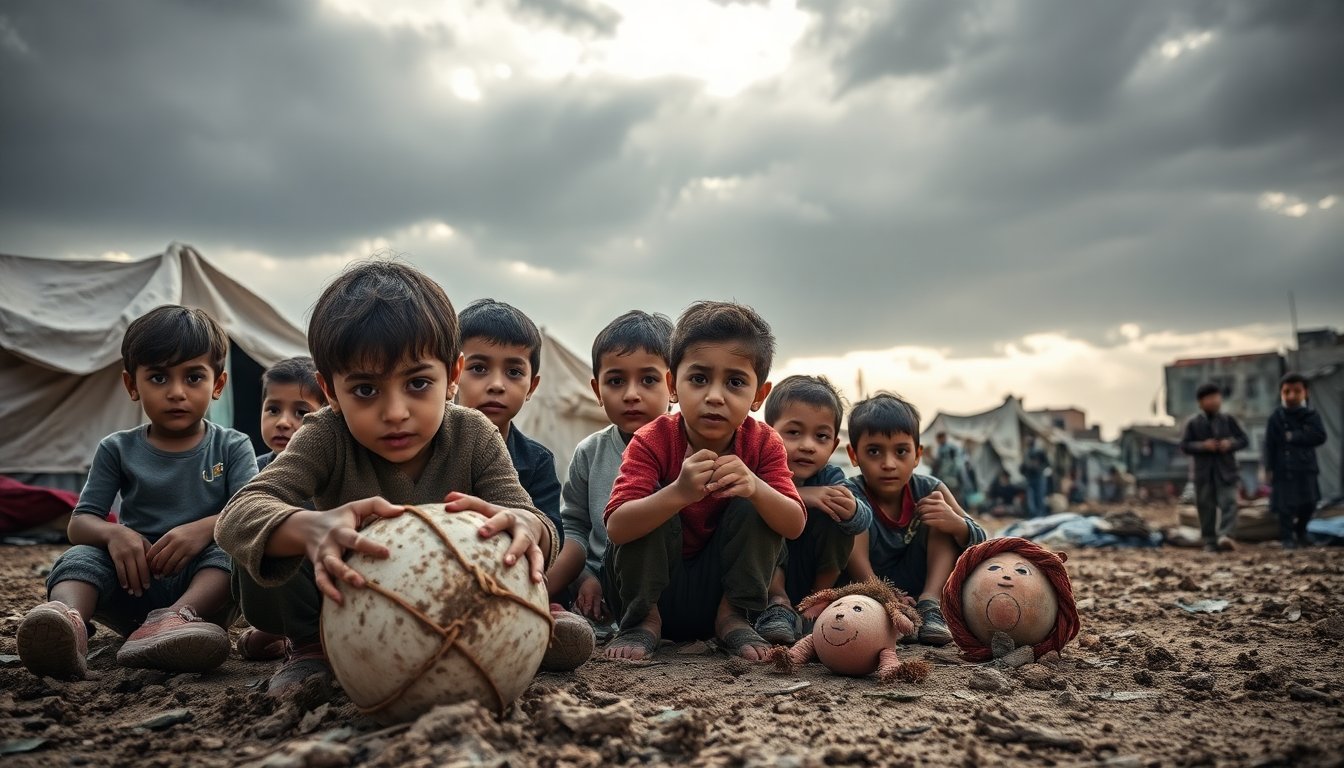
In the midst of the ongoing turmoil in Gaza, the situation for children has become increasingly dire. Among the many stories of loss, one stands out: that of Hamza Al-Rubaie. This young boy represents just one of the 17,000 orphans left in the wake of a devastating conflict. He has faced unimaginable grief, having lost both of his parents and three siblings. This article examines Hamza’s story and the broader implications for children in war-torn regions.
The devastating impact of conflict on families
Hamza’s life was irrevocably altered by the violence that swept through Gaza. With both parents gone, he was thrust into a world of uncertainty and despair. His loss extends beyond the personal; it represents a broader, heartbreaking narrative that resonates with countless families affected by war. Childhood trauma is a lingering shadow that can impact mental health and well-being well into adulthood.
The role of guardianship in recovery
In the aftermath of such profound loss, guardianship plays a crucial role. Hamza now lives with his aunt, who has taken on the enormous responsibility of raising him and providing emotional support. The role of extended family is vital in these circumstances, offering a semblance of stability. However, the emotional scars and the sense of loss can be overwhelming, making recovery a challenging journey for both the child and the guardian.
The disparity in responses to tragedy
Hamza’s story, while deeply emotional, starkly contrasts with the treatment of others lost in ongoing conflict. Recently, the recovery of an Israeli policeman’s remains, after over two years, received considerable media attention and military resources. In contrast, more than 10,000 Palestinians remain buried under rubble, with their families left in profound anguish and without closure. This disparity underscores the unequal treatment of lives lost in conflict, prompting critical questions about global empathy and the differing value placed on human lives.
The silence of the international community
The international response to the ongoing crisis in Gaza remains largely subdued, particularly concerning the deaths of Palestinian civilians. Families are left to grieve their loved ones without the assurance of recovery or proper acknowledgment. The absence of forensic teams to identify the deceased intensifies the pain of loss, adding layers of uncertainty. International media frequently neglect these stories, opting instead to highlight singular tragedies. This approach perpetuates a cycle of silence surrounding the suffering experienced by countless families.
Seeking justice and recognition
Amidst the ongoing humanitarian crisis, calls for justice and recognition are intensifying, particularly for children affected by conflict. Activists and organizations are working diligently to highlight these urgent issues, advocating for a more equitable approach to conflict resolution. The experiences of these children extend beyond mere statistics; they illustrate the profound human cost of war and emphasize the necessity for societal advocacy for peace and support.
Reflecting on the life of Hamza Al-Rubaie reveals broader implications regarding the resilience of children facing adversity. Amplifying their voices and sharing their stories is crucial for fostering understanding about the impacts of conflict on society’s most vulnerable members. Through these shared narratives, there exists potential to cultivate a more compassionate world.