
Table of Contents
The Terrorism Confinement Centre, commonly referred to by its Spanish acronym CECOT, has become a focal point of intense scrutiny and debate. This mega-prison, located in rural El Salvador, has recently drawn attention not only for its size and conditions but also for its connection to U.S. deportation policies. The facility has been in the spotlight following a controversial segment on CBS’s 60 Minutes, which examined the implications of the Trump administration’s actions regarding deported migrants.
A deep dive into CECOT
Launched in February , CECOT is touted as the largest prison in the Americas, with the capacity to hold up to 40,000 inmates. Nestled approximately 70 kilometers from San Salvador, this 23-hectare complex is a cornerstone of President Nayib Bukele‘s stringent anti-gang measures. Since the inception of these hardline policies, the nation has witnessed a notable decline in homicide rates, which has garnered Bukele significant public support.
Design and conditions
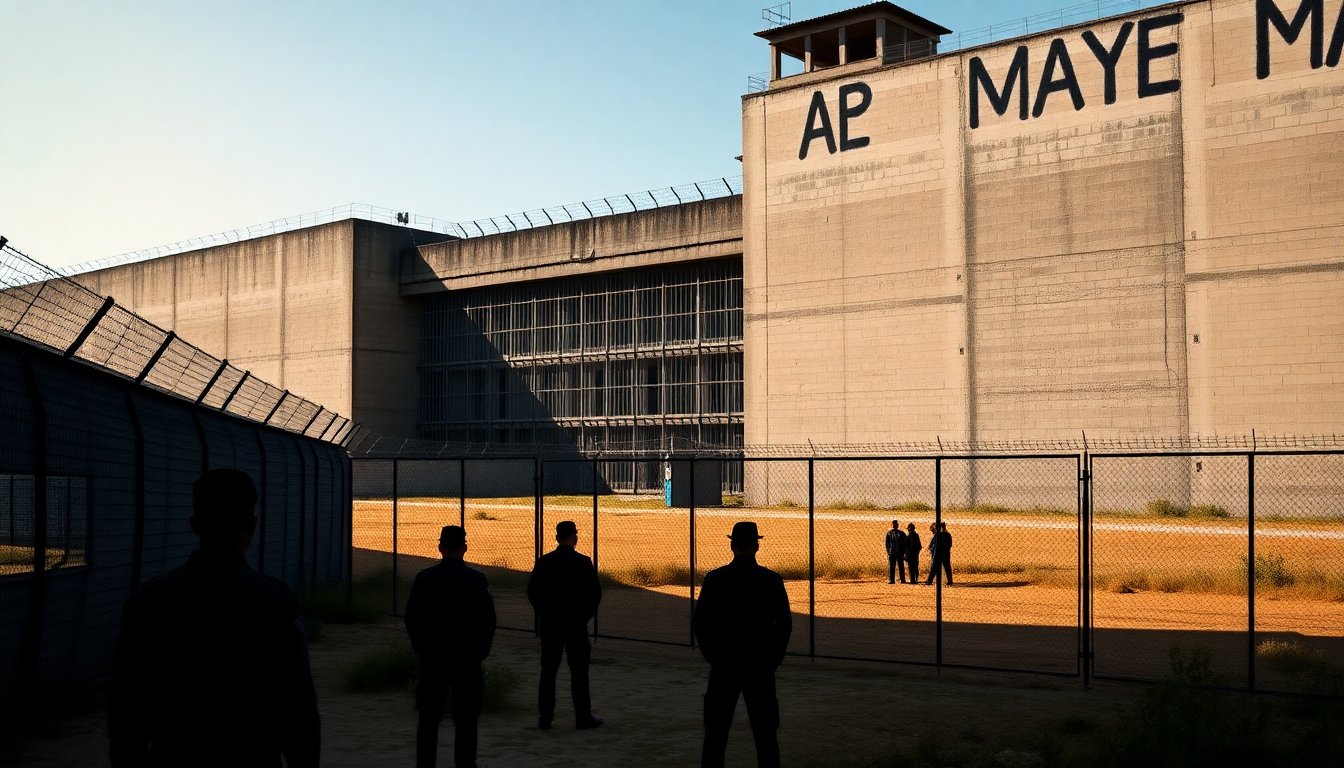
CECOT is constructed with a focus on security rather than rehabilitation. The complex comprises eight pavilions, where each unit can accommodate nearly 70 inmates. Conditions in the cells are grim; they lack windows, and the metal bunks are sparsely furnished. Inmates are confined to a mere 0.6 square meters of space, significantly below the international standards of three to six square meters, raising serious concerns from the Inter-American Commission on Human Rights.
Moreover, the absence of outdoor space and restrictions on family visits exacerbate the already harsh conditions. The prison is heavily monitored, with guards and cameras omnipresent. Reports indicate that the dining and recreational facilities are reserved exclusively for staff, leaving inmates in a state of constant confinement.
Human rights concerns and U.S. involvement
Despite the prison’s intended purpose of combating crime, numerous human rights organizations have condemned CECOT for its treatment of detainees. Testimonies from deported individuals reveal harrowing experiences of torture, abuse, and solitary confinement. One Venezuelan deportee recounted being subjected to sexual abuse, while another college student described being violently assaulted upon arrival.
Political implications of deportations
The connection between CECOT and the U.S. administration became evident when President Bukele extended an invitation to the Trump administration to transfer deportees to this facility. In March, the U.S. invoked an 18th-century wartime law to deport mainly Venezuelan migrants accused of gang affiliations to CECOT, leading to a controversial partnership that serves both countries’ agendas. Reports suggest that this agreement was financially beneficial for El Salvador, with the U.S. government providing approximately $6 million to cover the costs associated with these deportations.
As the situation unfolded, many individuals affected by these deportations claimed they were not involved in criminal activities and had insufficient means to contest their classification as gang members. Legal challenges have highlighted the vague nature of the accusations made by U.S. officials, prompting calls for increased scrutiny of human rights violations linked to both nations.
Public perception and ongoing debates
While CECOT has received criticism from human rights advocates, it has also garnered support from segments of the Salvadoran populace who appreciate the government’s efforts to reduce crime. The stark contrast between the prison’s brutal reputation and the perceived success of Bukele’s hardline security measures illustrates the complex narrative surrounding this facility.
The growing outcry over the conditions within CECOT, combined with the political ramifications of U.S. deportation policies, has sparked a broader discussion about the future of human rights in El Salvador. Calls for accountability and transparency continue to rise as organizations advocate for better treatment of detainees and a reevaluation of the partnership between the U.S. and El Salvador.
In summary, the discourse surrounding CECOT reflects a multifaceted issue where crime, human rights, and international relations intersect. As the world watches, the implications of this mega-prison remain a critical topic for advocates, policymakers, and the affected communities.